Key facts: Beavercreek
- Beavercreek is a city in Greene County about five miles east of downtown Dayton, incorporated in February 1980 [1].
- Its 2020 population of 46,549 makes it the largest city in Greene County [1].
- Housing units in Beavercreek grew by about 32 percent between 2000 and 2010 [1].
- Greene County Sanitary Engineering provides sewer service to Beavercreek [2], and county water was softened to about 8 grains per gallon from about 27 [3].
The houses
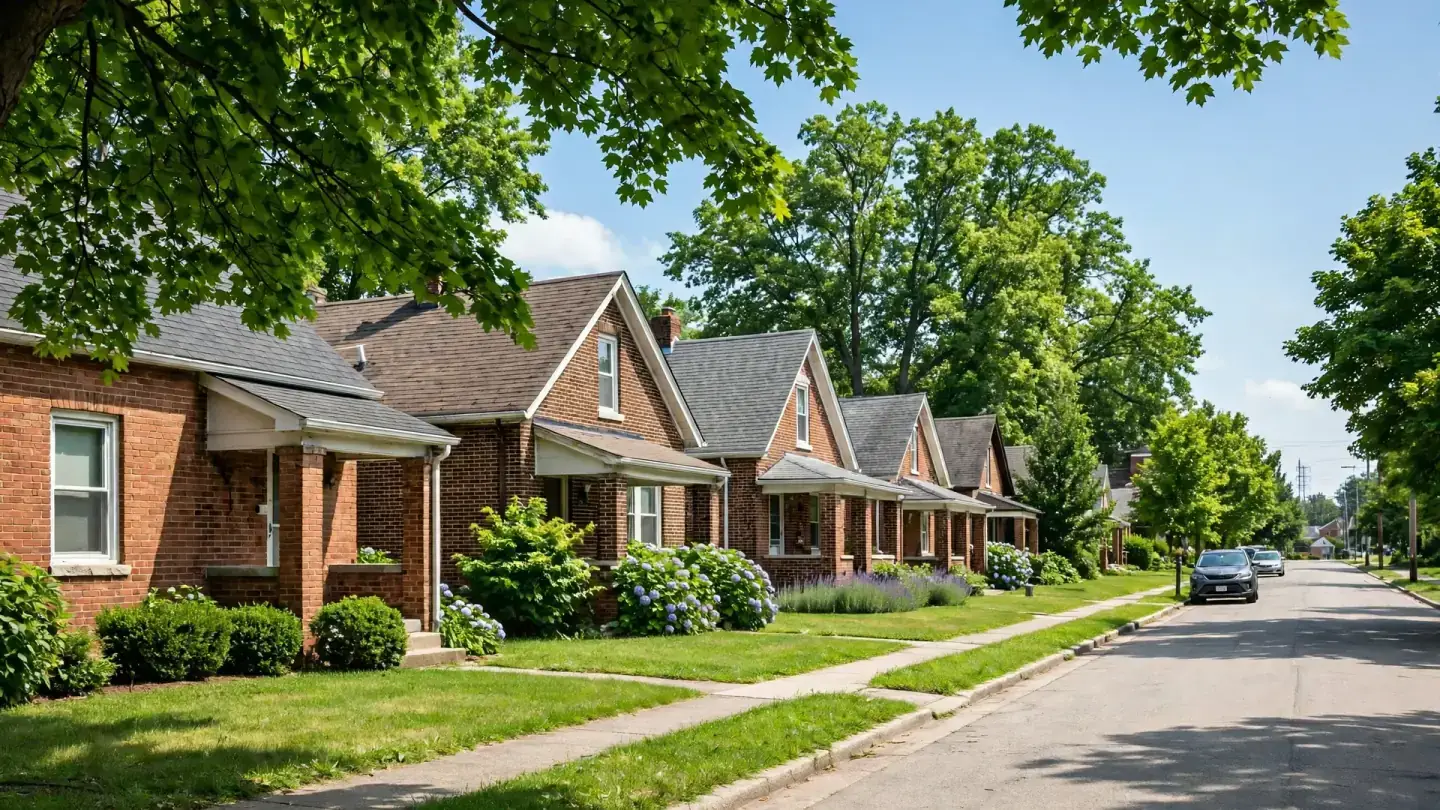
Beavercreek homes: newer subdivisions east of Dayton
Beavercreek lies about five miles east of downtown Dayton, across the county line in Greene County [1]. It incorporated as a city in February 1980 and had 46,549 residents in 2020, which ranks it first in Greene County by population [1]. Growth has been steady and recent: the number of housing units rose by about 32 percent between 2000 and 2010 alone [1].
The result is a city dominated by subdivisions. There are older houses along the original township roads and some 1960s and 1970s neighbourhoods, but a large share of Beavercreek homes date from the 1980s onward. Two-storeys and ranches with full basements are common, many of them finished as family rooms, offices or guest suites.
Newer construction usually means plastic drain and sewer pipe, which does not rust or scale the way cast iron does and has fewer joints for roots to enter. That does not make Beavercreek drains trouble-free. The common problems here are different: clogs in long horizontal runs, sump systems working hard in wet weather, basement bathrooms that depend on pumps, and grease in busy family kitchens.
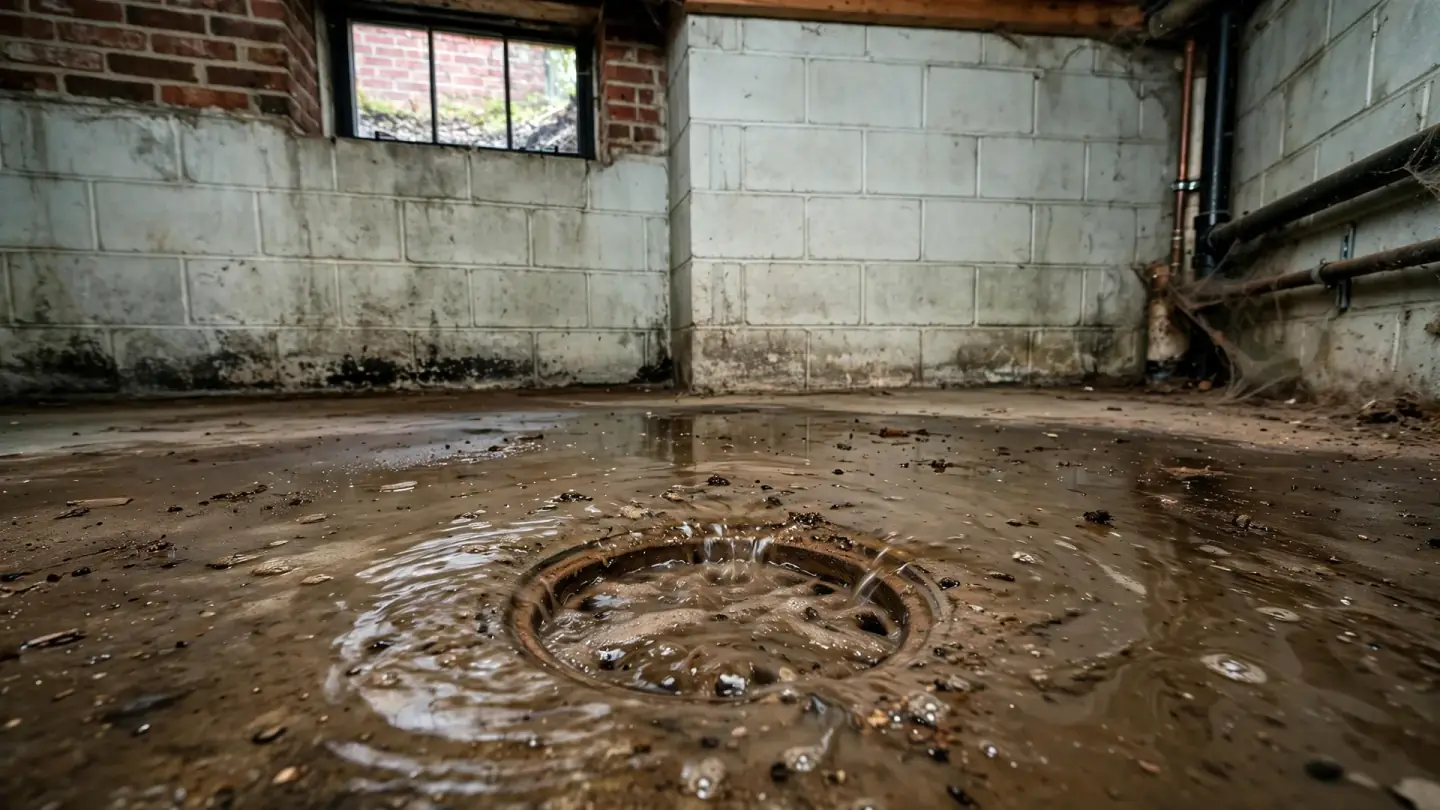
Finished basements raise the stakes. A backup that would just wet a concrete floor in an older house can soak carpet and drywall here. That is why diagnosis matters: finding where the problem is before anything is opened.
Common calls
What drain contractors see most in Beavercreek
Finished-basement backups
A basement bathroom or bar sink is the lowest fixture. When the main slows, water appears there first, often on finished floors.
Sump and ejector pump issues
Sump pits handle groundwater and ejector pumps lift basement waste. Both can fail or clog, and they are easy to confuse.
Kitchen grease in long runs
Open-plan kitchens with islands often have long horizontal drain runs. Grease cools and settles along them over time.
Hair in upstairs bathrooms
Multiple bathrooms mean multiple shower and tub drains collecting hair and soap, the most frequent single-fixture call.
Separate city
Who handles sewer service and permits in Beavercreek?
Beavercreek is not part of Dayton, and Dayton's sewer rules do not apply here. Sewer service in Beavercreek is provided by Greene County Sanitary Engineering, which lists the city among its service areas [2]. Questions about the public main, service problems in the street, or where your responsibility for the lateral ends should go to the county.
Building and plumbing permits are handled locally rather than by Dayton. Before any repair beyond clearing a line, such as replacing pipe, adding a cleanout or digging up the lateral, ask the contractor you're connected with to confirm requirements with the City of Beavercreek and Greene County.
Ohio's plumbing rule covers drainage inside buildings but leaves the building sewer to local sewer authorities and the Ohio EPA [6]. In Beavercreek, that means county rules govern the lateral.
Some homes on the edges of the city may be on private wells or septic systems rather than public water and sewer. If yours is, the advice on this page about county service does not apply, and septic systems need a different kind of contractor for the tank and field.
Sumps and basements
Why do Beavercreek basement bathrooms back up?
Many Beavercreek basements have a sump pit. Footing drains around the foundation collect groundwater and send it to the pit, and a pump lifts it out to the yard or a storm line. The sump should not connect to the sanitary sewer. If it does, storm water can overload the sewer in heavy rain.
Basement bathrooms built below the level of the main sewer often use an ejector pump. Waste from the toilet, shower and sink collects in a sealed basin, and the pump lifts it up to the main. Ejector pumps can clog with wipes and other items that should not be flushed, and when they fail, the basement fixtures back up.
It is easy to mix up these two systems. If a basement has water coming in, the first question is whether it is clean groundwater (likely a sump issue) or wastewater (a sewer or ejector issue). The sump pit vs floor drain guide explains how to tell, and floor drain cleaning covers basement drains.
If water is rising in a finished basement, stop using fixtures, keep people and pets away from it and call. For a backup that cannot wait, call to check emergency availability.
Beavercreek compared with nearby communities
Beavercreek drains behave differently from those a few miles west. Much of the city's housing went up recently, with units growing by roughly a third between 2000 and 2010 [1], so plastic pipe, finished lower levels and pumped basement fixtures are common. In Huber Heights to the north, the typical house is an older brick ranch built by one developer, and the usual complaint is an aging lateral. In Kettering to the southwest, seventy-year-old lines and mature trees are the usual story.
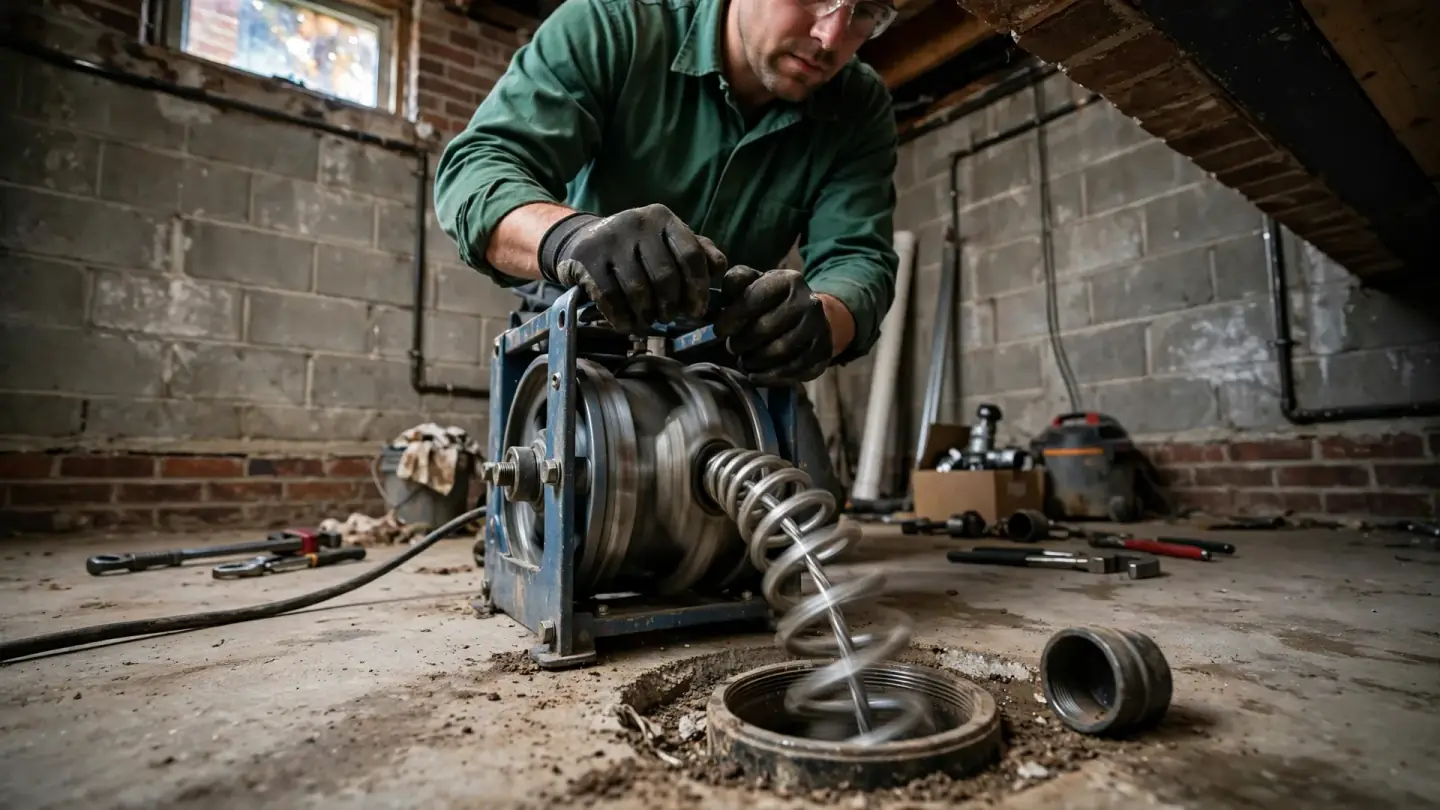
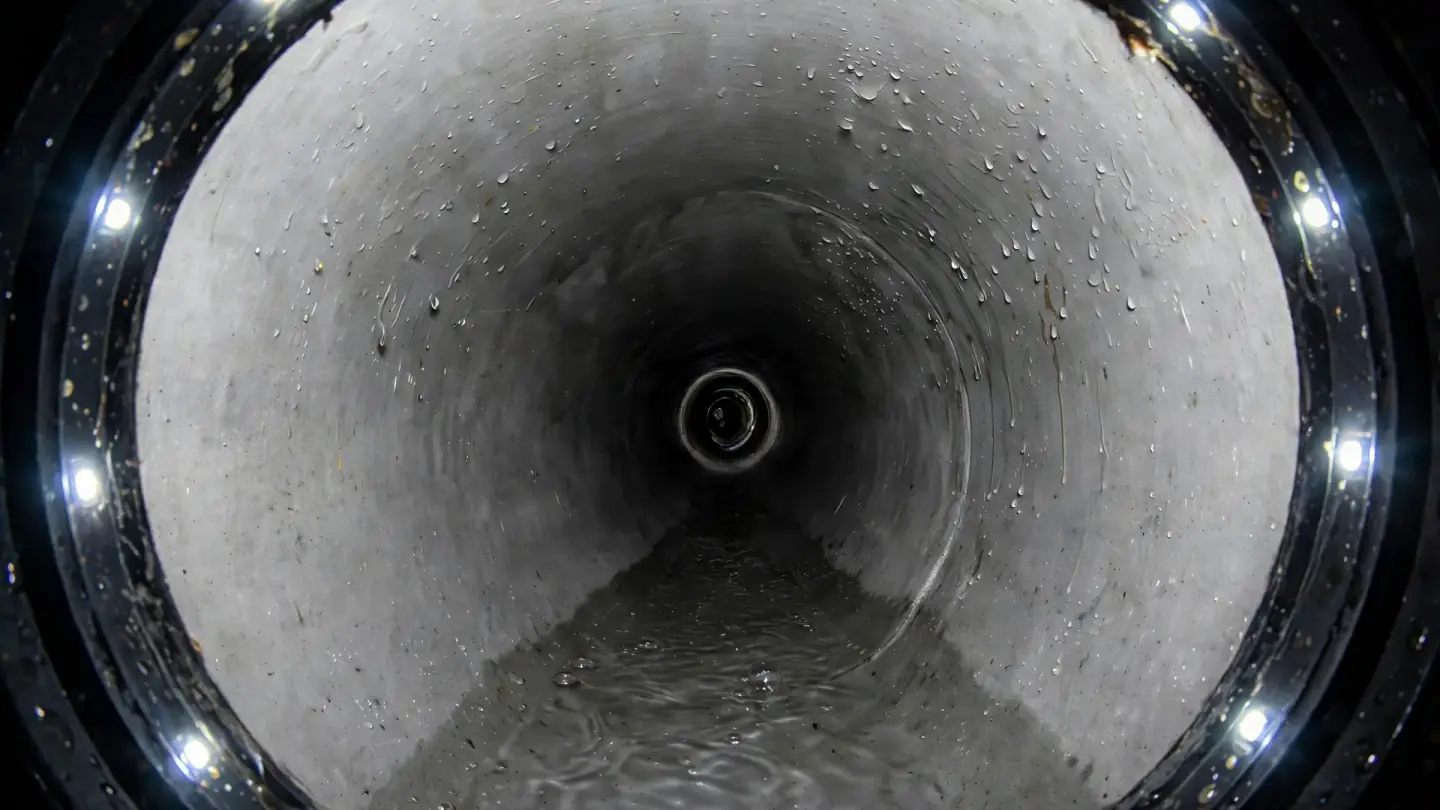
That difference matters when you describe the problem on the call. A Beavercreek backup is more likely to involve a pump, a grease-heavy kitchen run to an island sink, or a settled section of newer pipe than a root-packed clay joint. Mentioning the age of your house, whether the basement is finished and whether you have an ejector pit helps the contractor arrive with the right equipment, such as a camera inspection setup or a cable sized for a 4-inch main. For a wider view of the region, the areas page lists every neighbourhood and city this line covers.
Water hardness
Greene County softening and Beavercreek drains
Ground water in the Great Miami and Little Miami basins is naturally very hard [4]. Greene County has since upgraded its treatment and now softens its water to about 8 grains per gallon, down from about 27 [3]. Softer water means less scale in pipes, fixtures and water heaters for homes on the county system.
Two cautions. First, softening does not reach homes on private wells, which still get the region's naturally hard water and see more scale in fixtures and drains. Second, softer water does not stop soap, grease and hair from building up. Shower and tub drains and kitchen lines still need care.
For the shower and tub drains that collect hair in multi-bathroom homes, see shower and bathtub drain cleaning. For slow sinks, read the slow-draining sink guide first.
Weather
Rain, cold and Beavercreek plumbing
Beavercreek shares the Dayton area's weather, with January lows around 22°F and a couple of feet of snow in a typical season [5]. Most drains in newer houses run inside heated space, but lines in garages, outdoor kitchens and some crawl spaces can freeze. See frozen drain lines in winter.
Heavy spring rain is the bigger test. Sump pumps run constantly, and if a pump fails, groundwater rises in the pit and can flood the basement. A battery backup and a periodic test, pouring water into the pit to make sure the pump starts, are sensible precautions.
Older streets
Beavercreek's older neighbourhoods and township-era homes
Not every Beavercreek house is new. The city grew out of a township with farms and small settlements, and some neighbourhoods date from the 1960s and 1970s, before incorporation in 1980 [1]. Those houses are now around fifty to sixty years old, and their drains behave more like those in Kettering or Huber Heights than like the newest subdivisions.
In these older streets, a contractor may find cast iron inside, older pipe in the lateral and mature trees in the yard. Root intrusion, scaled kitchen branches and slow basement floor drains become more likely. If your house was built before the 1980s and drains have started slowing, a camera run of the main is a sensible first step. Sewer line inspection explains what the camera shows.
Houses from different eras sometimes sit side by side, so neighbours' experiences may not match yours. Knowing the year your house was built, and whether the lateral has ever been replaced, helps the contractor know what to expect.
New construction
Settling, bellies and debris in newer Beavercreek lines
Plastic drain pipe resists corrosion and roots far better than older materials, but it depends on good bedding. If the soil under a new line settles unevenly, a low spot, called a belly, can form. Water and waste sit in the belly, solids drop out and a clog builds there repeatedly.
Construction debris is another source of trouble in recently built homes. Drywall mud, grout and bits of packaging sometimes end up in drains during building or remodelling and collect at the first bend. A line that backs up within the first years of a house's life is worth a camera run to see whether debris or a belly is responsible.
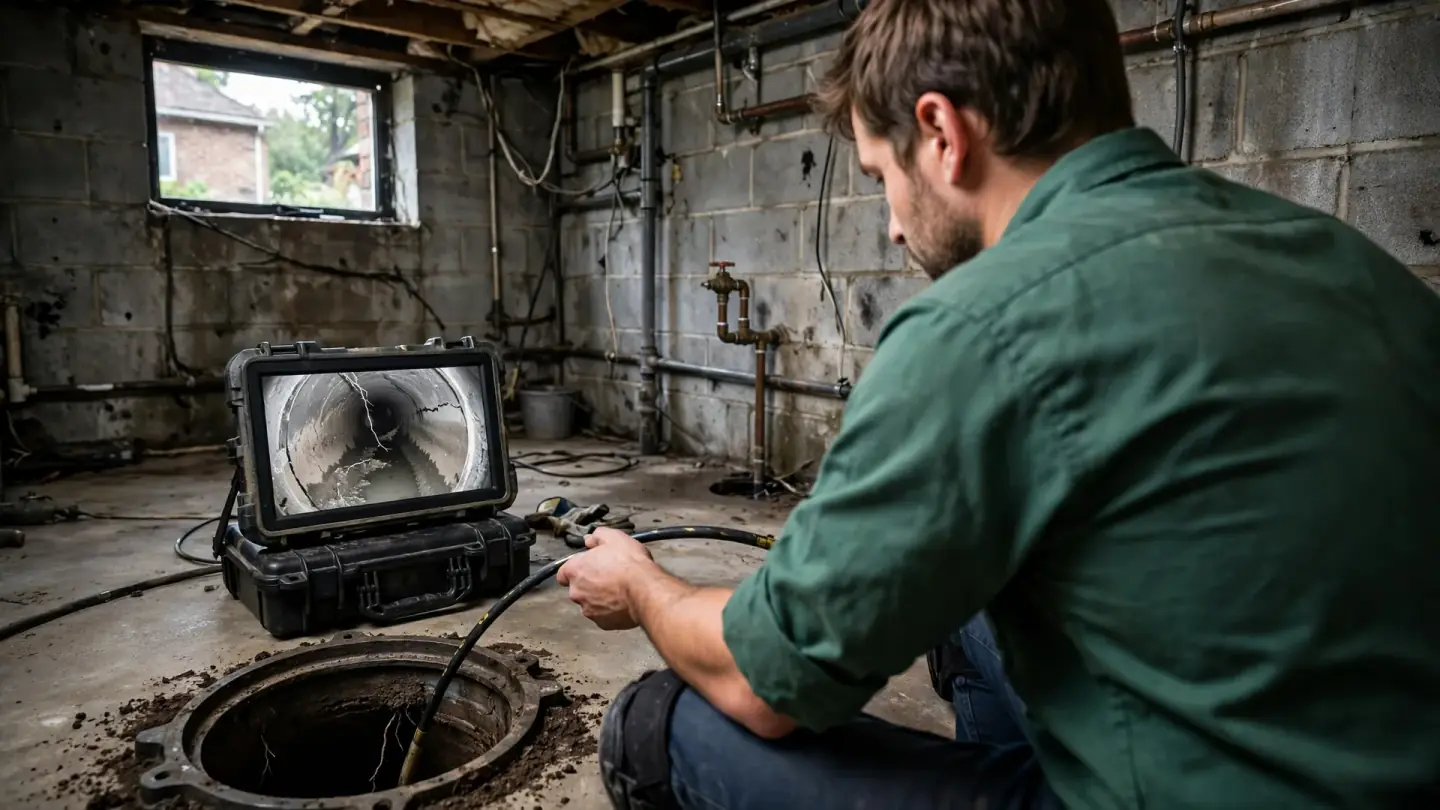
Both problems are hard to diagnose without a camera, and both tend to recur if the line is only cleared. Ask the contractor you're connected with for footage and for the distance from the cleanout to any low spot, so you can decide with the county and the city whether further work is needed. Drain camera inspection describes the process.
Kitchens
Island sinks and long kitchen runs in Beavercreek
Open-plan kitchens with island sinks are common in newer Beavercreek homes. An island sink cannot vent the usual way, and its drain often travels a long horizontal distance under the floor before reaching the stack. Long, nearly flat runs give grease and food particles time to cool and settle.
A garbage disposal adds to the load. Ground food still needs water to carry it, and short bursts of water leave it sitting in the line. Running plenty of cold water during and after disposal use, and keeping grease out of the sink altogether, helps keep the run clear. When it does clog, kitchen drain cleaning covers how contractors reach it.
Permits and who to call
Beavercreek permits and sewer contacts
Beavercreek is a separate city in Greene County. Confirm permits with the City of Beavercreek and Greene County.
- Sewer service: Greene County Sanitary Engineering [2].
- Water: Greene County softens its supply to about 8 grains per gallon [3]; private wells are not softened.
- Permits: confirm with the City of Beavercreek and Greene County.
- Lateral responsibility: confirm with the county where your section ends.
- Dayton's Sewer Maintenance rules do not apply in Beavercreek.
- Before digging: call Ohio811 two working days ahead.
Planning the visit
Planning a drain visit to a Beavercreek home
Beavercreek houses usually have a driveway and attached garage, so parking and bringing in equipment is easy. If the basement is finished, think about the route from the door to the utility room and lay down protection if you want it.
Find the cleanout. In newer houses it is often a white plastic fitting with a screw cap in the utility room, near where the main leaves the house, or outside near the foundation. Some houses have one in the garage. Clear access to it and to the sump and ejector pits if you have them.
Tell the contractor about any basement bathroom, ejector pump or sump pump, and which fixtures are slow. If water appears only in heavy rain, say so; it may point to the sump rather than the sewer.
Ask for camera footage once the line is clear. In newer plastic pipe, defects are less common, so footage that shows a clean line is useful too: it confirms the clog was a one-off.
FAQ
What do Beavercreek homeowners ask about drains?
Who do I call about the public sewer main behind my Beavercreek subdivision?
Greene County Sanitary Engineering, not the City of Dayton, serves Beavercreek's public sewer [2]. If several neighbours on your cul-de-sac back up at once, report it to the county first. If only your house is affected, the blockage is more likely in your own lateral, and a private contractor can clear it and run a camera to show the cause.
Do I need a Beavercreek permit just to have a drain snaked?
Usually not for routine clearing, but repairs that cut or replace pipe are a different matter. Beavercreek is its own Greene County city [1], so check with the City of Beavercreek and the county before any excavation or lateral replacement. A contractor you reach through this line can tell you which parts of a job normally need a permit.
Why does the basement toilet in my Beavercreek house back up when the washer drains?
A fixture below the main sewer usually drains into an ejector pit, and a big washer discharge can overwhelm a weak or clogged pump. Wipes and lint around the float are common causes. Let the contractor know you have a pit, because clearing the line above it without checking the pump rarely fixes the problem for long.
Since Greene County softened its water, should Beavercreek drains clog less?
Softer water helps with scale but does nothing for grease, hair or wipes. The county cut hardness from about 27 to about 8 grains per gallon [3], so new mineral crust forms more slowly. Older scale already inside pipes stays put, and homes on private wells receive no county softening at all.
Is it normal for a newer Beavercreek house to have a sagging sewer line?
It happens, and it is not always a sign of bad workmanship. Soil settles after construction, so a lateral laid in fresh backfill can develop a low spot, or belly, where paper and grease collect. A camera inspection locates the dip and shows whether regular cleaning is enough or a section should be re-laid.
Can my Beavercreek sump pump be piped into the floor drain?
Generally no, a sump pump moves groundwater and should discharge outdoors rather than into the sanitary sewer. Feeding storm water into a sewer lateral adds load during heavy rain, exactly when the system is busiest. Ask the contractor to trace where your discharge goes, and confirm the local rule with Greene County before changing anything. See the sump pit and floor drain guide.
Which Beavercreek drain problems are worth a call rather than a plunger?
Call when more than one fixture is slow, when water appears in a floor drain or shower, or when a clog returns within weeks. Those signs point past the trap to a branch or the main line. A single slow bathroom sink is often a hair clog you can tackle yourself first, with care and no harsh chemicals.