Key facts: Huber Heights
- Huber Homes built more than 10,700 single-family homes and 2,250 multi-family units in the area between 1956 and 1992 [1].
- The former Wayne Township area incorporated as Huber Heights on January 23, 1981 [1].
- The city's Division of Water and Wastewater is city-owned and operated by Veolia [2].
- Huber Heights added membrane softening at its Rip Rap Road water plant [3].
The houses
Huber Heights homes: one builder, thousands of brick houses
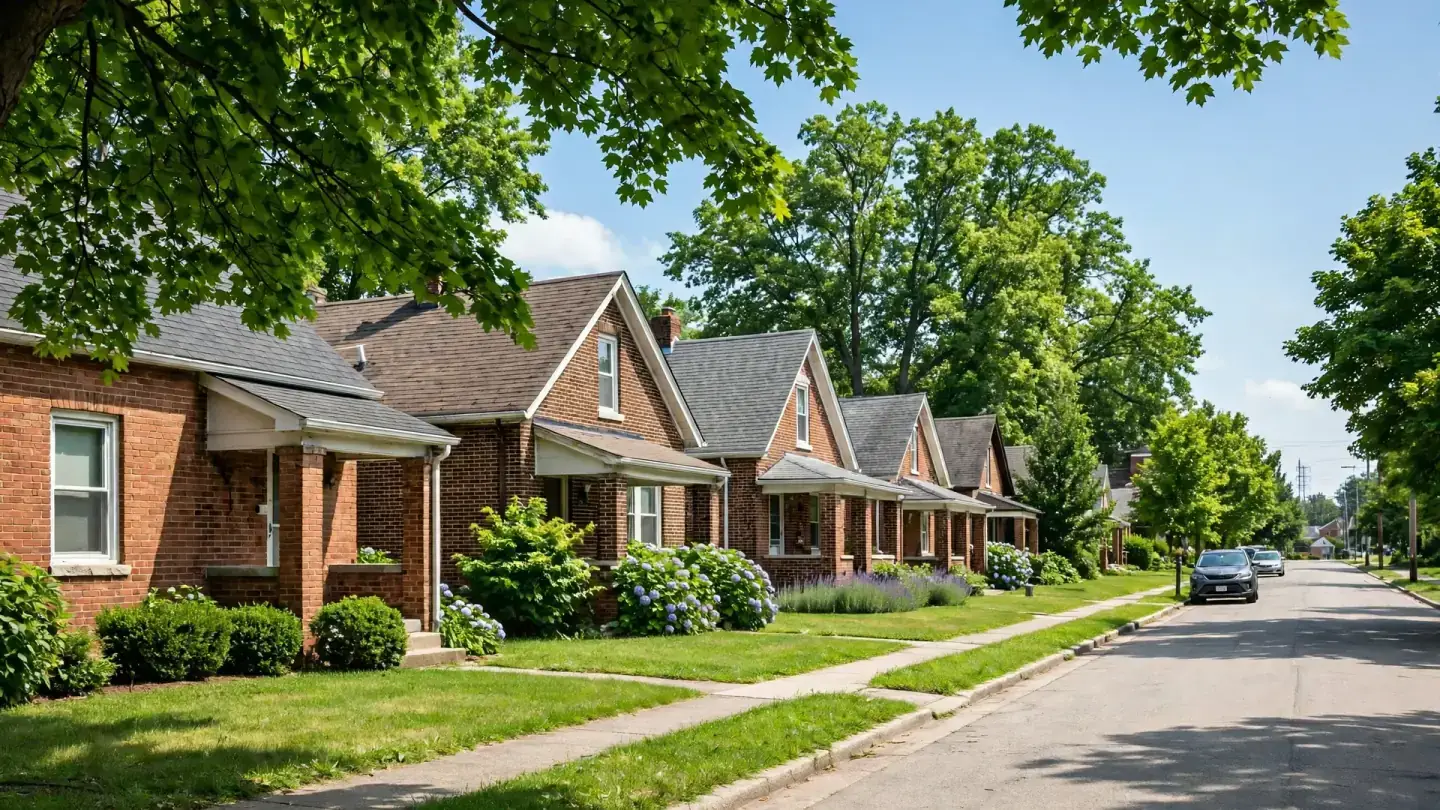
Huber Heights sits north-east of Dayton, in the area that was once Wayne Township. Charles H. Huber's company, Huber Homes, began building there in 1956 and kept going until 1992, completing more than 10,700 single-family houses and about 2,250 multi-family units [1]. Cityhood came in January 1981, when the former township incorporated [1]. Its long-standing nickname, "America's Largest Community of Brick Homes," reflects how many of those houses were built in brick [1].
For drain work, the important point is repetition. A builder working at that scale used a limited set of floor plans, repeated across street after street. Ranches, bi-levels and two-storeys appear again and again, with similar kitchen, bath and laundry layouts. A contractor who has worked in a few Huber houses of a given style will often know where the cleanout is, which way the main runs and where trouble tends to start.
The other point is age. The earliest Huber houses are now around seventy years old, and even the last ones are more than thirty. Over that span, building materials changed. Older houses may have cast-iron drains inside and clay or other older pipe outside; later houses are more likely to have plastic. Many have been partly updated over the years, so the only way to know what is under a given house is to look.
Huber also founded a private utility in 1956 to serve his developments [1]. Today, water and wastewater are run by the city, which matters when you need to know who to call about the public sewer.
Common calls
What drain contractors see most in Huber Heights
Same plan, same weak spot
Repeated floor plans mean repeated problems. If a neighbour with the same model had a clog under the laundry, yours may be heading the same way.
Lines under slabs
Houses without basements route drains under the floor. Clogs and cracks there are found with a camera rather than by looking.
Laundry and kitchen in one run
Compact layouts often send the washer and kitchen sink into the same branch. Lint and grease together make a stubborn clog.
Roots from yard trees
Trees planted when the houses were new are now mature, and older laterals with open joints let their roots in.
Separate city
Who runs water, sewer and permits in Huber Heights?
Huber Heights is a separate city, not part of Dayton. Dayton's rules about laterals and its Division of Sewer Maintenance do not apply here. The City of Huber Heights owns its Division of Water and Wastewater, and the system is operated under contract by Veolia [2]. Questions about the public main, service problems in the street, or where your responsibility for the lateral ends should go to the city's water and wastewater contacts.
Building and plumbing permits are handled by the City of Huber Heights. Before any repair that goes beyond clearing a line, such as replacing pipe, adding a cleanout or digging up the lateral, ask the contractor you're connected with to confirm with the city what is required.
Ohio's plumbing rule covers drainage inside the building, but it leaves the building sewer outside to local sewer authorities and the Ohio EPA [6]. In practice that means the city's rules govern the lateral, so a quick call to confirm requirements before work starts is time well spent.
Huber Heights spans Montgomery County and a small part of Miami County [1]. If you live near the northern edge, double-check which agencies serve your address.
Floor plans
Where are the drains in a Huber slab ranch or bi-level?
Many Huber ranches were built on slabs or crawl spaces, with the drains running under the floor to a main that exits toward the street. On a slab, the cleanout is often outside near the foundation, in the garage or behind an access panel. When several fixtures back up at once in a slab house, the clog is usually in the main beyond where the branches join.
Bi-levels split the house between an upper floor and a lower level that sits partly below grade. Laundry and a second bathroom often go on the lower level, close to the main. That makes the lower-level fixtures the first to show a problem, much like a basement floor drain in an older house.
Two-storey Huber homes and houses with full basements have the most familiar layout: everything drains down to the basement and out. Floor drains and laundry tubs are common, and the basement is where a contractor will usually start.
Whichever plan you have, tell the contractor on the call. Knowing it is a slab ranch or a bi-level helps them bring the right equipment and find the cleanout faster. If a toilet and tub are both backing up, see toilet and tub backing up together.
How Huber Heights differs from neighbouring areas
Drain trouble in Huber Heights tends to follow the builder's pattern. Huber Homes put up more than 10,700 single-family houses here [1], so a fault common to one floor plan can turn up on street after street. That is different from Beavercreek, where newer plastic lines and ejector pits are typical, and from Belmont in East Dayton, where interwar basements with floor drains take the first hit when the line slows.
Because the city runs its own water and wastewater division [2], the questions about who owns which part of the sewer also differ from Dayton's rules. Before a contractor arrives, it helps to know whether your house is a slab ranch, bi-level or basement model, where the cleanout sits, and whether problems started after a heavy rain or a holiday with a full house. Recurring backups in an older Huber lateral are often handled with main sewer line cleaning followed by a camera pass. The full list of covered communities is on the service areas page.
Water hardness
Softer water and older drains in Huber Heights
Ground water in the Great Miami River basin is naturally very hard, with high calcium and magnesium [5]. For years that hardness showed up as scale in Huber Heights kettles, water heaters and drains. Around 2020, the city added membrane softening at its Rip Rap Road water plant, reported as a project to make the city's water noticeably softer [3].
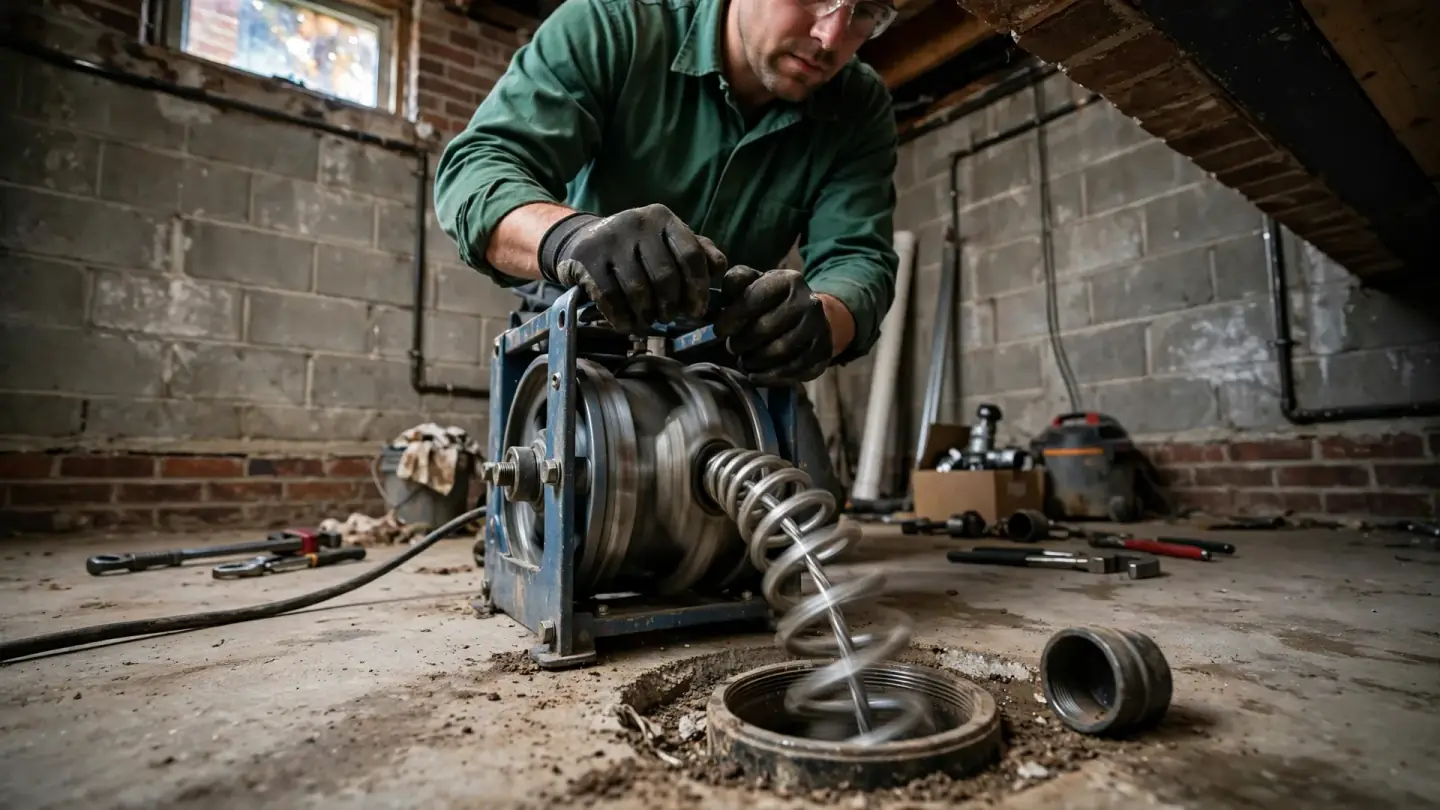
Softer water slows new scale, but it does not remove what is already there. A cast-iron or galvanised line that built up scale over decades can still be rough and narrow inside, which catches grease, hair and paper. If a Huber Heights drain has been slow for years, clearing it may restore flow, but a camera can show whether old buildup is the real problem.
Soap and detergent are a separate issue. Lint and soap residue in laundry lines and grease in kitchen lines build up regardless of water hardness. Using strainers and lint traps and running hot water through the drains from time to time helps. For recurring slow kitchen drains, see kitchen drain cleaning.
Weather
Winter, storms and Huber Heights drains
Huber Heights shares the Dayton area's climate, with January lows around 22°F and a couple of feet of snow in a typical season [4]. Slab houses with drains near exterior walls, and lines running through unheated garages, are the most likely to freeze in a cold snap. A drain that slows on the coldest day may be partly frozen; avoid chemical cleaners and warm the area gently. See frozen drain lines in winter.
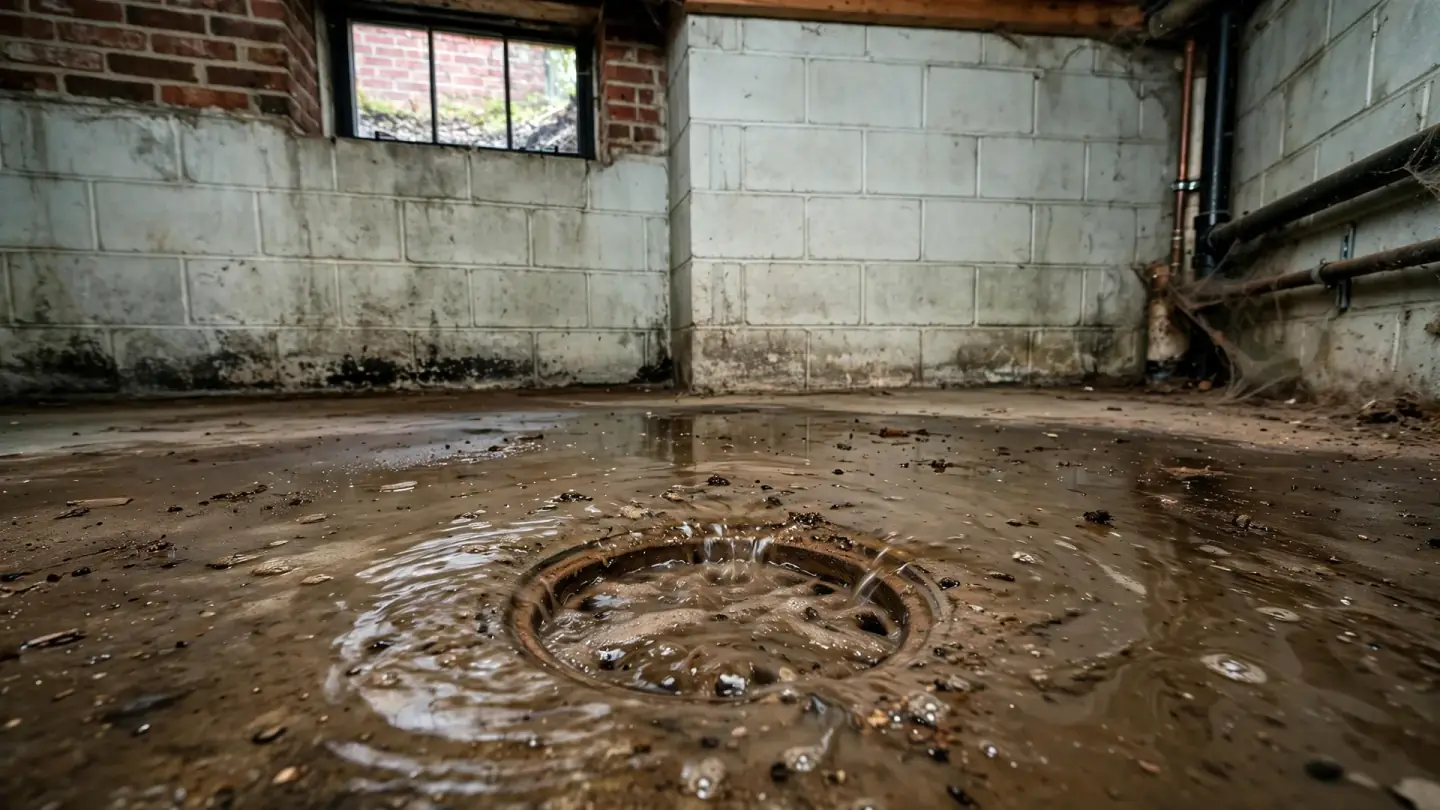
In heavy rain, houses with basements or lower levels may see water at a floor drain or around a sump. A sump pump that discharges into a laundry tub or floor drain sends storm water into the sanitary sewer, which can overload it. If water rises only during storms, contact the city's water and wastewater division about the public main, and read sump pit vs floor drain.
Selling and buying
Selling or buying a Huber house with an aging lateral
Because so many Huber houses share a builder and an era, buyers sometimes assume they are all in the same condition. They are not. Fifty or more years of different owners, trees and repairs mean two identical houses side by side can have very different drain lines.
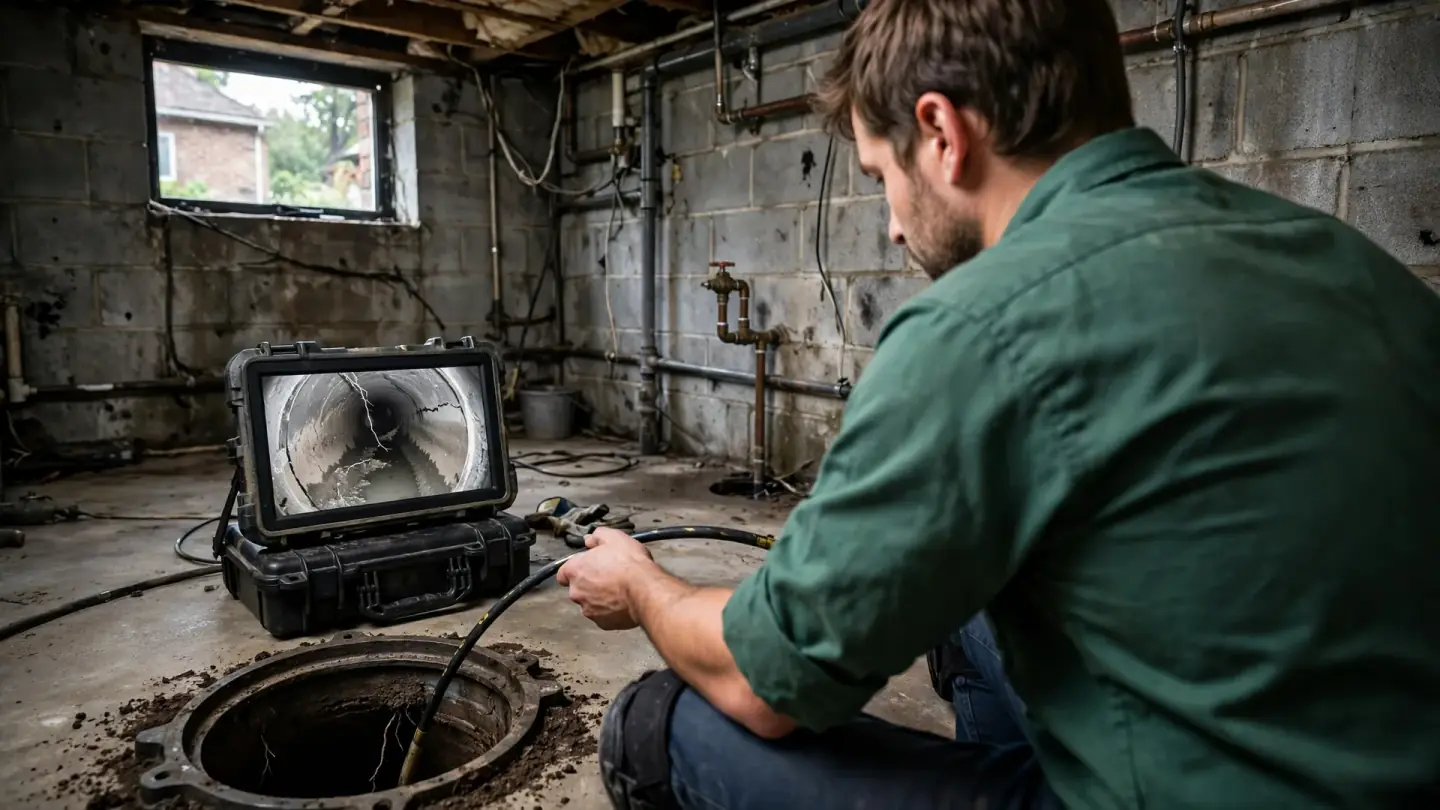
A camera inspection of the lateral is the simplest way to know. It shows whether the line is intact, whether roots have entered and whether there are sags where water sits. Sellers who have recent footage can answer buyers' questions directly; buyers who ask for it can plan with confidence.
Permits and who to call
Huber Heights permits and sewer contacts
Huber Heights is a separate city. Confirm permits with the City of Huber Heights.
- Water and sewer: a water and sewer utility owned by the city and run under contract by Veolia [2].
- Building and plumbing permits: City of Huber Heights.
- Lateral responsibility: confirm with the city where your section ends.
- Dayton's Sewer Maintenance rules do not apply in Huber Heights.
- Before digging: call Ohio811 two working days ahead.
- State rule: the building sewer is left to local sewer authorities and Ohio EPA [6].
Planning the visit
Planning a drain visit to a Huber Heights home
Huber houses almost always have a driveway and attached garage, which makes access easy. Open the garage if the cleanout or water heater is there, and clear a path to it.
Know your floor plan. Tell the contractor whether the house is a slab ranch, a bi-level, a two-storey or has a full basement, and which fixtures are backing up. If you know where the cleanout is, inside or outside, say so.
If you have had the line cleared before, mention when and what was found. Repeated root problems at the same distance from the cleanout point to a specific defect that can be located and discussed.
Ask for the camera footage once the line is clear, and for the location and depth of any defect. In a neighbourhood of similar houses, that information is useful not only to you but to whoever owns the house next.
FAQ
What Huber Heights homeowners ask about drains
Who maintains the public sewer in Huber Heights?
The City of Huber Heights owns its Division of Water and Wastewater, and Veolia operates it [2]. That means Dayton's sewer office is not the contact here. Report suspected main-line problems to the city, and ask them where your private lateral ends so you know which section a contractor would be clearing.
Do Huber Heights drain repairs go through Dayton or the city?
They go through Huber Heights, which incorporated as its own city in 1981 [1]. Building and plumbing permits come from the City of Huber Heights, not Dayton. Routine clearing rarely needs a permit, but replacing pipe often does, so confirm with the city before work that involves cutting or excavating.
Has the new softening at Rip Rap Road ended drain clogs in Huber Heights?
No, softening reduces fresh scale but cannot remove clogs from grease, hair or lint. The city added membrane softening at its Rip Rap Road plant [3], which helps fixtures and water heaters. Crust that formed in pipes before the change is still there, so older Huber homes may continue to see slow drains.
Where would the sewer cleanout be on my Huber Heights slab ranch?
Look outside near the foundation, in the garage, or behind an access panel near a bathroom. Huber houses share floor plans across many streets [1], yet cleanout placement still varies between models and later remodels. If you cannot find one, tell the contractor; they can work through a toilet flange or roof vent instead.
Why do so many Huber houses on my street get the same drain backup?
Huber Homes repeated designs across thousands of houses built between 1956 and 1992 [1], so similar pipe layouts age in similar ways. If a neighbour with your model had roots or a sag in the lateral, your line may share that weak spot. Mention it on the call; it helps the contractor plan a camera inspection.
Should I get the sewer line scoped before buying a Huber Heights house?
Yes, it is a sensible step for any home more than a few decades old. Many Huber houses are now over fifty years old, and a standard home inspection rarely looks inside the lateral. A camera inspection shows roots, cracks or sags before closing, so you can plan cleaning or repair with clear footage.
Is a gurgling toilet in my Huber Heights duplex caused by the other unit?
It can be, because duplex units often share a drain stack or lateral. When the neighbour runs a large volume of water, a partial clog downstream can pull air through your toilet trap. Tell the contractor that the building is shared, and read the gurgling drains guide for more clues.