
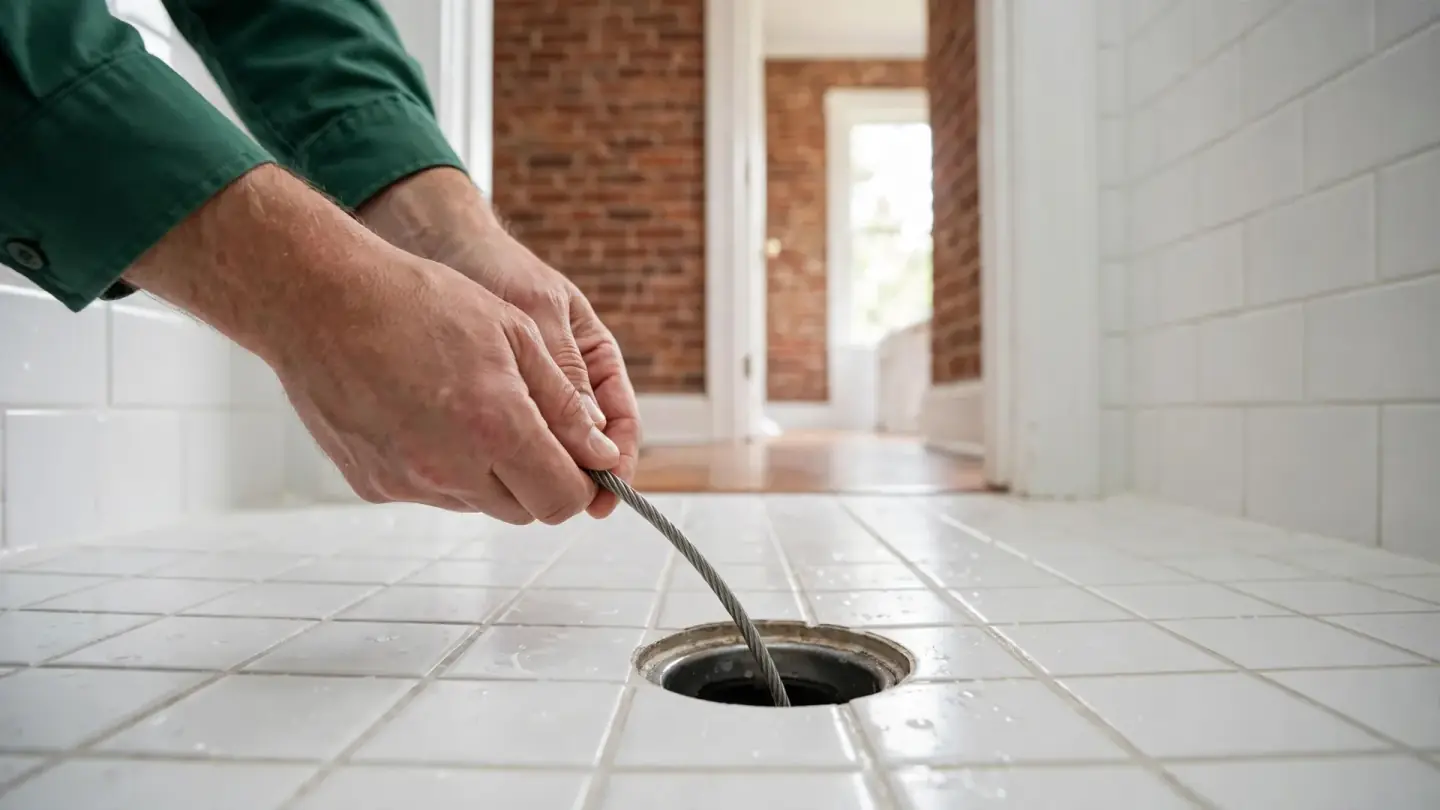
Key facts: Shower & Bathtub Drain Cleaning
- Federal water surveys rate the local supply as very hard, and hardness minerals react with bar soap to form scum [2].
- Dayton supplies water to over 400,000 people and lime softens it at its Ottawa and Miami plants [1].
- Drainage piping inside Ohio homes follows the state's modified version of the 2021 IPC, Chapter 7 [3].
- Average January lows near 22°F in Dayton can freeze tub traps sitting over porches or crawlspaces [4].
Under the tub
Why do tub and shower drains collect hair faster than other drains?
A bathtub drain is a short, small-diameter run with very little fall. Water leaves through the drain shoe in the floor of the tub, meets the overflow pipe coming down from the plate under the faucet, passes through a trap below the floor and heads sideways to the bathroom branch. A stall shower is similar but without the overflow.
Each piece has a spot where hair snags. Lift-and-turn and toe-touch stoppers have posts and threads that catch strands. Trip-lever tubs hide a plunger or spring inside the overflow tube that does the same. Once a few hairs anchor, soap and conditioner bind them into a mat that slows water and catches more hair every day.
Soap matters more than people expect. Bar soap reacts with calcium and magnesium in the water to form scum, a waxy deposit that coats the pipe and gives hair something to stick to. Conditioners and body oils add a slick film. Together they turn a quick-draining tub into a slow one over a few months.
Older houses add another wrinkle. Before modern P-traps became standard, many tubs drained through a drum trap, a small canister set in the floor or below it. Drum traps collect hair and sludge in a pocket that a standard cable often passes straight over. If a tub in an older Dayton house never quite clears, that is one of the first things the contractor you're connected with will ask about.
A tub that is slow alongside other fixtures is covered on the clogged drain repair page.
Tub and shower clues
What standing shower water is telling you
Water pools only during long showers
Flow is restricted but not stopped. A hair mat near the stopper or just below the drain is the likely cause and is close enough to reach.
Tub drains, then stalls halfway
When the first few inches leave quickly and the rest crawls, the restriction is usually in the trap or the first bend, where hair and scum settle.
Grey scum ring left after draining
Soap scum lingering on the tub surface often means the same scum is coating the drain line, especially with harder or unsoftened water [2].
Tub fills when the toilet flushes
When flush water surfaces in the tub, the blockage lies past both fixtures; toilet and tub backing up together walks through it.
Overflow plate gurgles
Air bubbling through the overflow as the tub drains suggests a partial clog below the junction of the overflow and drain.
Clog keeps returning in an old house
A tub that slows again weeks after every clearing may drain through a drum trap or a corroded lead or galvanized line under the floor.
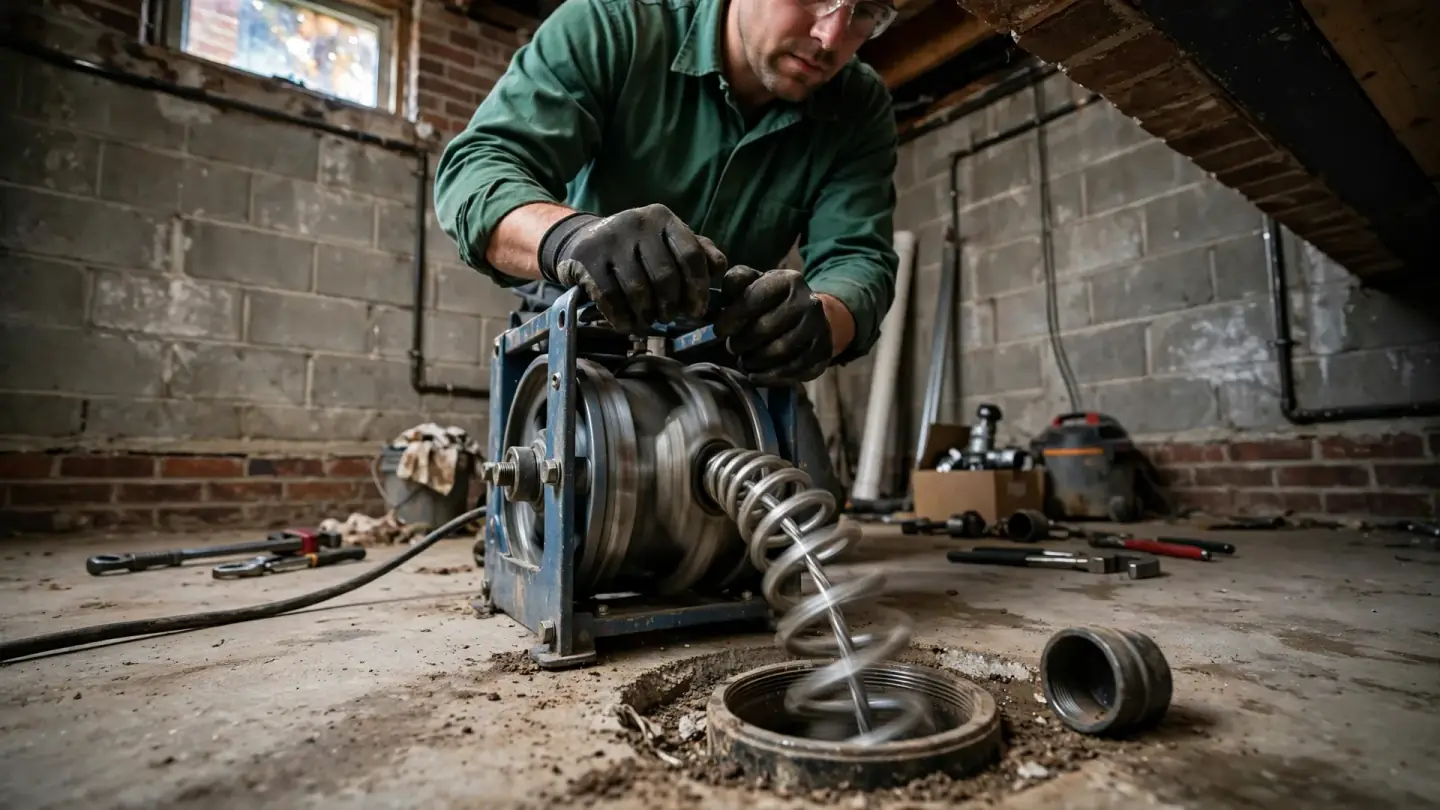
Clearing the tub
Pulling a hair mat and opening the tub trap
- 1
Identify the drain type
The contractor checks whether the tub uses a lift-and-turn, toe-touch, push-pull or trip-lever stopper, and whether the shower is a stall with a fixed strainer.
- 2
Remove the stopper or strainer
Most stoppers unscrew from the drain shoe. Trip-lever assemblies pull out through the overflow opening, bringing out the hair wound around them.
- 3
Run a small cable through the overflow
Feeding the cable down the overflow tube rather than the drain shoe gives a straighter path to the trap and avoids the tight bend in the shoe.
- 4
Look for a drum trap
In older houses an access cap in the floor near the tub or below in the basement ceiling may reveal a drum trap that needs opening and cleaning by hand.
- 5
Flush with a full tub
Filling the tub and releasing all the water at once tests the line under load and pushes loosened scum on toward the branch.
- 6
Refit and seal the overflow
Stoppers and the overflow plate are reinstalled with their gaskets so water does not leak into the floor or ceiling below.
Drain assemblies
Shower and tub drain assemblies and where each one clogs
| Drain style | Where hair catches | How it is cleared | Owner upkeep |
|---|---|---|---|
| Lift-and-turn stopper | Under the stopper and on the post | Unscrew stopper, pull hair, cable if needed | Remove and wipe monthly |
| Toe-touch stopper | Spring cartridge and threads | Unscrew cartridge and clean | Remove and wipe monthly |
| Trip-lever with plunger | Plunger and linkage inside overflow | Pull assembly through overflow | Clean linkage a few times a year |
| Stall shower strainer | Under the screwed-on grate | Remove grate, hand-clear, small cable | Use a hair catcher on top |
| Old drum trap | Sludge pocket in the canister | Open cap and clean by hand | Consider replacement with a P-trap |
| Shared bathroom branch | Junction with toilet and sink | Larger cable from a flange or cleanout | Keep wipes out of the toilet |
Bathroom routine
Shower drain jobs you can do and the ones to hand off
- Fit a hair catcherA simple silicone or mesh catcher over the drain stops most hair before it reaches the stopper. Empty it into the trash after each shower.
- Pull the stopper and clean itMost stoppers unscrew by hand or with a flat screwdriver. Pulling the wad of hair from under the stopper fixes many slow tubs outright.
- Plunge with the overflow blockedCover the overflow plate with a wet cloth and hold it tight, or the plunger simply pushes air out of the overflow.
- Leave drum traps to the contractorOld drum trap caps are often brass or lead and seized. Forcing them can crack the trap or the line under the floor.
- Do not mix cleaners in a standing tubDifferent drain products can react with each other. If one did not work, let the water drain or be pumped out before anything else is tried.
- Stop if the toilet or sink joins inWhen more than the tub is involved, the clog is past the tub trap. Stop using water and have the branch or main opened.
Dayton showers
Do soap scum and hard water clog Dayton tub drains?
Hardness drives soap scum. Calcium and magnesium are plentiful in water across this part of Ohio [2]. Dayton lime softens the water it supplies to more than 400,000 people [1], which helps, but homes on private wells or harder suburban supplies see the full effect: more scum on the tub, more scum in the drain, and more hair held in place by it.
Older Dayton housing stock is full of the drain styles that clog most. Houses from the late 1800s and early 1900s in neighbourhoods like the Oregon District and South Park often had their bathrooms added or remodelled several times. Drum traps, lead tub bends and galvanized branches can survive under floors long after the fixtures above were replaced.
Cold weather can mimic a clog. Winter nights in Dayton routinely fall well below freezing [4], and a tub on an exterior wall over an unheated crawlspace or porch can freeze its trap during a hard cold snap. A tub that stops suddenly on a bitter night and drains again after the room warms was frozen, not clogged. The frozen drain lines in winter guide covers what to do.
Rentals and student housing near Dayton's universities see heavy shower use from several people a day. Tub and shower lines in those properties clog on a predictable rhythm, which is where a hair catcher and a scheduled preventative drain maintenance visit make a real difference.
Past the tub trap
When the tub is only the first fixture to back up
Tubs and showers are usually the lowest fixtures in a bathroom, so they show downstream problems first. If water rises in the tub when the toilet flushes or the washer drains, the blockage is in the shared branch, the stack, the building drain or the lateral, and no amount of work at the tub stopper will help.
In that case the contractor works from a larger access point: a toilet flange, a stack cleanout or the main cleanout in the basement. The main sewer line cleaning page covers that work. Ownership splits at the street: the homeowner keeps the lateral clear, and Dayton maintains the public sewer [5].
Dayton laterals under older streets are often jointed clay, and roots that enter at the joints produce exactly this whole-bathroom pattern. A drain camera inspection shows whether roots, a sag or a broken joint is the cause. State plumbing rules govern pipe inside the house, while the sewer beyond the wall falls to the local utility and Ohio EPA [3], so lateral repairs in Dayton go through a licensed plumber and a permit [5].
Should a yard repair be needed, the locate request goes to Ohio811 (still widely called OUPS) a couple of working days beforehand, and sewers get green paint [5]. For a tub that simply drains slowly, though, none of that applies: the stopper, trap and a short cable usually finish the job.
Browse the Dayton drain services hub for other fixtures, or compare kitchen drain cleaning and toilet drain clearing when the trouble is in another room.
FAQ
Tub and shower drain questions in Dayton
Why does water pool around my feet when I take a shower?
A partial clog is restricting flow, usually hair bound together with soap scum near the drain or in the trap. The water still leaves, just slower than the showerhead delivers it. Pulling the stopper or strainer and removing the hair you can reach often fixes it; if not, the mat is deeper in the trap or line.
What is a drum trap, and does my old Dayton bathtub have one?
A drum trap is a small metal canister that older houses used under the tub instead of a modern P-trap. Look for a round screw cap in the bathroom floor near the tub, or in the ceiling below it. Drum traps collect hair and are hard to clear, so the contractor may suggest replacing one if it keeps clogging.
Is it safe to plunge a clogged bathtub drain?
Yes, as long as you seal the overflow plate first with a wet cloth held firmly over it. Without that seal, the pressure escapes through the overflow and the plunger barely moves the clog. Use a cup plunger, keep a few inches of water in the tub, and never plunge after pouring in a chemical cleaner.
Does hard water make my shower drain clog faster in Dayton?
It can contribute. Hard water reacts with soap to form scum that coats the pipe and binds hair. Groundwater in the Miami Valley is very hard [2], though Dayton's city water is lime softened before it is delivered [1]. Homes on private wells or harder supplies may see more scum build-up in tub and shower lines.
Why does my bathtub fill with water when I flush the toilet?
The tub and toilet share a drain branch, so toilet water showing up in the tub means the blockage sits downstream of both fixtures. That puts it in the shared branch or the main, not at the tub drain. Stop flushing and stop running water; cleaning the tub drain alone will not fix this one.
My shower stopped draining on a freezing night in Dayton. What happened?
A tub or shower built over an unheated crawlspace, porch or garage can freeze at the trap during a hard cold snap. Warm the room and the space below gently, without an open flame. If it drains once it warms up, ice was the cause, and insulating that space helps prevent a repeat.
How often should a rental property tub or shower drain be cleaned?
It depends on how heavily the unit is used. Busy rentals usually do well with a hair catcher on each drain, a stopper clean-out at every turnover, and a cable run once draining starts to slow. Asking tenants to report slow drains early keeps a hair mat from becoming a full blockage.