Key facts: Emergency Sewer Line Cleaning
- In Dayton the owner is responsible for the house lateral; the City's Division of Sewer Maintenance maintains and fixes the public main [1].
- Street-side lateral repairs in the right-of-way are done by City crews and billed to the plumber, who bills the owner [1].
- There is no set schedule for root cleaning a lateral; it depends on pipe condition and nearby trees and shrubs [1].
- Ohio's plumbing rule removes building-sewer provisions, leaving the sewer outside the building to local sewer authorities and the Ohio EPA [2].
Warning signs
Clues that the blockage sits in the main line or lateral
The lowest drain reacts first
Water rising at a basement floor drain or a basement toilet when fixtures above are used points to a blockage below them all.
Several fixtures slow at once
Kitchen, bathrooms and laundry all getting sluggish over the same few days is a building-wide problem, not three separate clogs.
Gurgling across rooms
Toilets that bubble when a tub drains suggest air trapped by a blocked main; the gurgling drains guide explains why.
Toilet and tub together
A toilet and tub on the lowest level backing up together is a standard main-line pattern, covered in the toilet and tub guide.
Damp or lush lawn over the line
Soggy ground or unusually green grass along the lateral can mean a break as well as a blockage, which affects how it should be cleared.
Who owns which part
Who is responsible for my lateral and the City sewer main?
Dayton draws a clear line. According to the City's Sewer Maintenance FAQ, the private lateral between the house and the public sewer is the owner's to maintain, and the Division of Sewer Maintenance is in charge of the sewer main under the street [1]. Where the lateral needs repair in the right-of-way on the street side, City crews do that work and bill it to the plumber, who bills the owner [1]. If a lateral is broken, a licensed plumber pulls a permit and handles the private-side repair.
In practice, that means two possible first calls. If the backup affects only your building and gets worse whenever your own fixtures run, the blockage is almost certainly on your lateral, and a private drain contractor is the right call. If neighbours are reporting the same backup, especially during a heavy storm, the main itself may be overtaxed or blocked. The FAQ says Sewer Maintenance can help determine whether basement flooding in heavy rain comes from the main or from internal sources such as downspouts, foundation drains or sump pumps [1].
The City will not locate your lateral for you; Plumbing Inspection may hold a lateral location record, or a licensed plumber can locate it with a probe [1]. That matters when the next step after clearing is repair. Outside Dayton, Kettering is served by Montgomery County Environmental Services and Beavercreek by Greene County Sanitary Engineering, so check which provider covers the street before calling about the public side.
What happens on site
How a contractor opens a blocked lateral
- 1
Pick the right access
A basement or outdoor cleanout is preferred. With no cleanout, a toilet can be pulled, or the contractor may advise on adding one later.
- 2
Relieve the water carefully
If the line is full, the contractor controls the release so the standing sewage drains into the line rather than across the floor.
- 3
Cable to the blockage
A sectional or drum machine with a cutter sized to a 4-inch line works through roots, wipes or grease until flow returns.
- 4
Flush and watch the flow
Running several fixtures together confirms the line is carrying a real load again rather than a trickle.
- 5
Camera the cleared pipe
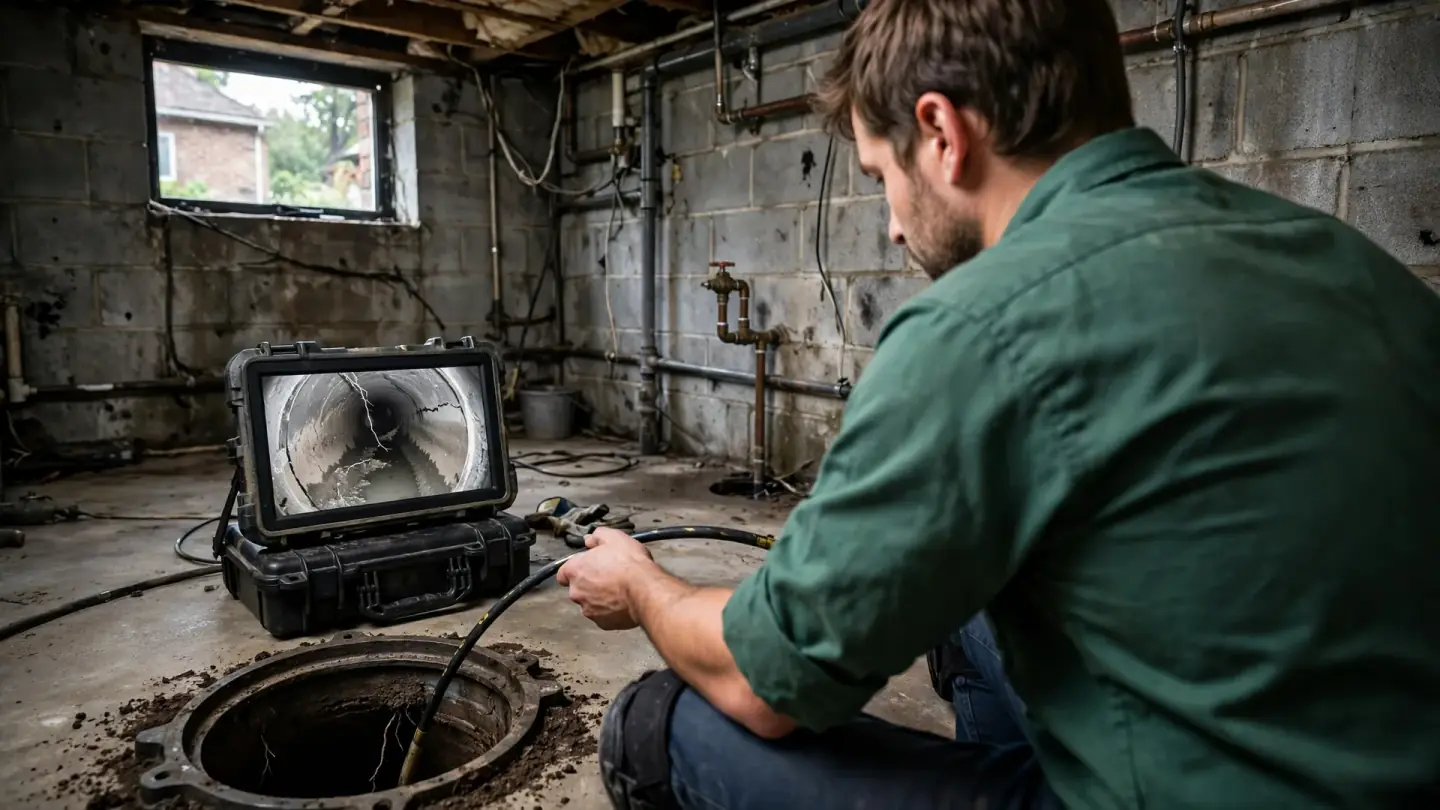
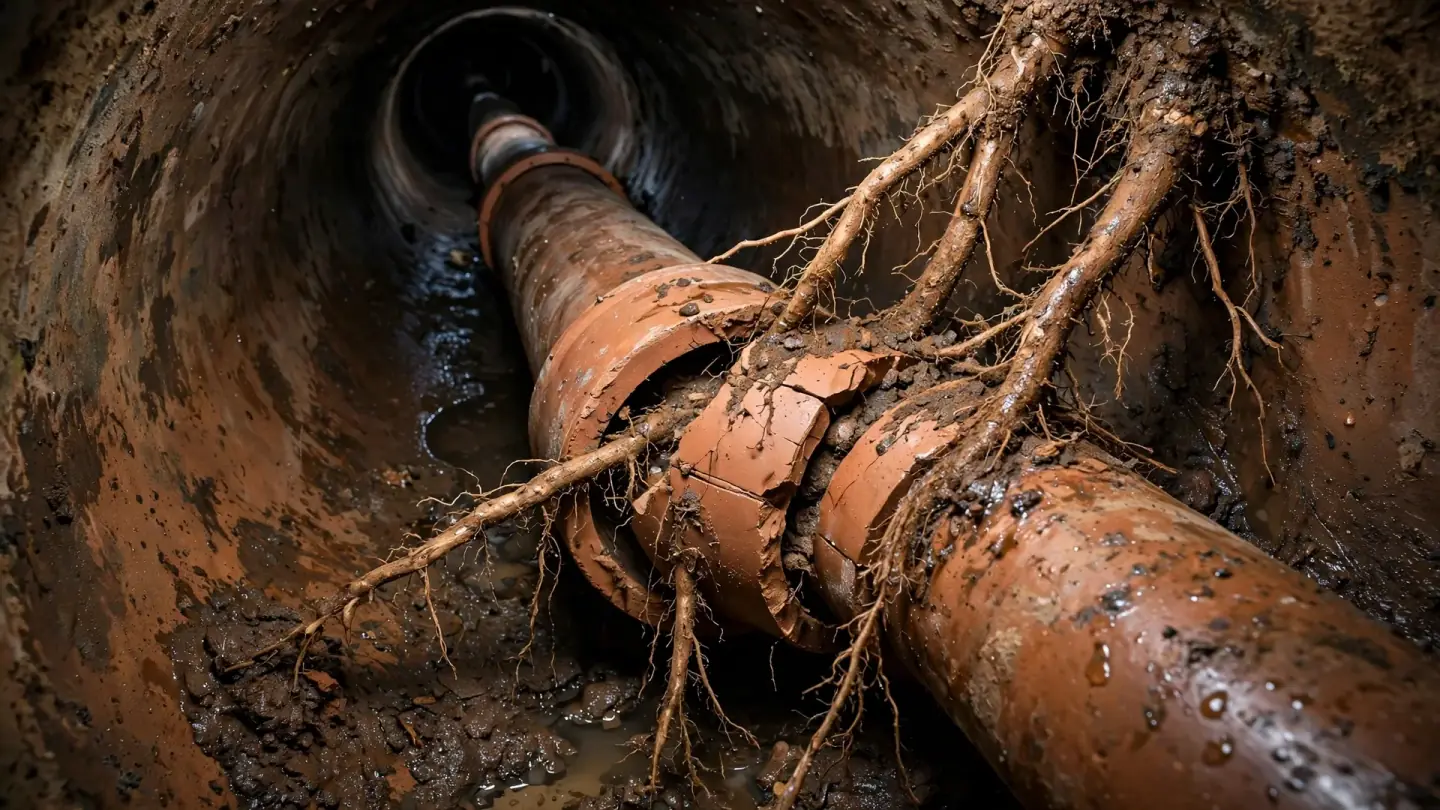
A camera run shows whether roots are entering at clay joints, whether there is a sag or break, and where it sits, so repair decisions rest on footage.
Dayton housing
Why do older Dayton sewer laterals block so suddenly?
Neighbourhoods such as South Park, with more than 700 structures mostly from the 1880s to the early 1900s [4], and the Oregon District, with buildings from the 1820s onward [5], were built long before plastic sewer pipe. Many laterals of that era are clay or cast iron. Roots find clay joints and grow into fine mats that catch paper and grease, and the line narrows for months before it finally closes. The City notes that root cleaning has no fixed schedule; it depends on the pipe and the trees and shrubs around it [1].
Later homes in neighbourhoods such as Belmont, many from the 1920s to the 1950s, can have similar materials. Whatever the age, the pattern after clearing is the same: if roots caused it, they will be back, and the camera footage tells you how quickly. Regular main sewer line cleaning or a full sewer line inspection can follow once the emergency is over.
Ohio's plumbing rule for sanitary drainage leaves the building sewer to local sewer authorities and the Ohio EPA, and backwater valves are installed if the Ohio EPA or the local sewer purveyor requires them [2]. If backups keep coming during storms, that is a question to raise with the contractor and the sewer provider, not a quick add-on in the middle of an emergency. A single toilet that overflows has its own toilet emergency page, and a line that clogs again soon after clearing is covered under urgent hydro jetting. Every option is on the drain services page.
FAQ
Main line backup questions for Dayton homeowners
Why is sewage coming up through my basement floor drain?
The floor drain is often the lowest opening on the main line, so when the line or lateral is blocked, water from upstairs fixtures rises there first. Stop all water use in the house, including the washer and dishwasher. Then call to have the main line opened, or to check whether the City main is blocked.
How can I tell if my main sewer line is clogged and not just one drain?
Several fixtures backing up together is the clearest sign of a main line blockage. Others include water rising at the floor drain when a toilet flushes and gurgling in more than one drain. A single slow sink with everything else working normally points to a branch clog instead.
Can I use the toilet if my main sewer line is backed up?
No. Every flush adds water to a line that cannot empty, and it will come up at the lowest point, often the basement. Stop using every toilet, sink, shower and appliance until the line is cleared. If anyone needs a bathroom, use a neighbour's or a public restroom for now.
Will the City of Dayton fix a blocked sewer line on my property?
Generally the property owner is responsible for the private sewer lateral, while the City maintains the public main. The City's sewer maintenance service can check whether the main is flowing. If it is, the blockage is on your side, and you will need a private contractor to clear it.
Is it safe to stay in the house with sewage in the basement?
Keep people and pets away from the affected area, and do not touch the water without gloves and boots. Ventilate if you can do it safely, and switch off electrical equipment only if you can reach the breaker without standing in water. A large spill may need a professional cleanup crew.
How does a contractor clear a backed-up main sewer line?
They usually open the line through a cleanout using a powered drain cable with a cutting head, then run water to confirm flow. Many recommend a camera inspection afterwards to see whether roots, a sag or a break caused the blockage. Jetting may follow if heavy buildup remains on the pipe walls.
Sources and citations
- [1]City of Dayton — Water: Sewer Maintenance FAQ
- [2]Ohio Admin. Code 4101:3-7-01 — Sanitary drainage
- [3]Montgomery County Environmental Services — Kettering
- [4]Wikipedia — South Park Historic District (Dayton, Ohio)
- [5]Wikipedia — Oregon Historic District
- [6]Greene County — Sanitary Engineering service areas