
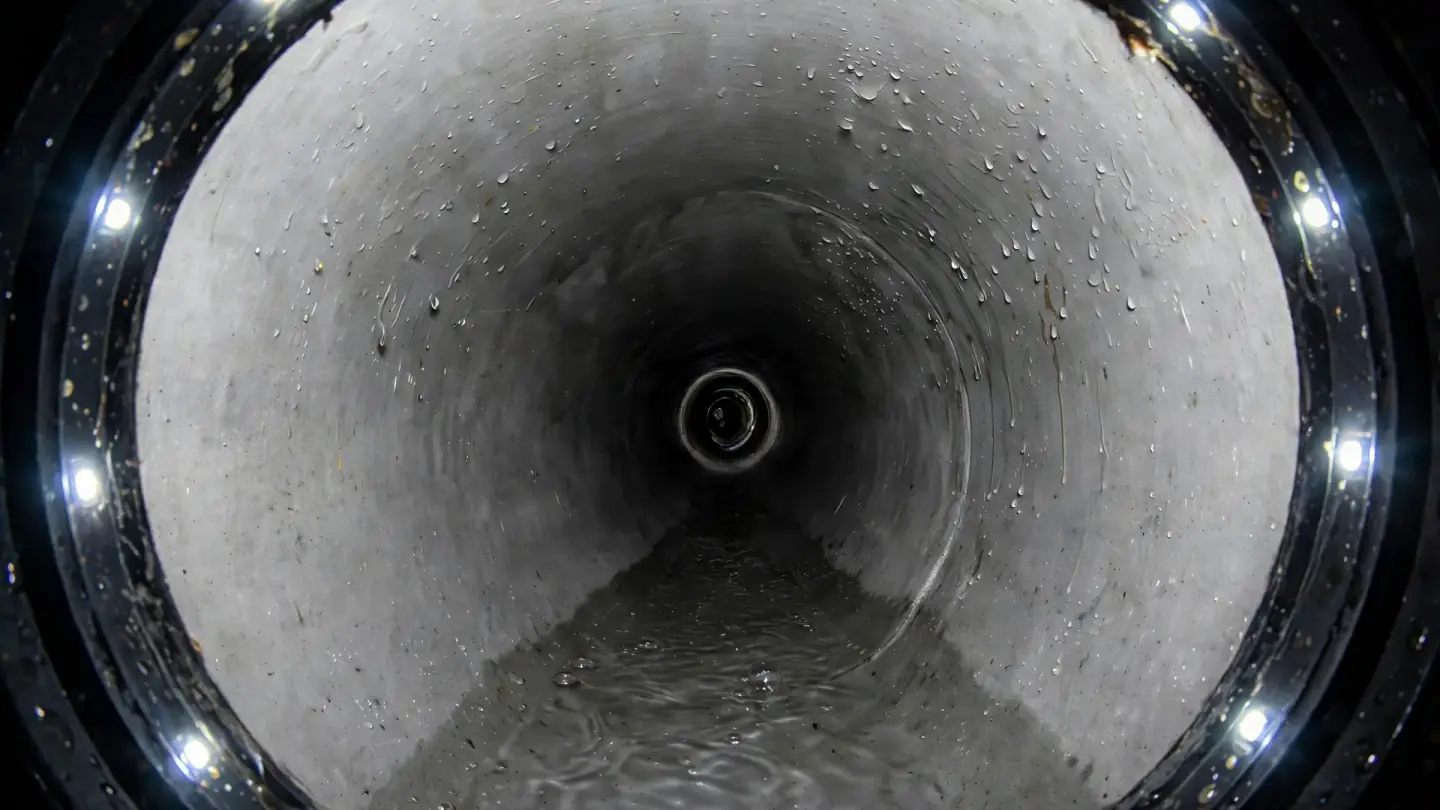
Key facts: Sump pit vs floor drain
- Dayton keeps storm and sanitary sewers separate; laterals are not supposed to connect to catch basins [1].
- The City lists sump pumps, foundation drains and downspouts tied into plumbing as heavy-rain basement flooding causes [1].
- A sump pump removes accumulated groundwater from a pit and discharges it away from the building [2].
- Basement sewer odour is usually a dry trap; the City suggests pouring water into trapped fixtures [1].
Short answer
The difference in one paragraph
A basement floor drain is a trapped opening that connects to the house drain and out through the lateral to the sanitary sewer. It takes spills, water-heater relief discharge and sometimes laundry. A sump pit is a basin that collects groundwater from around and under the foundation; a pump lifts that water out and discharges it away from the building [2]. In Dayton the sanitary and storm systems are separate, and the City lists sump pumps tied into plumbing among the causes of heavy-rain basement flooding [1].
So the question to ask when the floor is wet is simple: did the water come up from below (groundwater, sump) or back up through the drain (sanitary line)? The answer decides whether you need drain cleaning or pump and drainage work.
What you see / likely cause / what to do
Telling a sump problem from a floor drain problem
| What you see | Likely cause | What to do |
|---|---|---|
| Sump pit full to the rim, pump silent | Pump failed, float stuck or power lost | Check the breaker and float; this is pump work, not drain cleaning |
| Floor drain overflowing with grey water and paper | Blocked lateral or main | Stop water use; book floor drain cleaning or main line clearing |
| Floor drain rises every time the sump runs | Sump discharge piped into the floor drain or laundry tub | Reroute the discharge outdoors |
| Sewer smell near the floor drain, floor dry | Trap seal has dried out | Pour water into the drain [1] |
| Pump runs constantly in dry weather | Check valve failed or discharge line short-cycling | Have the check valve and discharge inspected |
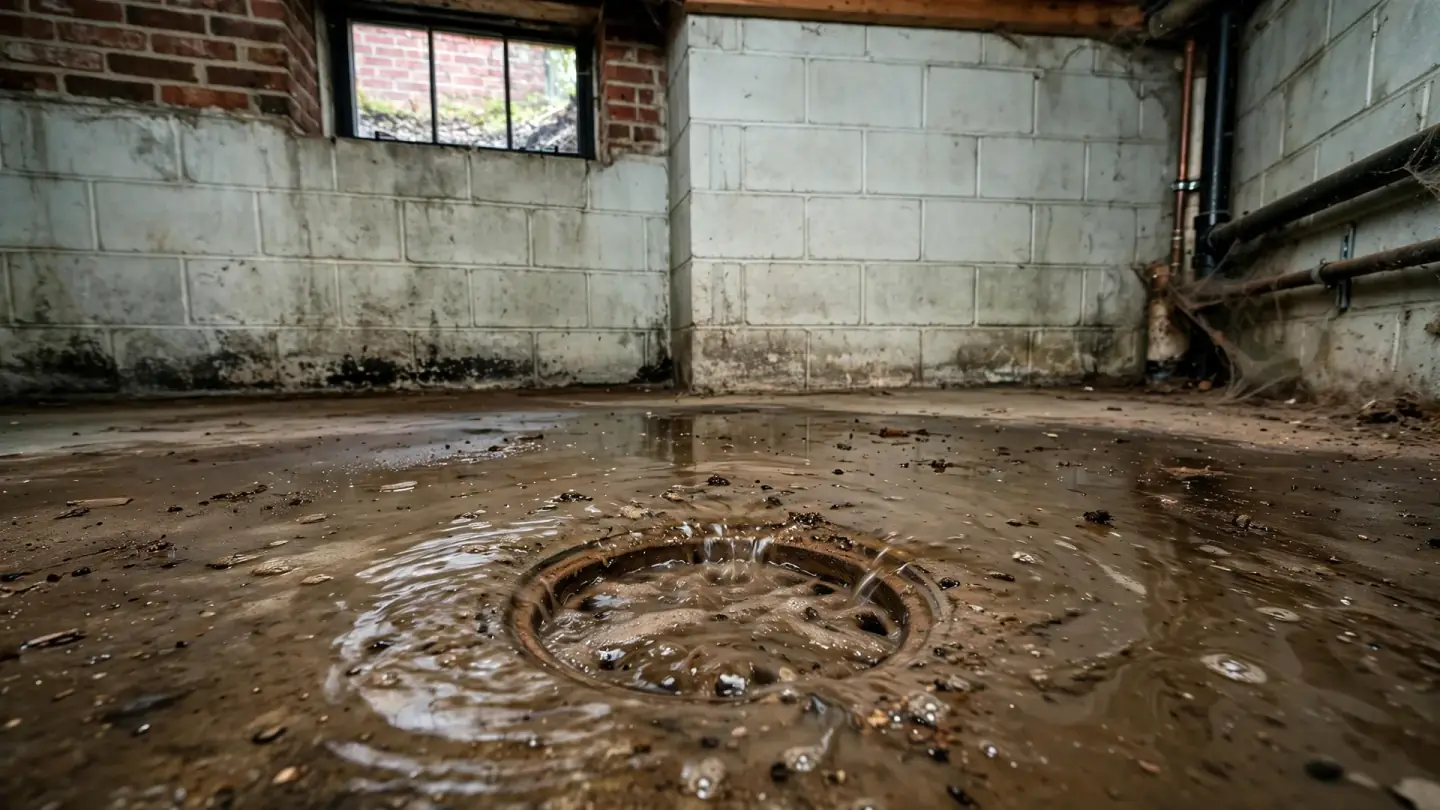
The trapped floor drain
Safe checks
Five-minute checks on both openings
- Lift the sump lid and look: is there water, and does the float move freely?
- Follow the sump discharge pipe. It should leave the house through the wall, not drop into a floor drain, tub or stack.
- Pour a bucket of water into the floor drain. It should go down steadily; if it backs up, the drain line is restricted.
- Sniff at the floor drain. A sewer smell on a dry floor usually means the trap needs water [1].
- Keep hands out of the sump pit while the pump is plugged in.
Deep dive
Where does a basement floor drain actually go?
The floor drain is part of the sanitary drainage system. Beneath the grate sits a trap that holds water to block sewer gas from entering the basement [3]. Below the trap the pipe joins the building drain, which leaves through the foundation as the house lateral. In Dayton, the property owner is responsible for that lateral all the way to the public main [1].
Because the floor drain is often the lowest opening in the house, it is where the sanitary system shows trouble first. A blockage in the lateral makes water from upstairs fixtures rise here. That is why a floor drain backing up with grey water is a drain-cleaning call, usually through the main sewer line cleaning route rather than the floor drain alone.
Deep dive
What is a sump pit for, and where should its water go?
A sump pit sits lower than the slab and collects groundwater from drain tile or gravel under and around the foundation. When the water rises, a float switches the pump on and it pushes water up a discharge pipe and out of the building [2]. The water is groundwater, not sewage, and it belongs outdoors or in a storm route, not in the sanitary line.
The problem appears when someone took a shortcut and ran the discharge hose into a floor drain or laundry tub. In dry weather nobody notices. In a storm the pump moves far more water than the house drain was meant to carry, and the City specifically names sump pumps tied into plumbing as a cause of basement flooding during heavy rain [1]. Our guide on a basement drain backing up after rain walks through how that looks.
Deep dive
Why a dry floor drain smells and a sump pit can too
Floor drains rarely get used, so the trap water evaporates and sewer gas comes through. The City's advice for basement sewer odour is to pour water into the trapped fixtures [1]. A sump pit can also smell if the pit is unsealed, stagnant water sits in it, or, worse, if it has been connected to something it should not be. A smell at the sump is worth mentioning to the contractor you're connected with.
How a contractor diagnoses it
How a contractor sorts sump from sewer
- 1
Trace both pipes
The contractor follows the sump discharge and the floor drain line to see where each one ends up.
- 2
Flow-test the floor drain
Water is run into the floor drain and nearby fixtures to check for a restriction downstream.
- 3
Run the camera
A drain camera inspection from the cleanout shows the floor drain branch and the lateral, including any unexpected pipes joining it. Ask to see where each branch enters on the footage.
- 4
Check the pump cycle
The sump pump is run while someone watches the floor drain and laundry tub for a matching rise.
- 5
Report which trade is needed
If the drain line is restricted, it is cleared. If the problem is the pump or its discharge, that is noted so the right work is booked.
Fix options
Matching the fix to the right opening
A restricted floor drain or lateral is cleaned with a cable or jet, then filmed so you know the bore is open. A dried trap gets water, and some owners add a trap primer or seal. A sump discharge running to the sanitary side is rerouted outside, away from the foundation. A failed pump, float or check valve is replaced. None of those overlap much, which is why getting the diagnosis right on the first visit matters.
The guides hub has more on basement water: rain-driven floor drain backups and gurgling that signals a restriction.
Prevention
Keeping both basement openings working
- Pour a bucket of water into the floor drain every month or two to keep the trap sealed.
- Test the sump pump each spring by filling the pit with water and watching it cycle.
- Keep the sump discharge outdoors and extended away from the foundation.
- Keep the floor drain grate clear of lint, debris and stored items.
- Book preventative drain maintenance if the floor drain has backed up before.
What to tell the contractor
What to say when calling about basement water
- Whether the water came from the floor drain, the sump pit or the walls.
- What the water looked and smelled like.
- Whether it happened during rain or in dry weather.
- Where your sump discharge pipe goes.
- Where the cleanout is and whether other drains in the house are slow.
FAQ
Sump pit and floor drain questions
Can a floor drain and a sump pit share the same pipe?
They should not share a pipe, because they serve different systems. The floor drain belongs to the sanitary sewer, while sump water is groundwater meant to discharge outdoors. The City of Dayton names sump pumps tied into household plumbing as one cause of basement flooding during heavy rain [1].
Why does my basement floor drain smell even though it never backs up?
The trap has most likely dried out, so sewer gas passes straight through. The City of Dayton suggests pouring water into trapped fixtures to restore the seal [1][3]. If the smell comes back within days, the trap may be damaged or the vent may be pulling it dry, which is worth having checked.
Is a full sump pit something a drain cleaner fixes?
Usually not, because a full pit with a silent pump points to the pump, its float switch or its power supply. That is pump work rather than drain cleaning [2]. A drain contractor can confirm the floor drain line is clear, but the pump itself is generally a separate repair.
Does every house in Dayton have a sump pit?
No, many older Dayton basements have only a floor drain. Sump pits are common where groundwater control or foundation drainage was planned during construction or added later. If you are unsure what you have, look for a round, often covered pit in a corner with a pump and discharge pipe.
My basement floor is wet. Which opening should I check first?
Start by noticing where the water is coming from and what it looks like. Grey or smelly water rising at the floor drain is a drain problem. A pit brimming with clear water while the pump stays silent is a sump problem. Water seeping at wall joints may be neither.
Should the floor drain have water sitting in it all the time?
Yes, a little standing water down in the trap is normal and is what blocks sewer gas [3]. What is not normal is water rising toward the grate, water staying near the top after use, or the drain overflowing when other fixtures run. Those are signs of a restriction further down the line.
Who do I call if both the sump pit and floor drain overflow together?
Call to describe both, because that combination can mean heavy groundwater and a sanitary line under strain at the same time. The contractor you are connected with can clear and film the drain line, and tell you whether the pump also needs separate attention. Stop using water in the house meanwhile.