Key facts: Gurgling drains
- The City of Dayton notes toilets can gurgle or splash while crews jet the sewer main, from vacuum or back-pressure [1].
- A trap's water seal blocks sewer gas; losing it lets odour into the house [2].
- Vents admit air to the drain system so water flows without siphoning traps [3].
- Basement sewer odour is usually a dry trap, fixed by pouring water into the fixture [1].
Short answer
Why are my drains making a gurgling noise?
Water flowing down a drain pushes air ahead of it and pulls air behind it. A working vent lets that air in and out without disturbing the traps [3]. When the vent is blocked or the pipe is partly clogged, air takes the only path left: through the water in a nearby trap. That bubbling is the gurgle. If it is ignored, the trap can be pulled dry, which lets sewer gas in, and the partial clog can become a backup.
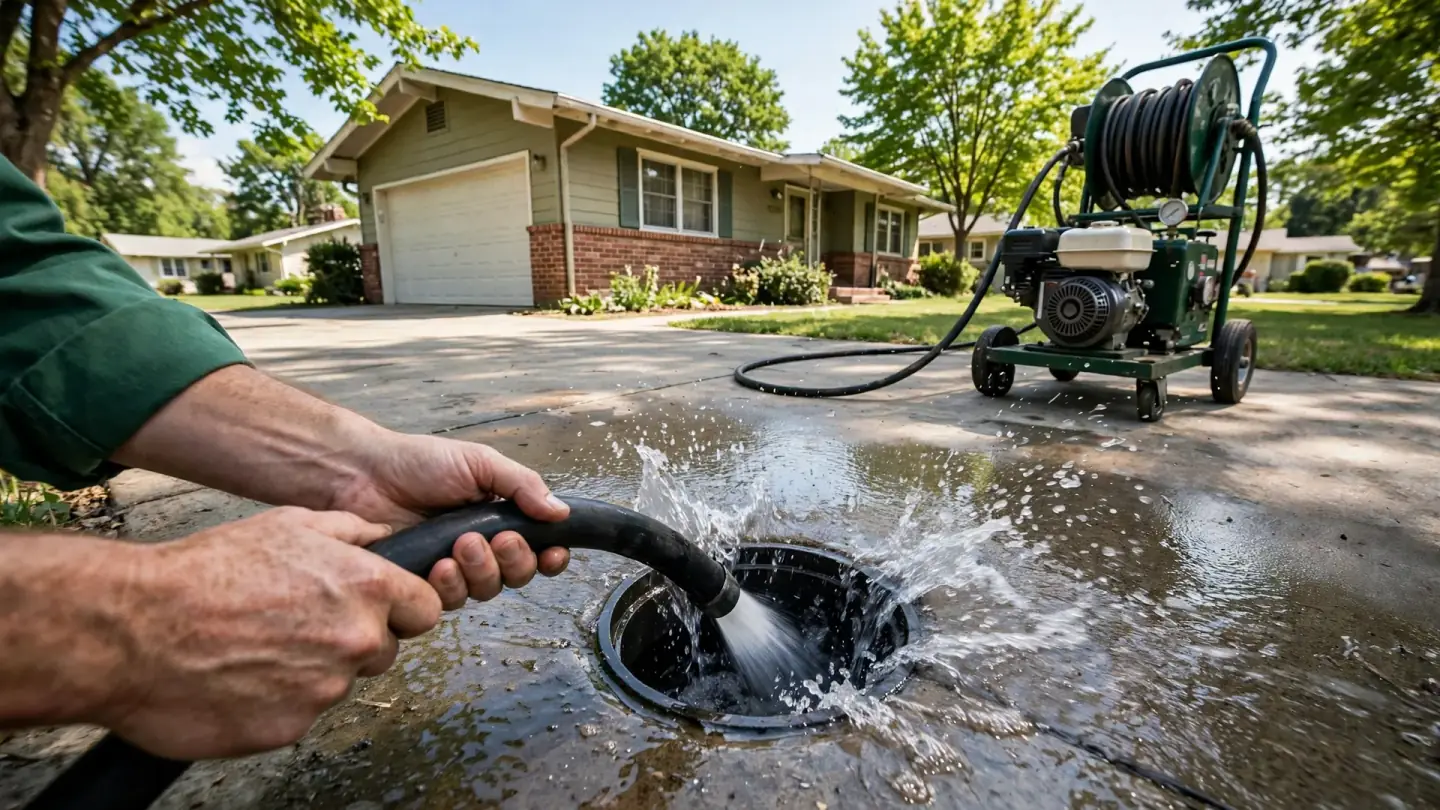
In Dayton, one cause is not in your house at all. The City notes that toilets may gurgle or splash water while crews jet the main, due to vacuum or back-pressure [1]. If the noise started the day a City truck was on your street and stopped afterwards, that was likely the reason.
What you see / likely cause / what to do
Matching the gurgle to its source
| What you see | Likely cause | What to do |
|---|---|---|
| Toilet gurgles when the tub or sink drains | Partial restriction downstream or a blocked vent | Have the branch cleared and the vent checked |
| All drains gurgle and run slow | Main line partly blocked | Book main line cleaning and a camera run |
| Toilet gurgles or splashes once, with a City truck nearby | Main sewer jetting [1] | Usually stops when jetting ends; call if it continues |
| Gurgling with sewer smell in a room | Trap siphoned dry by a venting fault | Refill the trap; have venting checked |
| Gurgling after a storm only | Lateral or main under extra load | See our basement rain backup guide |
| Kitchen sink gurgles when the dishwasher drains | Grease narrowing the kitchen branch | Kitchen drain cleaning |
Jetting the line
Safe checks
Listening checks that narrow it down
- Note which fixture gurgles and which fixture is draining when it happens.
- Run one fixture at a time: if only one drain causes gurgles elsewhere, the restriction is on its branch.
- Check for a City crew working the sewer main under the street if the gurgling began suddenly.
- Pour water into floor drains and rarely used fixtures; a smell that goes away means the trap was dry [1].
- Look at the roof vent from the ground for leaves, nests or winter frost; do not climb onto the roof.
- Avoid chemical openers. A gurgle is a warning, not a clog you can dissolve.
Cause 1
A partial clog forcing air through the traps
The most common reason for gurgling is a pipe that has narrowed but not closed. Grease in a kitchen branch, hair and soap in a bathroom branch, roots in a lateral: all of them leave a gap for water but squeeze the air out of the pipe. As water rushes through, it pulls air from the nearest trap.
If one area of the house gurgles, the restriction is on that branch and clogged drain repair on the branch usually clears it. If every drain gurgles, especially the basement floor drain, the building drain or lateral is the likely spot, and our toilet and tub backing up together guide describes what happens if it is left.
Cause 2
Can a blocked vent cause gurgling drains?
The plumbing vent runs up through the roof and lets air into the drain system [3]. Leaves, bird nests and winter frost can partly close it. Renovations sometimes add fixtures without proper venting, or connect a vent in a way that does not work. When venting fails, drains run slowly and traps gurgle and lose water, letting sewer gas into the room [2].
A vent fault often shows up as gurgling with no blockage found in the drain. The contractor you're connected with may run water while listening at fixtures, check the vent opening, and test whether the stack is clear.
Cause 3
When the City is jetting your street
Dayton's Division of Sewer Maintenance cleans the public mains. The City notes that while it jets a main, homes on that line may hear toilets gurgle or even see water splash from a toilet because of vacuum or back-pressure in the main [1]. This usually stops when the crew finishes. If the gurgling continues after they leave, the cause is more likely in your own line.
How a contractor diagnoses it
Tracking down a gurgle
- 1
Fixture-by-fixture test
Each fixture is run in turn while others are watched and listened to, mapping which branch triggers the noise.
- 2
Check vents
The vent stack is checked for blockage, and any recently added fixtures are checked for proper venting.
- 3
Open the partial blockage that pulls air
If a partial clog is found, a cable or hydro jetting opens the line.
- 4
Camera inspection
A drain camera inspection records the line from the cleanout, showing grease, roots, offsets or sags. Ask to see the footage and where each problem sits.
- 5
Retest
Fixtures are run together again to confirm the gurgling has stopped.
Fix options
Quieting the drains for good
A partial clog is cleared and the line filmed to show it is open. A blocked vent is cleared at the roof. An undersized or missing vent may need re-piping or an air admittance device where allowed. If gurgling comes with slow drainage throughout the house, main sewer line cleaning with camera footage is the usual first step.
The full guides list continues the topic: see toilet and tub filling together for what a gurgle can turn into, and slow sinks explained for the single-fixture version.
Prevention
Habits that keep drains quiet
- Keep grease out of kitchen drains [1].
- Use hair catchers in tubs and showers.
- Keep rarely used traps topped up with water.
- Have roof vents checked after storms or if trees overhang them.
- Schedule preventative drain maintenance if roots or grease were found before.
What to tell the contractor
Describing the gurgle on the phone
- Which fixtures gurgle and which fixture triggers it.
- Whether drains are also slow, and which ones.
- Whether there is a sewer smell anywhere.
- Whether the City has been working on the street recently.
- Any recent renovations or added fixtures.
FAQ
Gurgling drain questions
Does a gurgling toilet always mean there is a clog?
No, a gurgling toilet can come from a partial clog, a blocked vent or City crews jetting the sewer main nearby [1]. A short gurgle while the street is being cleaned is usually harmless. Gurgling that continues for days, especially with slow drains, most often points to a restriction in your own line.
Why does my toilet bubble every time the washing machine drains?
The washer releases a large volume of water quickly, and that flow pulls air through the nearest trap, often the toilet. It usually means the line downstream is partly blocked or the vent is not supplying enough air. Describe the pattern on the call; it helps the contractor narrow down where the restriction sits.
Can gurgling drains let sewer gas into my house?
Yes, gurgling can siphon water out of a trap, and a trap without water no longer blocks sewer gas [2]. If you smell sewage after a gurgle, run water into that fixture to refill the seal. Then have the cause checked, because the trap will keep emptying until the restriction or vent problem is fixed.
How long does gurgling last when the City is jetting the sewer main?
It normally stops once the crew finishes your section of the main, often within the same visit. The City notes that jetting can cause gurgling or water movement in household fixtures [1]. If the noise continues after the crew has left, the more likely source is your own drain or vent.
Should I worry about a drain that gurgles just once?
One gurgle after a large volume of water drains is common and usually nothing to worry about. Repeated gurgling, drains that slow down, or a sewer odor are the signs that matter. Those suggest a restriction is building, and having the line checked early is easier than dealing with a backup later.
Why do my bathroom sink and tub gurgle when I flush?
When a flush makes a nearby sink or tub gurgle, the fixtures share a branch that is not moving air or water freely. A partial blockage downstream or a vent problem is the usual reason [3]. If water also rises in the tub, treat it as a shared-line blockage rather than a noise.
Will a chemical drain cleaner stop the gurgling?
Usually not, because gurgling is about airflow and restrictions further down the line than chemicals reach effectively. A thin film may clear briefly, but buildup, roots or a vent issue remain. Chemicals left in the pipe also make the job hazardous for whoever opens the drain next, so mechanical cleaning is the safer route.