Key facts: Belmont
- Belmont's commercial district along Watervliet Avenue and Smithville Road was booming by the mid-1920s [1].
- Dayton the private lateral between the house and the public sewer is the owner's to maintain [2].
- Dayton says basement flooding in heavy rain can stem from an overtaxed main or from downspouts, foundation drains or sump pumps [2].
- Dayton softens its water with lime at the Ottawa and Miami treatment plants [3].
The houses
Belmont homes: interwar basements and neighbourhood shops
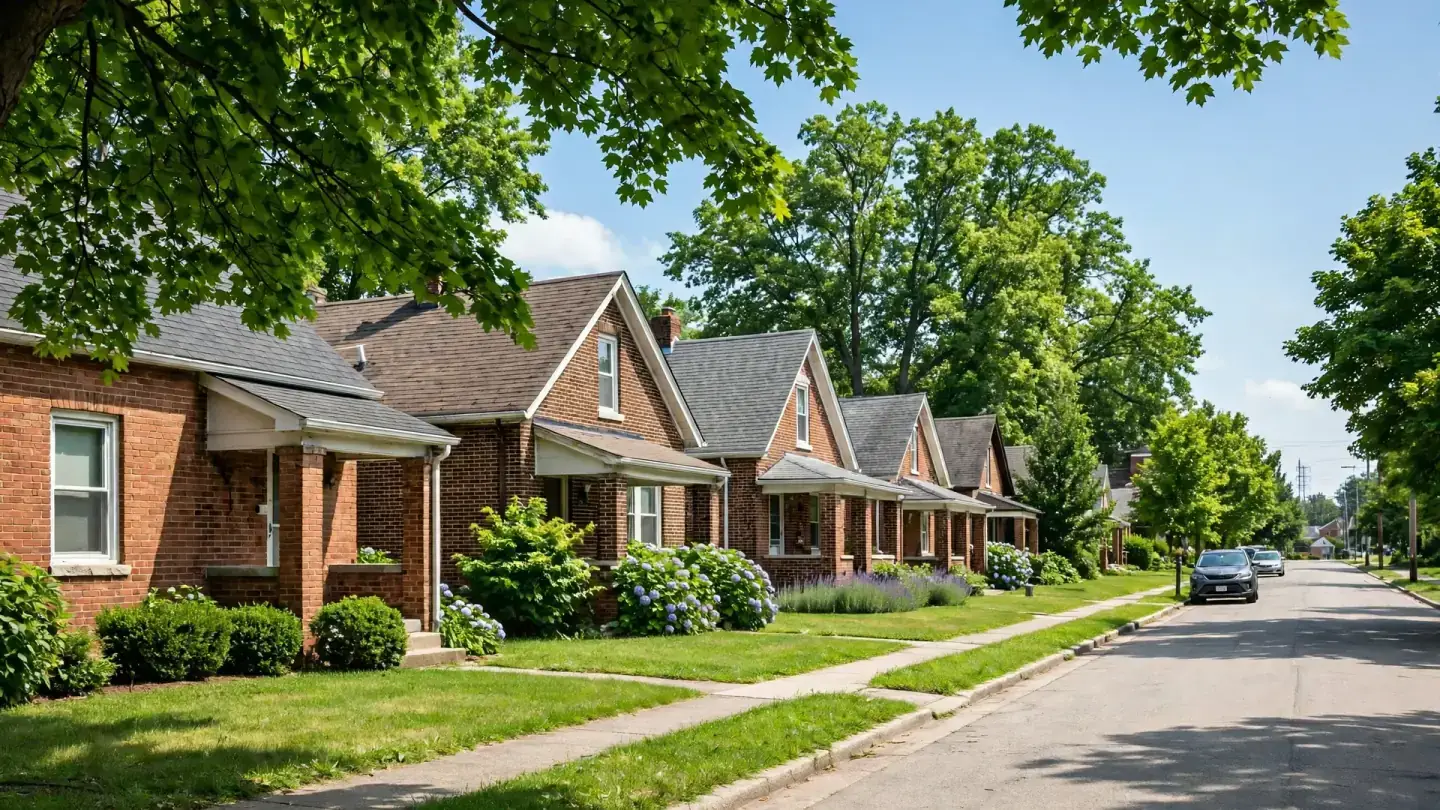
Belmont is on Dayton's east side, centred on the commercial strip where Watervliet Avenue meets Smithville Road. Local history writers place its boom in the mid-1920s, and county records date at least one of its commercial buildings to 1925 [1]. Residential streets spread out from that corner, and much of the housing reflects the interwar years and the decades that followed: bungalows, Cape Cods and, on later streets, small ranches.
Compared with the Victorian districts closer to downtown, Belmont houses are simpler and more uniform. Most have a single main stack, a kitchen at the back, one bathroom upstairs or on the main floor, and a full basement with a poured floor. The basement usually holds the furnace, the water heater, the laundry and at least one floor drain. Many also have a laundry tub, and some have a basement toilet or shower added later.
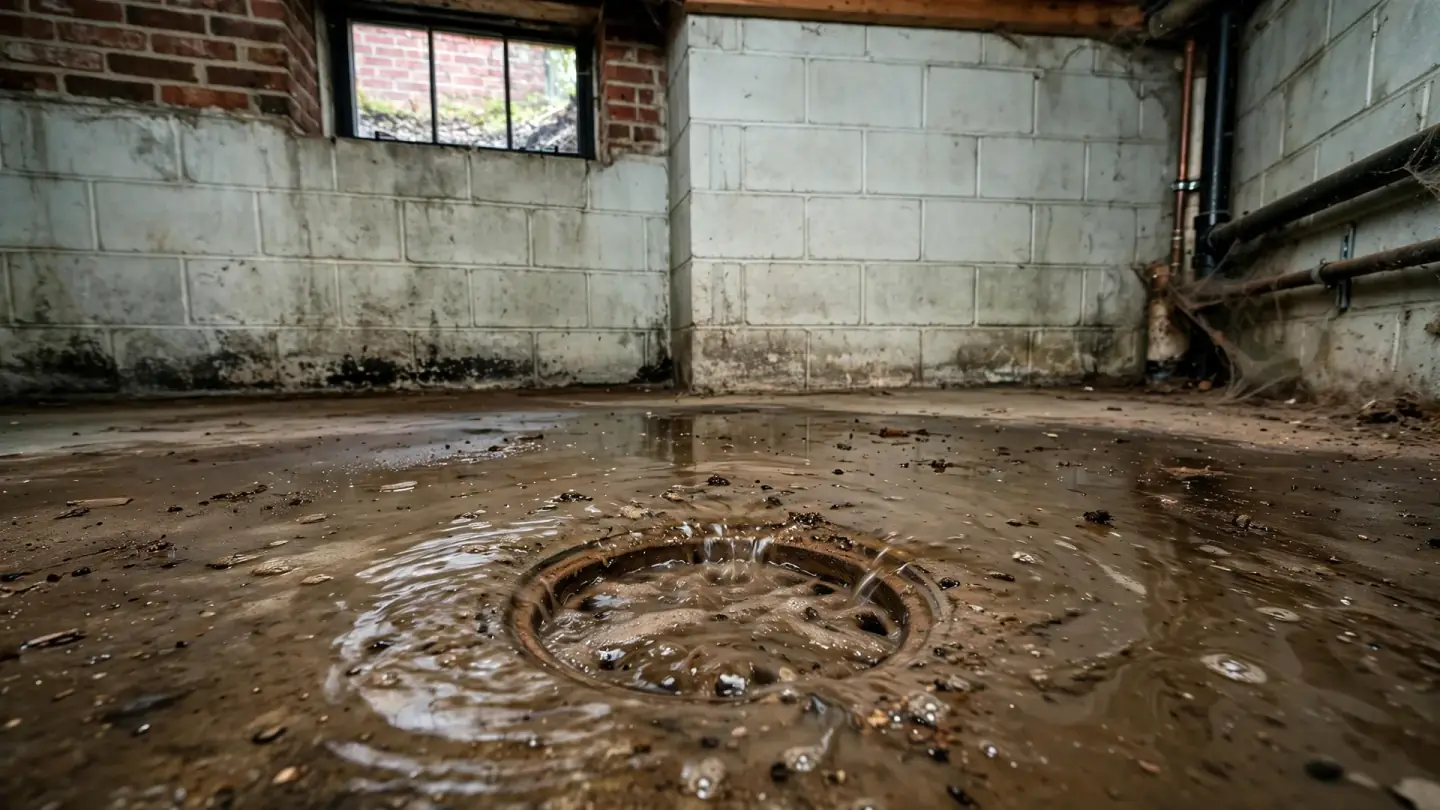
That layout shapes drain problems. Everything in the house drains down to the basement and out through one line to the street. The basement floor drain is the lowest opening, so when the main line slows or the public sewer is overloaded, water appears there first. For many Belmont owners, a wet basement floor is the first warning that something downstream is wrong.
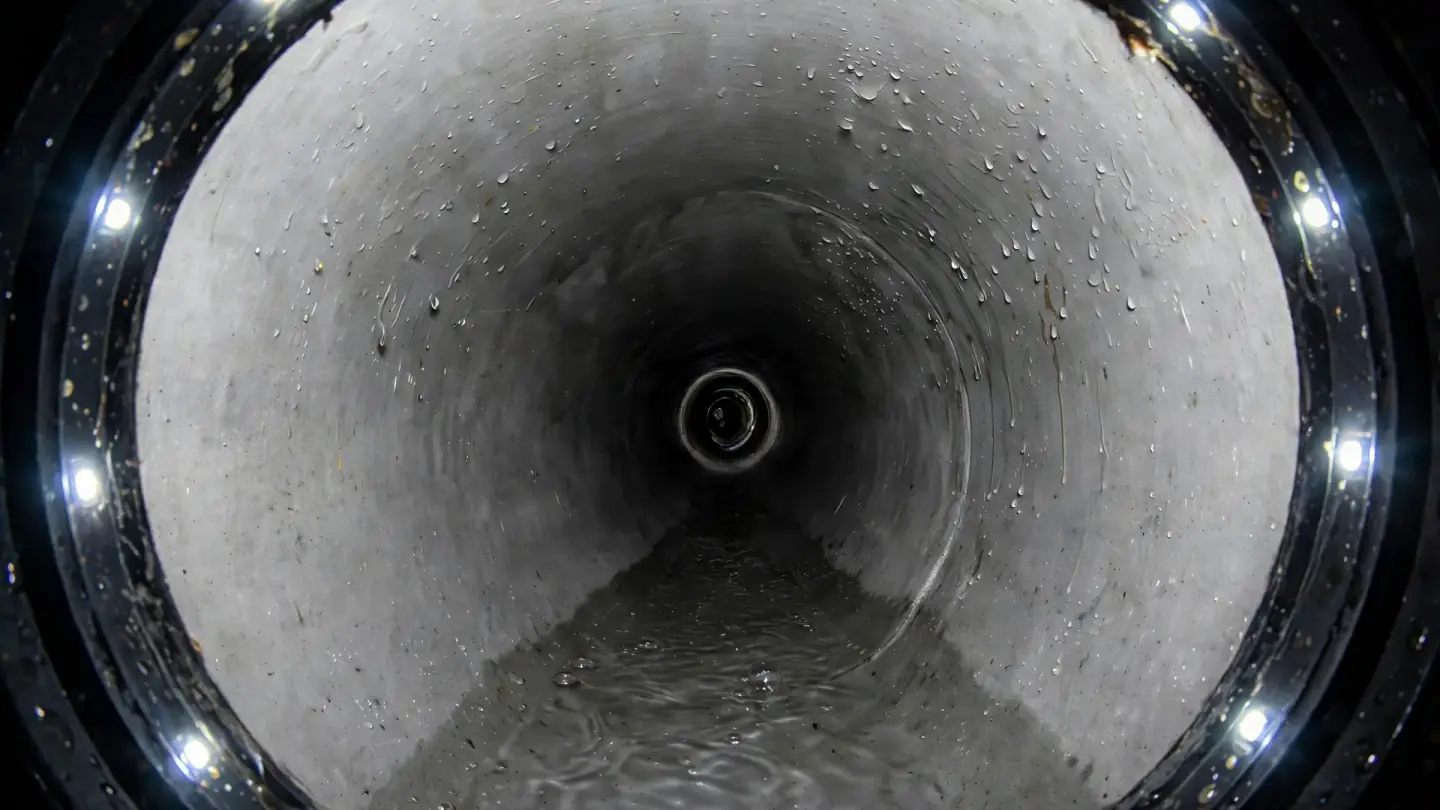
The laterals under these houses were laid during the same building period. Depending on when a street was developed and whether the line has been repaired since, a contractor may find clay, cast iron, or a replacement section of plastic. A camera run is the only reliable way to know.
Common calls
What drain contractors see most in Belmont
Floor drain overflows
Water rising through the basement floor drain after laundry or a storm, usually pointing to a slow main line rather than the drain itself.
Laundry lint and soap
Washers emptying into a laundry tub or standpipe send lint and detergent into the basement line, where it builds a soft, stubborn clog.
Root intrusion at old joints
Clay sections under front yards and parkways let roots in. The line runs slow for weeks before it backs up.
Basement bathroom add-ons
Toilets and showers added below the original drain level sometimes rely on ejector pumps or tight fittings that clog easily.
Basement drains
Why does the Belmont basement floor drain back up first?
A basement floor drain is a simple fitting: a grate, a trap below it that holds water, and a pipe that joins the main drain. It catches water from a leaking water heater, a washer overflow or condensation from the furnace. In a Belmont house it is also the canary for the whole system, because it is the lowest point.
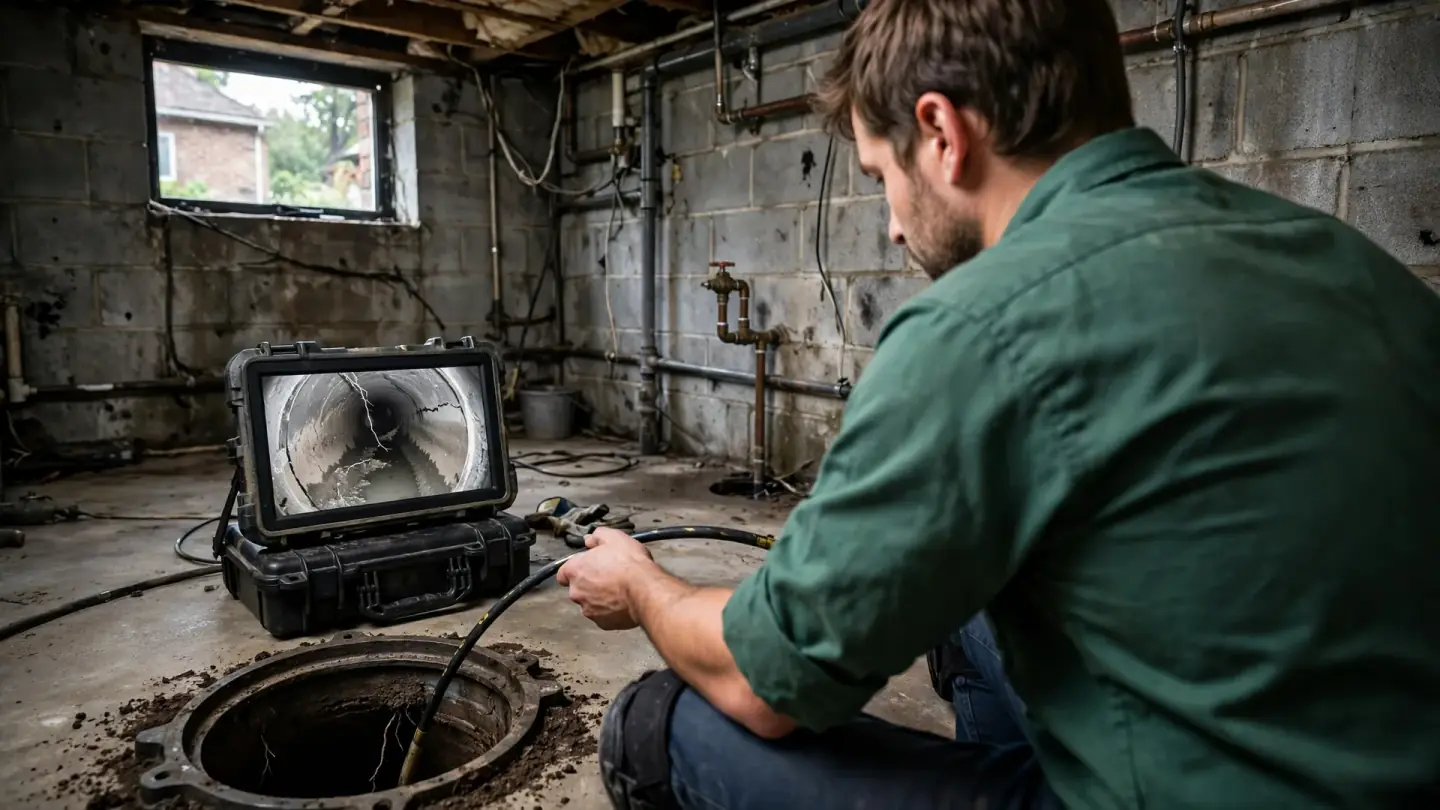
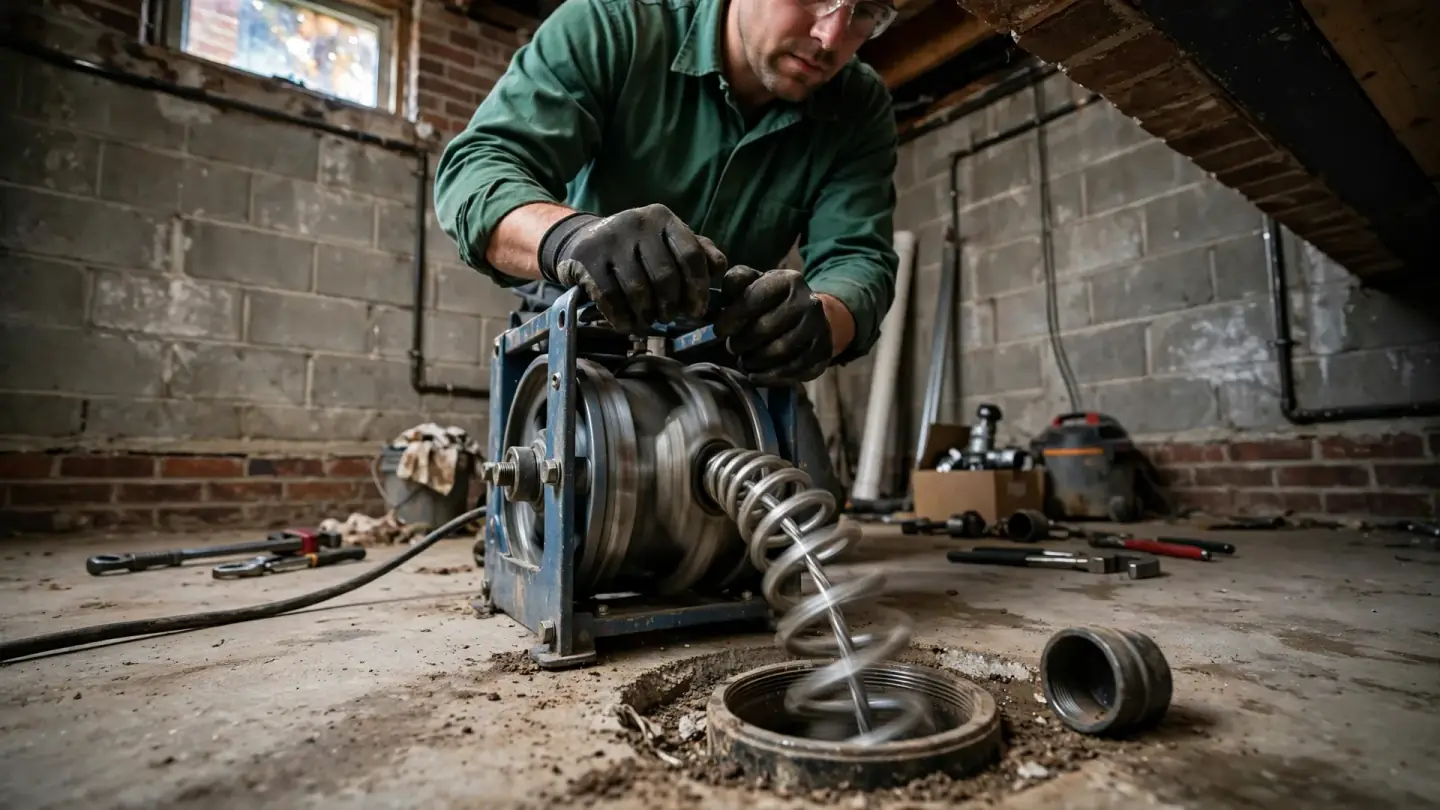
If the floor drain gurgles when the upstairs toilet flushes, or water seeps up from it during a load of laundry, the problem is almost always further along the main. Clearing the floor drain alone does not fix that. A contractor will usually start from a cleanout on the main and run a cable or jetter toward the street. Floor drain cleaning explains the approach.
Odour is the other common floor drain complaint. The City of Dayton notes that a sewer smell in a basement is usually caused by a dry trap, and recommends pouring water into floor drains and other trapped fixtures [2]. In basements where the floor drain rarely gets water, that trap can dry out in a few weeks, especially in winter when the furnace runs.
Some Belmont basements have both a floor drain and a sump pit. They do different jobs: the floor drain connects to the sanitary sewer, while a sump collects groundwater and pumps it out. Mixing those two systems causes trouble. The sump pit vs floor drain guide explains the difference.
Storms
What causes Belmont basements to flood in heavy rain?
Dayton runs separate storm and sanitary systems. Rainwater is meant to go to catch basins and then to streams and rivers; household waste goes through laterals to the sanitary sewer and on to the treatment plant. Laterals are not supposed to connect to catch basins, and the City disconnects illegal connections when it finds them [2].
In practice, older houses sometimes send rainwater where it should not go. Downspouts once tied into the sewer, foundation drains that connect to the floor drain, or sump pumps that discharge into a laundry tub all add storm water to the sanitary system. The City lists those internal sources, along with an overtaxed or blocked main, as possible causes of basement flooding during heavy rain, and its Sewer Maintenance staff can help sort out which is involved [2].
If your Belmont basement takes water during storms, note what it looks like and when it starts. Clear water seeping at the wall joint is a groundwater issue. Murky water rising from the floor drain during a downpour, especially if neighbours have the same problem, can point to the public main. Water that only appears when you run the washer points to your own line. The basement drain backing up after rain guide covers the checks.
Ohio's plumbing rule says backwater valves are installed where the Ohio EPA or the local sewer purveyor requires them [6]. If storm backups are a repeat problem, ask the contractor you're connected with whether a backwater valve is appropriate for your house and what the City requires.
Water and scale
Soap, scale and Belmont laundry lines
The Great Miami River basin's ground water is very hard, rich in calcium and magnesium [4]. Dayton treats its supply with lime softening before it reaches homes [3], which reduces scale considerably. What softening cannot do is stop soap residue, fabric softener and lint from building up in a laundry line.
Belmont laundry setups are often decades old: a washer draining into a concrete or plastic laundry tub, which drains to the floor drain or main through a short line. Lint passes through the tub strainer and settles in the trap and horizontal run, and detergent binds it into a mat. Over time the tub drains slowly, then overflows.
A lint trap on the washer discharge hose is the simplest prevention. Running hot water through the laundry tub now and then helps, as does avoiding very heavy detergent doses. If the tub still drains slowly, the contractor can clear the line and check whether the problem is in the branch or the main.
Kitchen drains in these houses face the same story with grease instead of lint. The City asks residents to put grease in the trash rather than the sink, because it hardens in the main [2]. Kitchen lines in older houses, often galvanised or cast iron, catch grease quickly. Kitchen drain cleaning covers the approach.
Winter
Cold snaps and Belmont drain lines
Dayton's January lows average around 22°F at the airport, and the city sees roughly two feet of snow in a typical season [5]. Most Belmont drains run inside heated basements and are safe from freezing. The weak points are drains on exterior walls, lines under unheated rear porches or additions, and outdoor laundry or garage drains.
A frozen drain line drains slowly at first and then not at all. Do not pour boiling water into PVC lines, and never use chemical cleaners on a frozen drain. Warm the space gently and, if the drain stays blocked, have it checked. See frozen drain lines in winter for safe steps.
Older owners and rentals
Long-held Belmont houses and rental basements
Many Belmont houses have changed hands only a few times, and others have become rentals. Either way, the drain history is often unknown. A basement toilet installed decades ago, a laundry tub plumbed by a previous owner, or a floor drain that was capped and forgotten can all surprise the next person who needs a line cleared.
For landlords, the useful habit is a short record for each house: where the cleanout is, when the main was last cleared and what the camera showed. Tenants should know where the floor drain is and not to cover it with stored boxes or rugs, because it is the first place a backup will show. A preventative drain maintenance plan suits houses with a known root problem, so the line is cleared before it backs up rather than after.
For buyers, a camera run of the lateral before closing is worth asking about. A typical home inspection does not look inside the sewer line, and in a house built during Belmont's interwar boom [1] that line may be close to a century old.
Permits and who to call
Who handles what in Belmont
Belmont is part of the City of Dayton.
- Your lateral, from house to main, is the owner's responsibility [2].
- The City's Division of Sewer Maintenance looks after the public main [2].
- A broken lateral is repaired by a licensed plumber who pulls a permit [2].
- Street-side repairs are done by City crews and the property owner is responsible for them, through the plumber [2].
- The City will not locate your lateral; Plumbing Inspection may have a record [2].
- Call Ohio811 two working days before digging [2].
Planning the visit
Preparing your Belmont basement for a drain visit
Most Belmont houses have a driveway or easy street parking, which makes getting equipment in simple. The main access point is usually the basement, reached by interior stairs or an outside entrance. Clear a path from the door to the cleanout and the floor drain.
The main cleanout in a house of this era is typically a cast-iron fitting with a plug near the front basement wall, sometimes low on the stack. If yours is behind boxes, shelves or a finished wall, clear it before the visit. If you cannot find one, tell the contractor; they may come in through a toilet or vent instead.
If water is standing on the floor, keep children and pets away and stop using fixtures. Do not pour chemicals into a backed-up drain; they make the job harder and more hazardous for whoever opens the line.
Have a few details ready for the call: which fixtures are slow, whether the floor drain is taking water, whether it happens in rain, and whether the problem has occurred before. Ask for camera footage of the main line once it is clear, so you know whether you are dealing with a one-time clog or a line that needs attention.
Belmont is not the only part of the region with basement-first drain trouble. The Victorian houses of South Park face older clay laterals and heavier root growth, while postwar Kettering homes tend to show problems at a lower-level laundry. The list of covered areas shows every community this line serves, and the after-rain basement guide covers what to do while you wait.
FAQ
Questions Belmont homeowners ask about basement drains
Why does my Belmont floor drain overflow every time the washer pumps out?
A partial blockage downstream is usually the reason. The washer releases a big surge, and if roots, lint or grease narrow the line toward the street, the water rises at the lowest opening, which in a Belmont basement is the floor drain. Clearing the main line and checking it with a camera shows how much of the pipe is restricted.
When the whole street floods in a storm, is that Belmont problem the City's or mine?
If neighbours back up at the same moment during heavy rain, the public main may be overtaxed, which the City handles [2]. Backups that happen in dry weather when you run water point to your own lateral, which the owner is responsible for [2]. Dayton's Sewer Maintenance staff can help sort out which side is involved.
How do I get rid of a sewer smell coming from my Belmont basement?
Start by pouring a bucket of water into the floor drain, because a dried-out trap is the usual cause [2]. Basement drains in older Belmont houses can sit unused for months. If the odour returns quickly after refilling, a cracked pipe, loose cleanout plug or failed seal may be letting sewer gas through, and a contractor can check it.
Is it okay to run my Belmont sump discharge into the basement floor drain?
It is best avoided. Dayton names sump pumps, downspouts and foundation drains among the household sources that can add to basement flooding in storms [2]. Pumping groundwater into the sanitary line adds load at the worst moment. Ask the contractor where your discharge ends up and check what the City allows before rerouting it.
Do I need a backwater valve in my 1920s Belmont house?
Possibly, if storms repeatedly push sewage up through your floor drain. Ohio's plumbing rule calls for backwater valves where Ohio EPA or the local sewer purveyor requires them [6]. A contractor can camera the line first to rule out a blockage, then talk through whether a valve fits your basement layout and the City's requirements.
Will the City of Dayton find my Belmont sewer lateral before a contractor digs?
No, the City does not locate private laterals [2]. Plumbing Inspection may hold a record of the original connection, and a contractor can trace the line with a camera and locator. Before any excavation, Ohio811 must be called two working days ahead so buried utilities are marked [2].
Can lint from an old Belmont laundry tub really block the main line?
Yes, lint mixed with soap scum builds up surprisingly fast in older cast-iron and clay pipe. Laundry tubs in Belmont basements often drain straight into the floor drain or a short branch, so fibres reach the main quickly. A lint trap on the washer hose and periodic floor drain cleaning keep the problem in check.