Key facts: Emergency Commercial Drain Cleaning
- Dayton asks restaurants to install and maintain grease traps because grease poured down drains solidifies and blocks sewer mains [1].
- The homeowner, not the City, maintains the service pipe that carries waste out to the public sewer; the City's Division of Sewer Maintenance handles the main [1].
- Dayton's sanitary and storm sewers are separate; illegal connections from laterals to catch basins are disconnected [1].
- Ohio applies Chapter 7 of the 2021 International Plumbing Code to sanitary drainage, with backwater valves where the Ohio EPA or local sewer purveyor requires them [2].
Commercial warning signs
Early signs a business drain system is in trouble
Floor drains slow during peak hours
Kitchen floor drains that hold water while the dish machine and sinks are all running are close to capacity.
Grease trap odour in the dining room
A strong rancid smell often means the trap is overdue for pumping or grease is escaping into the line beyond it.
Restroom toilets slow on busy nights
Customer restrooms that struggle under heavy use but recover overnight point to a narrowing line rather than a single clog.
Water rising in a basement or lower unit
In mixed-use buildings, the lowest tenant usually sees a main line backup first.
Grease in business lines
Why do restaurant drains fail during the busiest service?
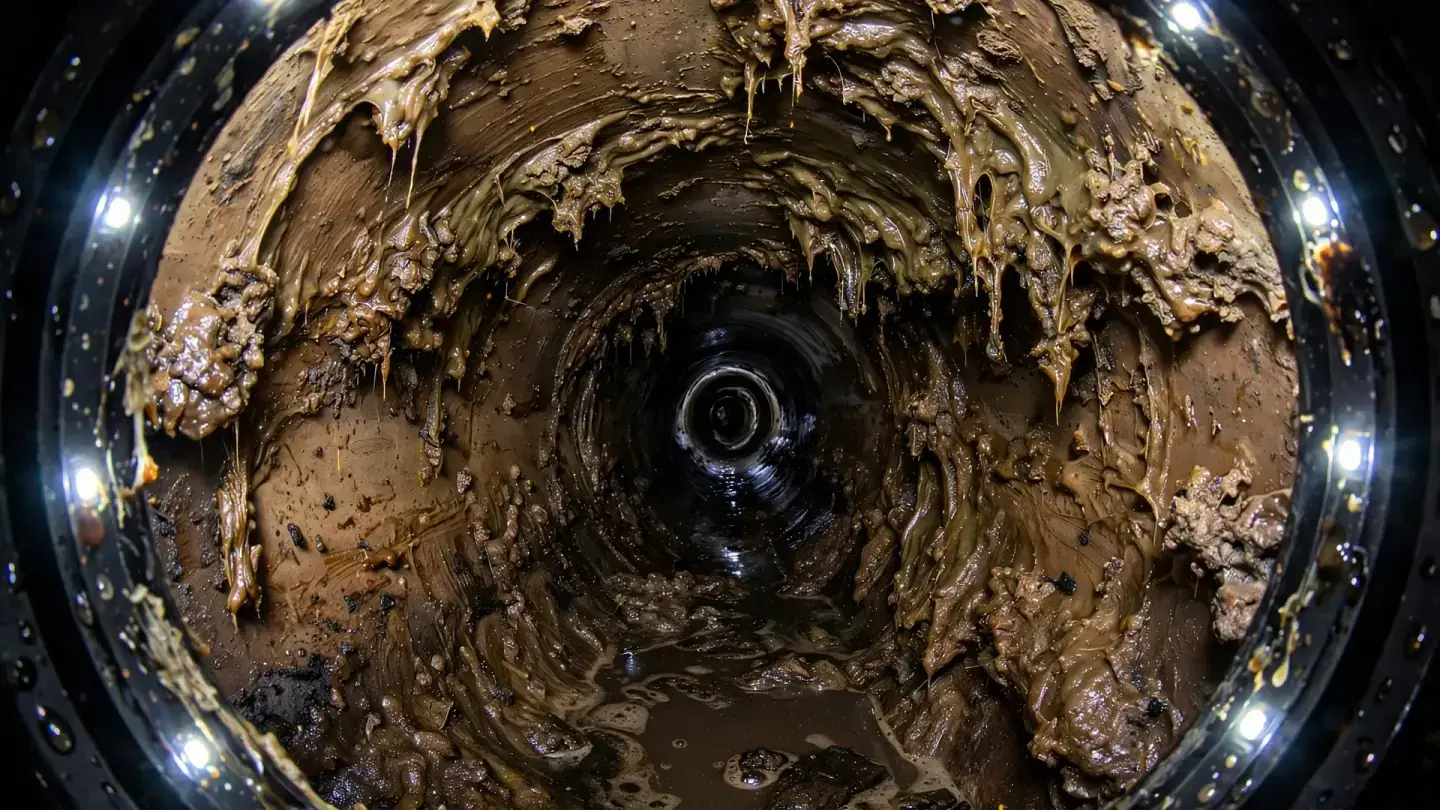
Commercial kitchens send far more fat, oil and starch down the drain than any house. Warm dish water carries it past the sink, it cools and sets in the line, and it catches food solids on the way. The City of Dayton states plainly that grease solidifies and blocks sewer mains, and that restaurants should install and maintain grease traps [1]. A trap that is overdue for pumping lets grease pass straight through to the building drain, which then narrows until a busy service closes it.
Other businesses have their own patterns. Salons and barbers deal with hair and product residue in shampoo sinks. Laundromats and launderettes push large volumes of lint. Offices and retail units with shared restrooms see paper and wipes. Mixed-use buildings in older parts of Dayton often have long horizontal runs and old cast iron or clay laterals, so a problem in one unit can affect the others.
Water hardness plays a part as well. Groundwater in the Great and Little Miami basins is very hard [3], and although Dayton lime-softens its supply [4], dish machines and hot-water lines still leave scale that grease can bond to. Routine commercial drain cleaning and preventative drain maintenance are the long-term answer; this page is about getting through the day it fails.
Who to call
Which drain problem belongs to which service provider
| Problem | Usual first call | Notes |
|---|---|---|
| Grease trap full or overflowing | Grease trap pumping service | Line beyond the trap may also need clearing afterward |
| Kitchen line or floor drain blocked beyond the trap | Drain-cleaning contractor | Cable to open flow, jetting later for grease coating |
| Restroom toilets or urinals blocked | Drain-cleaning contractor | Often a branch line; check whether other restrooms are slow |
| Whole building backing up into lowest level | Drain-cleaning contractor | Lateral to the main is the owner's responsibility in Dayton |
| Several buildings on the block backing up in rain | City of Dayton Sewer Maintenance | The main is cleaned and repaired by the City |
| Clear groundwater seeping in, not sewage | Waterproofing or sump specialist | Not a drain blockage; see the sump pit guide |
The commercial visit
How an emergency business call usually runs
- 1
Brief the contractor on the phone
Say what type of business, which drains are affected, whether there is a grease trap or interceptor and when it was last pumped, and whether you are open.
- 2
Agree access and timing
The contractor you're connected with tells you what they can do and when, and you agree how to work around service and customers.
- 3
Open the line
A cable machine sized to commercial lines restores flow from the best cleanout, often outside the kitchen to keep work away from food areas.
- 4
Find the cause
A camera run or a look at the trap shows whether grease, a failed fitting, roots or a broken pipe caused the backup.
- 5
Plan to stay open
Findings can lead to jetting, a pumping schedule, staff guidance on grease, or repair work arranged outside trading hours.
Responsibility
Is the blockage in our building drain or the public sewer main?
Business owners in Dayton carry the same responsibility as householders: the lateral from the building to the sewer main is theirs, and the main itself is the City's [1]. If a backup hits several businesses on the block during a storm, report it to Dayton Sewer Maintenance before arranging private clearing. If only your building is affected, the problem is on your side. Kettering, Huber Heights and Beavercreek businesses deal with their own city or county sewer provider for the public side.
Landlords of multi-unit buildings should make sure tenants know where the cleanouts are and that grease and wipes do not go down the drains. The floor drain cleaning and sump pit versus floor drain guide help sort out water that is groundwater from water that is a backup.
For a home rather than a business, the general emergency drain cleaning triage page is a better starting point. A blocked home kitchen line is covered on the residential kitchen emergency page, and the services directory lists every other option.
FAQ
Business drain emergency questions
What should restaurant staff do when the kitchen floor drain backs up during service?
Stop running the dish machine and prep sinks that feed that drain first. Rope off the wet area, move food and clean equipment away from the water, and follow your food-safety plan for anything it touched. Then call a commercial drain contractor and tell them which fixtures are on the affected line.
Do we have to close the restaurant if a drain backs up?
Not always, but any backup that reaches food areas or leaves the business without working handwashing or toilets is serious. Your local health department and food-safety plan set the rules, so check with them. Many businesses limit service to unaffected areas while the contractor clears the line, where that is safe.
Is a grease trap backup the same as a blocked commercial drain?
No. A grease interceptor that is full needs pumping by a grease hauler, while a blocked drain line needs cleaning by a drain contractor. The symptoms can look alike, with slow sinks and strong odours. Tell the contractor when the trap was last serviced, as that helps them decide which problem you have.
Who fixes a blocked drain in a rented shop or office unit?
It depends on your lease, which usually says whether the tenant or landlord handles drain lines. Report the backup to the property manager straight away in writing. In an emergency, the manager may approve a contractor by phone. Keep notes of what happened and when, as the lease may require them.
Can a commercial drain contractor work after we close for the night?
Many commercial jobs are scheduled after closing so the line can be shut down safely, but availability varies by contractor. Call to check emergency availability and say when the building will be empty. Have someone ready to unlock doors, show the cleanouts and switch off equipment that discharges to the drain.
Why do our restroom drains keep clogging at our Dayton business?
Heavy use, paper products that do not break down and items flushed by the public are common causes. Recurring clogs on one line can also mean scale or a damaged section further downstream. A camera inspection after clearing shows which it is, and a maintenance schedule may stop the repeat calls.