Questions and answers
Drain cleaning questions from Dayton, answered
Most Dayton drain questions have a short answer: one slow fixture is usually a local clog, while several drains backing up together point to the main line. The answers below are grouped by topic, and each links to the page with the full explanation.
FAQ
Backups and urgent problems
What's the first thing to do when sewage comes up through the basement floor?
Stop all water use in the house, keep people and pets away, and skip the drain chemicals. Then call to check emergency availability. If neighbors on the street have the same problem, report it to the City of Dayton, which handles the public main. The emergency drain cleaning page walks through the first hour step by step.
Is an overflowing toilet a reason to call tonight, or can it wait?
If water keeps rising or it is your only toilet, call tonight; if a plunger clears it and nothing else is affected, it can usually wait. Close the supply valve behind the toilet to stop more water entering the bowl. Our toilet emergency guide covers the signs that point past the fixture.
Why would the basement drain only overflow during heavy storms?
Storm water is getting into the sanitary system somewhere, either in the public sewer or through your own lateral, and the extra flow pushes back into the lowest opening. Cracked joints and roots make it worse. The basement backup after rain guide explains how to tell which it is and what a backwater valve can and cannot do.
My toilet and bathtub backed up at the same moment. What does that mean?
Two fixtures backing up together almost always means the blockage is past both of them, in the shared branch or the main building drain. Plunging the toilet just pushes water into the tub. Stop using water and call. The toilet and tub guide explains where the clog usually sits and how it is reached.
Can a busy restaurant keep serving while a floor drain is backing up?
Usually not safely; standing waste water in a food area is a health and slip hazard, so most kitchens stop using the affected sinks and area until it is cleared. Staff should shut off dish machines and keep wastewater off prep surfaces. See the commercial emergency page for the steps to take while you call.
FAQ
Clogs, smells and slow fixtures
Why does a drain clog come right back a week after snaking?
A cable usually bores a hole through the blockage but leaves grease, roots or scale on the pipe wall, so the next load catches on what is left. Repeat clogs are a sign the cause is still in the line. Hydro jetting scours the wall, and a camera shows whether the pipe itself is damaged.
What causes a sewage smell in a basement when nothing is backed up?
The most common cause is a dry trap: a floor drain that is rarely used loses its water seal and lets sewer gas through. Pouring a bucket of water into it often fixes the smell. If it returns, a cracked pipe or loose cleanout cap may be to blame, which the floor drain cleaning page explains in detail.
Is it okay to use store-bought drain cleaner on a slow sink?
It is best avoided. Caustic openers rarely clear grease or hair fully, can harm old metal pipe, and leave a hazard for whoever opens the line next. If a contractor is coming, tell them exactly what was poured in. The slow-draining sink guide lists safer checks such as cleaning the stopper and trap.
Why do my drains make a gurgling noise after someone flushes?
Gurgling means air is being pulled through a trap because water cannot flow or vent freely, usually from a partial clog downstream or a blocked roof vent. Occasional gurgling during City main cleaning can be normal. The gurgling drains guide explains how to tell a harmless blip from an early warning of a main-line clog.
Does Dayton city water leave scale that clogs drains?
Less than you might expect: the source water is very hard, but Dayton softens its supply with lime at its Miami and Ottawa treatment plants. [2] Homes on private wells or other systems may see more mineral build-up. Grease, hair and roots are the more common causes of clogs, as the clogged drain repair page explains.
Can drain lines freeze in a Dayton winter?
Yes, during long cold snaps, especially lines that run through garages, crawlspaces or exterior walls, or that hold water in a sag. Warm the area gradually and never use an open flame on the pipe. The frozen drain lines guide covers which drains are most at risk and how to keep them flowing.
FAQ
Sewer lines, the City and permits
Who owns the sewer pipe between my house and the street in Dayton?
The owner looks after the private sewer connection up to its junction with the public line, according to the City of Dayton. [1] The City maintains the public sewer main. If a backup affects several neighbors, report it to the City first. The main sewer line cleaning page explains the split in more detail.
Do I need a permit to fix a broken sewer lateral in Dayton?
Yes. The City says repairs to a broken sewer lateral require a permit pulled by a licensed plumber, and work in the street is handled by City crews. [1] Routine cleaning of a clogged line does not normally involve a permit. The sewer line inspection page explains how footage supports a repair decision.
How can I tell if a backup is in my line or the City main?
Ask the neighbors: if several houses on the street are backing up, the public main is the likely cause and the City should hear about it. If only your house is affected, the problem is usually in your own drain or lateral. The emergency sewer line page lists the warning signs of a main-line blockage.
Are Kettering, Huber Heights and Beavercreek sewers run by Dayton?
No. They are separate cities with their own permit offices, and their public sewers are run by their own city or county providers rather than the City of Dayton. Which office to call depends on your address. Each area page, such as Kettering or Beavercreek, names the provider and the local housing issues.
Is a camera inspection worth it before buying an older Dayton house?
Often, yes. Many Dayton homes have older clay or cast iron laterals, and a camera shows roots, sags, offsets and breaks that a walk-through cannot. Since the lateral is the owner's responsibility, knowing its condition before closing matters. The drain camera inspection page explains what the footage can and cannot show.
Should root cutting in a sewer line be done on a schedule?
If roots have been cleared from your lateral before, a regular cleaning schedule usually prevents the next backup better than waiting for one. Roots return through the same joints. The interval depends on the pipe and the trees nearby. The preventative drain maintenance page explains how footage helps set a sensible schedule.
FAQ
How calling this service works
Who actually shows up when I call this number?
An independent local drain contractor, not this website. Your call is connected to that contractor, and you speak with them directly on the same call about what they can do and when. Any agreement for work is between you and them. The about page explains how the referral model works and what this site does not do.
Can someone come out tonight for a backed-up drain in Dayton?
It depends on the contractor you're connected with; call to check emergency availability. This site does not promise arrival times or round-the-clock service, because the contractor decides what they can take on. Describe the problem clearly so they can judge urgency. The contact page lists what to have ready before you dial.
What should I ask a drain contractor before they start work?
Ask about licensing and insurance where it applies, what method they plan to use, whether a camera will be run, and whether you can keep the footage. In Dayton, a broken sewer lateral needs a permit pulled by a licensed plumber. [1] Get clear on what the visit includes before agreeing to anything with the contractor.
Does this site fill in a form or send my details to contractors?
No. There are no forms and no callback lists; the call itself is the connection. The site does not collect your details to pass on later, and calls may be recorded or routed by a call-tracking provider. The privacy policy explains what a call involves and the rights you have.
Do you take calls from areas near Dayton like Kettering?
Yes, calls are taken from Dayton neighborhoods and nearby cities including Kettering, Huber Heights and Beavercreek. Whether a contractor works your exact street is confirmed on the call. The service areas page lists each neighborhood and city with notes on its housing, sewer provider and the drain problems that come up most often there.
Still have a drain question?
Call and ask it directly; you speak with an independent local drain contractor on the same call.
Every question on this site, by page
Drain cleaning in Dayton,
Who is responsible for a clogged sewer lateral in Dayton?
The property owner. The City of Dayton says the owner looks after the private sewer connection up to its junction with the public line, while the City's Division of Sewer Maintenance handles upkeep of the public main itself. Street-side lateral work is done by City crews.
How do I know whether it's my drain or the City sewer main?
If only one fixture is slow, the problem is in that branch of your own plumbing. If every fixture backs up at once, the blockage is in your building drain, your lateral or the public main. Neighbors with the same trouble point toward the main, which the City of Dayton Sewer Maintenance division handles [1].
Can I get someone on the phone right away?
That is how the service works: your call is connected to an independent local contractor who speaks with you on that call. What they can do and when they can be there is something they tell you directly; no arrival time is promised here.
Why does my basement smell like sewer gas when nothing is clogged?
Usually a floor drain or rarely used fixture has a dry trap, so sewer gas comes straight through. Dayton's sewer maintenance guidance says pouring water into the trapped fixture normally fixes it. If the smell returns quickly, have the trap and vent checked.
Do I need a permit to have a drain cleaned in Dayton?
Routine drain cleaning generally does not need a permit in Dayton. Repairing or replacing a broken sewer lateral does: the City says a licensed plumber pulls the permit for that work [1]. Kettering, Huber Heights and Beavercreek run their own permit offices, so confirm the rules there before any digging starts.
About
Is Drain Cleaning Dayton a plumbing company?
No, it is a call-in referral service. Calls are connected to an independent local drain contractor, who does the work and agrees any terms with you directly. The site itself does not employ technicians, own equipment or visit homes, and it does not guarantee the work of the contractors that calls reach.
Why don't the pages list reviews or years in business?
Because none have been supplied and verified, and this site will not invent them. Publishing made-up ratings or history would mislead you. Instead, ask the contractor you're connected with about their experience, licensing and insurance on the call, and check any independent reviews of that business yourself before agreeing to work.
Are the photos on this site of real Dayton jobs?
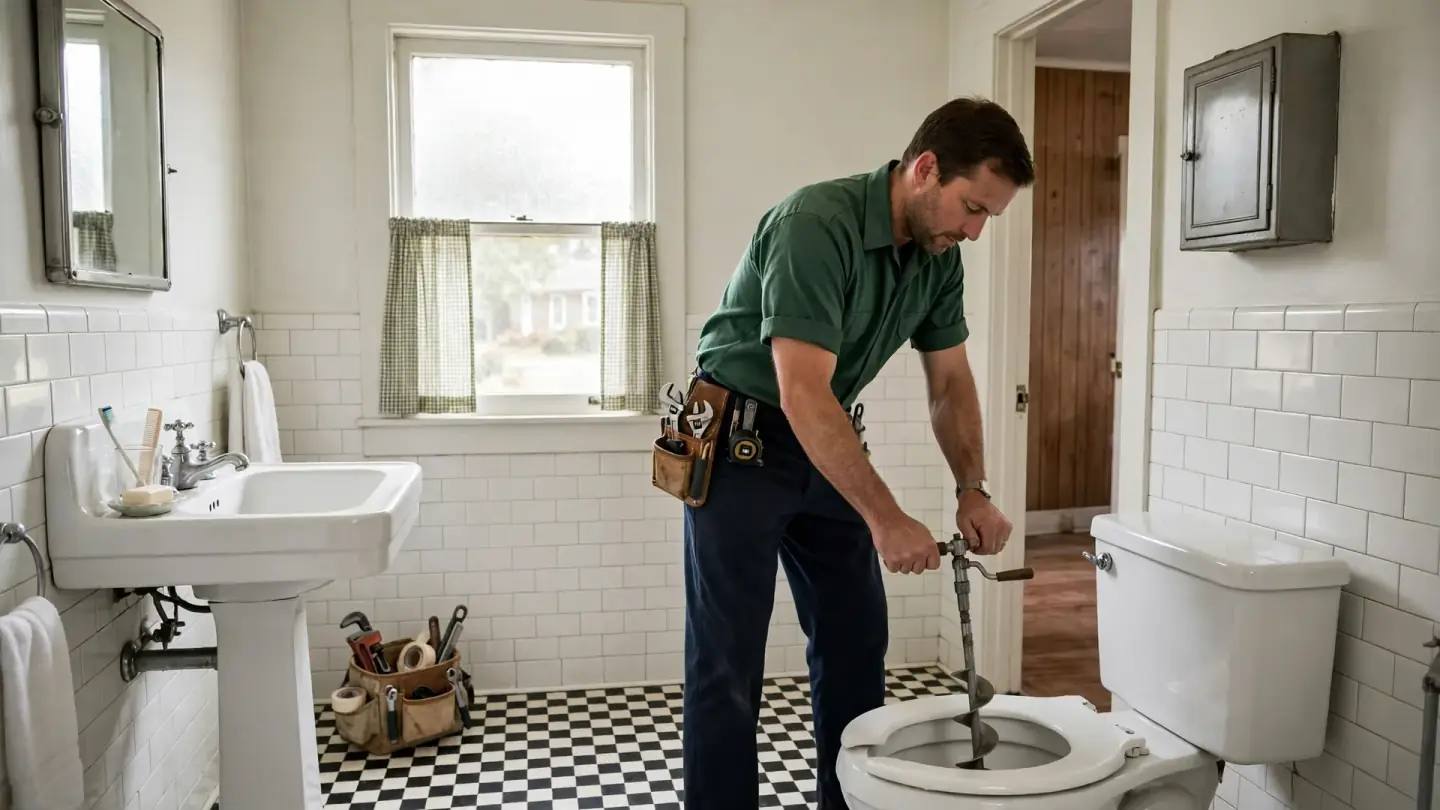
No. The images are AI-generated illustrations of typical drain situations, used to show what a problem or a piece of equipment generally looks like. They are not photos of specific jobs, customers or contractors, and the editorial policy and footer both say so to avoid any confusion.
How do I report a mistake on one of these pages?
Call the number shown on the site and say your call is about a correction to the website. Errors in local rules, utilities or other facts are checked against official sources and fixed, and the page's review date is updated. The editorial policy explains how corrections are handled.
Areas
Is my Dayton suburb covered if it isn't listed here?
Possibly; the listed areas are the ones with full local pages, not a complete boundary. Call and give your town or neighborhood, and the contractor you're connected with will confirm whether they work there. Nearby cities have their own sewer providers and permit offices, so mention your address early on the call.
Why do older Dayton neighborhoods have more sewer line trouble?
Older homes are more likely to have clay or cast iron laterals with joints that roots can enter, and decades of settling can leave sags. Mature street trees add to the problem. The South Park and Oregon District pages describe the housing in those historic areas and the drain issues that come with it.
Who handles sewer mains outside the City of Dayton?
Each nearby city or county runs its own public sewers, so Kettering, Huber Heights and Beavercreek residents report main-line problems to their own provider rather than to Dayton. Your area page names the provider. Private laterals are generally the owner's responsibility, so a contractor clears the line from the house side.
Do drain problems differ between Dayton's newer and older suburbs?
Yes. Older streets tend toward roots, cracked clay and corroded cast iron, while newer subdivisions more often see grease clogs, construction debris or settling in plastic lines. The Huber Heights and Kettering pages show how postwar housing shapes the drain problems residents call about most.
Beavercreek
Who do I call about the public sewer main behind my Beavercreek subdivision?
Greene County Sanitary Engineering, not the City of Dayton, serves Beavercreek's public sewer [2]. If several neighbours on your cul-de-sac back up at once, report it to the county first. If only your house is affected, the blockage is more likely in your own lateral, and a private contractor can clear it and run a camera to show the cause.
Do I need a Beavercreek permit just to have a drain snaked?
Usually not for routine clearing, but repairs that cut or replace pipe are a different matter. Beavercreek is its own Greene County city [1], so check with the City of Beavercreek and the county before any excavation or lateral replacement. A contractor you reach through this line can tell you which parts of a job normally need a permit.
Why does the basement toilet in my Beavercreek house back up when the washer drains?
A fixture below the main sewer usually drains into an ejector pit, and a big washer discharge can overwhelm a weak or clogged pump. Wipes and lint around the float are common causes. Let the contractor know you have a pit, because clearing the line above it without checking the pump rarely fixes the problem for long.
Since Greene County softened its water, should Beavercreek drains clog less?
Softer water helps with scale but does nothing for grease, hair or wipes. The county cut hardness from about 27 to about 8 grains per gallon [3], so new mineral crust forms more slowly. Older scale already inside pipes stays put, and homes on private wells receive no county softening at all.
Is it normal for a newer Beavercreek house to have a sagging sewer line?
It happens, and it is not always a sign of bad workmanship. Soil settles after construction, so a lateral laid in fresh backfill can develop a low spot, or belly, where paper and grease collect. A camera inspection locates the dip and shows whether regular cleaning is enough or a section should be re-laid.
Can my Beavercreek sump pump be piped into the floor drain?
Generally no, a sump pump moves groundwater and should discharge outdoors rather than into the sanitary sewer. Feeding storm water into a sewer lateral adds load during heavy rain, exactly when the system is busiest. Ask the contractor to trace where your discharge goes, and confirm the local rule with Greene County before changing anything. See the sump pit and floor drain guide.
Which Beavercreek drain problems are worth a call rather than a plunger?
Call when more than one fixture is slow, when water appears in a floor drain or shower, or when a clog returns within weeks. Those signs point past the trap to a branch or the main line. A single slow bathroom sink is often a hair clog you can tackle yourself first, with care and no harsh chemicals.
Belmont
Why does my Belmont floor drain overflow every time the washer pumps out?
A partial blockage downstream is usually the reason. The washer releases a big surge, and if roots, lint or grease narrow the line toward the street, the water rises at the lowest opening, which in a Belmont basement is the floor drain. Clearing the main line and checking it with a camera shows how much of the pipe is restricted.
When the whole street floods in a storm, is that Belmont problem the City's or mine?
If neighbours back up at the same moment during heavy rain, the public main may be overtaxed, which the City handles [2]. Backups that happen in dry weather when you run water point to your own lateral, which the owner is responsible for [2]. Dayton's Sewer Maintenance staff can help sort out which side is involved.
How do I get rid of a sewer smell coming from my Belmont basement?
Start by pouring a bucket of water into the floor drain, because a dried-out trap is the usual cause [2]. Basement drains in older Belmont houses can sit unused for months. If the odour returns quickly after refilling, a cracked pipe, loose cleanout plug or failed seal may be letting sewer gas through, and a contractor can check it.
Is it okay to run my Belmont sump discharge into the basement floor drain?
It is best avoided. Dayton names sump pumps, downspouts and foundation drains among the household sources that can add to basement flooding in storms [2]. Pumping groundwater into the sanitary line adds load at the worst moment. Ask the contractor where your discharge ends up and check what the City allows before rerouting it.
Do I need a backwater valve in my 1920s Belmont house?
Possibly, if storms repeatedly push sewage up through your floor drain. Ohio's plumbing rule calls for backwater valves where Ohio EPA or the local sewer purveyor requires them [6]. A contractor can camera the line first to rule out a blockage, then talk through whether a valve fits your basement layout and the City's requirements.
Will the City of Dayton find my Belmont sewer lateral before a contractor digs?
No, the City does not locate private laterals [2]. Plumbing Inspection may hold a record of the original connection, and a contractor can trace the line with a camera and locator. Before any excavation, Ohio811 must be called two working days ahead so buried utilities are marked [2].
Can lint from an old Belmont laundry tub really block the main line?
Yes, lint mixed with soap scum builds up surprisingly fast in older cast-iron and clay pipe. Laundry tubs in Belmont basements often drain straight into the floor drain or a short branch, so fibres reach the main quickly. A lint trap on the washer hose and periodic floor drain cleaning keep the problem in check.
Huber Heights
Who maintains the public sewer in Huber Heights?
The City of Huber Heights owns its Division of Water and Wastewater, and Veolia operates it [2]. That means Dayton's sewer office is not the contact here. Report suspected main-line problems to the city, and ask them where your private lateral ends so you know which section a contractor would be clearing.
Do Huber Heights drain repairs go through Dayton or the city?
They go through Huber Heights, which incorporated as its own city in 1981 [1]. Building and plumbing permits come from the City of Huber Heights, not Dayton. Routine clearing rarely needs a permit, but replacing pipe often does, so confirm with the city before work that involves cutting or excavating.
Has the new softening at Rip Rap Road ended drain clogs in Huber Heights?
No, softening reduces fresh scale but cannot remove clogs from grease, hair or lint. The city added membrane softening at its Rip Rap Road plant [3], which helps fixtures and water heaters. Crust that formed in pipes before the change is still there, so older Huber homes may continue to see slow drains.
Where would the sewer cleanout be on my Huber Heights slab ranch?
Look outside near the foundation, in the garage, or behind an access panel near a bathroom. Huber houses share floor plans across many streets [1], yet cleanout placement still varies between models and later remodels. If you cannot find one, tell the contractor; they can work through a toilet flange or roof vent instead.
Why do so many Huber houses on my street get the same drain backup?
Huber Homes repeated designs across thousands of houses built between 1956 and 1992 [1], so similar pipe layouts age in similar ways. If a neighbour with your model had roots or a sag in the lateral, your line may share that weak spot. Mention it on the call; it helps the contractor plan a camera inspection.
Should I get the sewer line scoped before buying a Huber Heights house?
Yes, it is a sensible step for any home more than a few decades old. Many Huber houses are now over fifty years old, and a standard home inspection rarely looks inside the lateral. A camera inspection shows roots, cracks or sags before closing, so you can plan cleaning or repair with clear footage.
Is a gurgling toilet in my Huber Heights duplex caused by the other unit?
It can be, because duplex units often share a drain stack or lateral. When the neighbour runs a large volume of water, a partial clog downstream can pull air through your toilet trap. Tell the contractor that the building is shared, and read the gurgling drains guide for more clues.
Kettering
Does Dayton handle sewer problems for houses in Kettering?
No, Kettering is a separate city, and Montgomery County Environmental Services provides its water and sewer service [3]. Plumbing permits come from the City of Kettering [6]. If a backup affects several houses at once, contact the county; if it is only your home, the issue is more likely in your private lateral.
Why does the laundry in my Kettering split-level back up before anything else?
The lower-level laundry is the drain closest in height to the main sewer, so it shows trouble first. When roots, lint or grease narrow the line, a washer surge has nowhere to go and rises at that opening. Clearing the main and checking it with a camera usually reveals the cause and how far along it is.
Do I need a Kettering permit to fix a broken drain pipe?
Probably, because the City of Kettering says plumbing work requires a permit [6]. Simple clearing with a cable or jetter is generally treated differently from cutting or replacing pipe. Ask the contractor which category your job falls into, and confirm with the city's building department before repair work starts.
Are the sewer laterals under 1950s Kettering ranches reaching the end of their life?
Many are old enough to need attention, though age alone does not mean failure. Kettering grew faster than any Ohio city from 1955 to 1965 [2], so a lot of laterals were laid in the same decade. Repeated slow drains or root clogs justify a sewer line inspection to judge the pipe's condition.
How do I know if tree roots from my Kettering yard are in the sewer line?
Slow drains throughout the house, gurgling toilets and backups that return every year or two are the classic signs. Postwar streets now have large, mature trees, and roots seek out the joints of older pipe. A camera run after cleaning shows where roots enter and how often the line should be cleared.
Is Montgomery County upgrading the sewers that serve Kettering?
Montgomery County Environmental Services reports ongoing investment in its water reclamation system [4], and local coverage has described new sewer projects in the county [5]. Public upgrades help the main lines, but they do not change your private lateral. A clogged line between the house and the main is still the owner's to clear.
Can I wait until spring to clear a slow drain in my Kettering home?
It is risky, because a slow drain often becomes a full backup at the worst moment. Cold snaps, holiday guests and heavy laundry loads all add stress to a partly blocked line. If more than one fixture is slow, call to check availability; for a single sink, the slow-draining sink guide has safe first steps.
Oregon District
Who repairs the sewer pipe under the street in front of an Oregon District house?
The public main belongs to Dayton's Division of Sewer Maintenance, but the lateral to it is the owner's [3]. If the street-side portion of your lateral breaks, City crews do that section and the property owner is responsible for it, arranged through a licensed plumber who pulls the permit [3]. The private section is the plumber's job.
Will historic district rules stop me clearing a drain in the Oregon District?
No, routine clearing from inside the house or through an existing cleanout changes nothing visible from the street. The district has been a city historic district since 1972 [1], so exterior work is reviewed. If a repair would disturb a facade, front walk or masonry, check with the City before choosing that route.
Why does my Oregon District basement smell like sewage?
A dry floor drain trap is the most common reason, and the City suggests simply pouring water into it [3]. Basements in old brick houses often have drains nobody uses. If the smell continues after refilling, a cracked cast-iron line or loose fitting may be leaking gas, and a camera can find it.
Can a tenant upstairs cause my Oregon District basement drain to overflow?
Yes, in divided houses the units often share one stack and one lateral. A clog downstream fills from the lowest opening, so the basement floods even when the upstairs flat caused it. Tell the contractor how many units share the line, since that affects how the drain should be cleared and inspected.
How often should roots be cleaned out of an Oregon District sewer lateral?
There is no fixed schedule; Dayton says it depends on the line's condition and the trees and shrubs nearby [3]. Many laterals here are very old, with joints that let roots in. A camera inspection after clearing shows how many entry points there are, which helps you set a sensible cleaning interval.
Is it safe to hydro jet a very old pipe in an Oregon District house?
Sometimes, but only after a camera has shown the pipe's condition. Brittle clay or thinned cast iron can be damaged by high pressure, while sound pipe handles jetting well. A careful contractor inspects first and then chooses between hydro jetting and a cable machine based on what the footage shows.
Can Oregon District restaurant grease end up in a neighbouring home's drain?
Not through your private lateral, because each building connects separately to the public main. Grease from any source can still narrow the main itself, and Dayton keeps sanitary and storm sewers separate [3]. If several buildings back up together, report it to the City; nearby businesses may need commercial drain cleaning.
South Park
Why do roots keep growing back into my South Park sewer lateral?
Most South Park laterals are old clay pipe laid in short sections, and roots enter through the joints. Houses here date mostly from the 1880s to the early 1900s [1], so the pipe has shared ground with trees for a very long time. Clearing restores flow, but the gaps remain, so roots return.
Is the City working on the main if my South Park toilet suddenly gurgles?
It may be; Dayton notes that jetting the public main can cause gurgling or water splashing from toilets [2]. If a crew is in your street, wait and see whether it stops. If there is no crew, a partly blocked lateral or vent is the more likely cause and worth a call.
Should I scope the drain line before renovating a South Park Victorian?
Yes, a camera inspection before finishes go in is a smart step. New bathrooms and kitchens send more water through a line that may be over a century old. Footage shows roots, sags and cracks while it is still easy to plan repairs. See drain camera inspection for what the visit involves.
How do I tell whether a South Park backup is in my line or the City main?
Watch where water appears and whether neighbours are affected. A backup shared by several houses suggests the main, which Dayton's Sewer Maintenance division handles [2]. If only your house backs up, especially when you run water, your lateral is the likely culprit, and a contractor's camera can confirm it.
Do South Park historic district rules apply to sewer repairs?
They matter mainly when a repair changes something visible from the street. South Park became a city historic district in 1981 [1], and routine interior clearing does not affect its character. If an excavation would disturb the front yard, walkway or exterior masonry, check with the City before choosing that approach.
Who is responsible when the street-side section of a South Park lateral breaks?
The property owner is. Dayton crews repair the part of the lateral in the street right-of-way, but the owner is responsible for that work, which a licensed plumber arranges along with the permit [2]. The private section on your own lot is repaired directly by the plumber you hire.
Do worker cottages in South Park have different drain problems than the big Victorians?
Often, yes. Small cottages typically have one bathroom and a short lateral, so a single clog stops everything. Larger Italianate and Queen Anne houses may have several stacks, added bathrooms and long runs through old basements. Telling the contractor your house type helps them plan where to access the line.
Contact
Can I email or message instead of calling?
No. This is a call-in service only, so there is no contact form, email inbox or chat. Calling connects you directly with an independent local contractor, which is the quickest way to describe the drain and hear what they can do. The number appears on the call buttons on every page of the site.
Will anyone call or text me back after I hang up?
Not from this site. It does not keep callback lists or send marketing calls or texts. If you and the contractor agree to follow up, that is between the two of you. Calls may be recorded or routed by a call-tracking provider, as the privacy policy explains in more detail.
Does it take anything from me to place the call?
No. Placing the call through this site is free of charge from our side; your own phone plan's normal carrier rates may still apply. Anything to do with the work itself is discussed directly with the contractor you're connected with, and nothing is arranged unless you agree to it on that call.
What if the contractor can't take my drain job?
Contractors are independent and decide which jobs they can take. If the one you reach cannot help, they will tell you on the call, and you are free to look elsewhere. If the problem looks like the public sewer main, the City of Dayton or your own city's sewer provider is the right contact.
Editorial policy
Do the contractors write or approve the pages on this site?
No. The independent contractors that calls are connected to do not write, edit or approve any page. The advice stays the same whichever contractor takes a call, and pages are written to help you understand the drain problem rather than to steer you toward a particular job or method.
How can I check where a fact on a page came from?
Look for the numbered marker beside the statement and follow the matching link in the page's sources list. Local facts such as sewer ownership, permits and water treatment are taken from official sources like the City of Dayton. General explanations of how drains work describe common trade practice and are worded as guidance.
Is AI used to write the content on this site?
AI tools assist with drafting and with the illustrations, but local facts are checked against the cited official sources before publishing, and pages are reviewed on a schedule. Images are always AI-generated illustrations rather than photos, and they are labelled that way so nobody mistakes them for pictures of real jobs.
What kind of claims will this site never make?
It will never publish invented reviews, ratings or team bios, unverified licences or years in business, arrival-time promises, round-the-clock claims or figures for drain work. Those details either do not exist for a referral service or can only come from the contractor you speak with, so they are left to that conversation.
Guides
Which guide should I read if water is coming up right now?
Skip the reading and deal with safety first: stop using water, keep away from any sewage and call to check emergency availability. Once things are stable, the basement backup guide or the toilet and tub guide will help you understand what happened and how to describe it.
Are the do-it-yourself checks in these guides safe to try?
They are limited to low-risk checks such as cleaning a stopper, testing other fixtures or looking for a cleanout. None involve chemicals, power tools or opening a line under pressure. If sewage is present, or a check would mean taking apart pipe you are unsure about, stop and call instead of pushing on.
How are these drain guides kept accurate for Dayton?
Local statements such as sewer ownership, permits and water softening come from official sources like the City of Dayton and are cited on each page. General plumbing explanations describe common trade practice. Pages carry a review date and are corrected when rules change; the editorial policy explains the full process.
Can a guide tell me whether my problem is serious?
A guide can point out the warning signs, such as several fixtures backing up or a recurring clog, but it cannot see inside your pipe. Only an inspection on site can confirm the cause. Use the guide to describe the symptoms clearly, then let the contractor you're connected with judge how serious it is.
Basement drain backing up after rain
Does Dayton mix storm water and sewage in the same pipe?
No, the City of Dayton describes separate storm and sanitary systems. Storm water is carried to rivers and streams, while sanitary flow goes to the treatment plant. Private laterals are not supposed to connect to catch basins, and the City says illegal connections get disconnected [1]. That separation is why rain in your basement drain usually points to something feeding or restricting your own line.
Who pays to fix a cracked sewer lateral under the street in Dayton?
The homeowner, not the City, maintains the service pipe that carries waste out to the public sewer. A licensed plumber pulls the permit, City crews handle the portion inside the public right-of-way and bill the plumber, and the plumber then bills the owner [1]. Ask the contractor you speak with to explain each step before any digging is agreed.
Is it okay for my sump pump to empty into the basement floor drain?
It should not, because a sump pump exists to move groundwater away from the building, not into the sanitary sewer [3]. The City of Dayton lists sump pumps tied into plumbing as one cause of heavy-rain basement flooding [1]. Rerouting the discharge outdoors, away from the foundation, takes that extra load off the floor drain during storms.
Will installing a backwater valve stop every rain backup?
No, a backwater valve only blocks reverse flow from the public side. It cannot clear a lateral clogged with roots or grease, and whether one is required depends on Ohio rules or the local sewer authority [2]. Having the line cleaned and filmed first shows whether a valve would actually address the cause you have.
Why is my basement drain backing up even in light rain now?
When small storms start causing backups, the lateral has usually lost capacity. Roots, grease buildup or a sagging section can narrow the pipe, or a downspout or new connection may be feeding it. A camera run after the line is cleared shows which of these is present, so the fix matches the cause.
Should I run the washer or shower while the floor drain is full of water?
Stop using water in the house until the floor drain empties, because every gallon you send down has nowhere to go but back up. Hold off on laundry, showers and dishwashers. Keep children and pets away from the water, treat it as contaminated, and call to describe the backup so a local contractor can talk you through next steps.
What should I tell the contractor about a storm-day backup?
Say when the backup started relative to the rain, which openings filled, and whether it drained by itself afterwards. Mention any sump pump, downspouts near the foundation and earlier backups. Those details help the contractor you are connected with judge whether the lateral, a hidden connection or the public main is the likelier source.
Frozen drain lines in winter
How cold does it need to get before a drain line freezes in Dayton?
It depends more on exposure than on one temperature. Drains inside heated, insulated walls rarely freeze, but lines in garages, crawlspaces or outside walls can ice up on an ordinary January night, when Dayton averages about 21.8°F [1]. Windy nights and long stretches below freezing raise the risk for those exposed runs.
Is it safe to pour boiling water down a frozen drain?
No, avoid boiling water on a frozen drain. It can soften or warp plastic pipe and can crack a cold porcelain sink or toilet bowl. Warm tap water poured slowly, where there is room, plus gentle warm air from a space heater kept at a safe distance, is the gentler way to thaw it.
Can a frozen drain pipe burst the way a water supply pipe does?
Drain lines burst less often because they are not under pressure, but ice can still split traps, fittings and thin sections. As the line thaws, look underneath sinks and along exposed runs for drips or wet spots. A small crack found early is far easier to deal with than water running into a wall.
Why does the same drain freeze every winter while others are fine?
That line is likely holding standing water that the others drain away. A sag, a partial clog or a grease coating can leave water sitting in the pipe, and standing water freezes first. Filming the line once it has thawed shows the cause so it can be corrected before the next cold snap.
Is a frozen drain line an emergency?
It can be when sewage is backing up or the only toilet in the house is affected. In those cases, call to check emergency availability with a local contractor. If it is a single sink or garage drain with no backup, warming the space slowly often solves it without a visit.
Can roof vents freeze shut and cause slow drains?
Yes, in hard cold a vent opening can frost over as warm, moist air condenses and freezes at the cap [3]. When that happens, drains may gurgle or empty slowly because air cannot enter the system. Do not climb an icy roof yourself; describe the symptoms on the call so the contractor can check it safely.
What can I do this winter to keep drains from freezing?
Keep heat reaching the rooms and crawlspaces where drains run, and close garage doors on cold nights. Insulate exposed drain pipes, run water through rarely used fixtures regularly, and avoid pouring grease that slows flow. If a line froze last year, having it filmed before winter can reveal the sag or buildup behind it.
Gurgling drains
Does a gurgling toilet always mean there is a clog?
No, a gurgling toilet can come from a partial clog, a blocked vent or City crews jetting the sewer main nearby [1]. A short gurgle while the street is being cleaned is usually harmless. Gurgling that continues for days, especially with slow drains, most often points to a restriction in your own line.
Why does my toilet bubble every time the washing machine drains?
The washer releases a large volume of water quickly, and that flow pulls air through the nearest trap, often the toilet. It usually means the line downstream is partly blocked or the vent is not supplying enough air. Describe the pattern on the call; it helps the contractor narrow down where the restriction sits.
Can gurgling drains let sewer gas into my house?
Yes, gurgling can siphon water out of a trap, and a trap without water no longer blocks sewer gas [2]. If you smell sewage after a gurgle, run water into that fixture to refill the seal. Then have the cause checked, because the trap will keep emptying until the restriction or vent problem is fixed.
How long does gurgling last when the City is jetting the sewer main?
It normally stops once the crew finishes your section of the main, often within the same visit. The City notes that jetting can cause gurgling or water movement in household fixtures [1]. If the noise continues after the crew has left, the more likely source is your own drain or vent.
Should I worry about a drain that gurgles just once?
One gurgle after a large volume of water drains is common and usually nothing to worry about. Repeated gurgling, drains that slow down, or a sewer odor are the signs that matter. Those suggest a restriction is building, and having the line checked early is easier than dealing with a backup later.
Why do my bathroom sink and tub gurgle when I flush?
When a flush makes a nearby sink or tub gurgle, the fixtures share a branch that is not moving air or water freely. A partial blockage downstream or a vent problem is the usual reason [3]. If water also rises in the tub, treat it as a shared-line blockage rather than a noise.
Will a chemical drain cleaner stop the gurgling?
Usually not, because gurgling is about airflow and restrictions further down the line than chemicals reach effectively. A thin film may clear briefly, but buildup, roots or a vent issue remain. Chemicals left in the pipe also make the job hazardous for whoever opens the drain next, so mechanical cleaning is the safer route.
Slow draining sink
Is a slow bathroom sink usually caused by hair?
Usually, yes; hair bound up with soap scum at the stopper and trap is the most common cause. Pull and clean the stopper, then check the trap if you are comfortable. If the sink is still slow afterwards, the restriction is further into the branch line or the vent, which is where a contractor's tools help.
Will pouring boiling water clear a slow kitchen sink?
It may loosen a thin grease film for a short time, but grease cools and settles again further down the pipe. Very hot water can also damage some plastic fittings. Mechanical cleaning removes the coating from the pipe wall instead of pushing it deeper, so the sink stays clear longer.
Does Dayton's hard water cause scale buildup in drains?
Groundwater in the Miami Valley is naturally very hard [2]. The City of Dayton softens its supply with lime treatment [3], which reduces scale, but soap scum still forms and private wells are not treated. Over years, that residue narrows sink drains and traps, especially in older bathroom branches.
Why does my sink gurgle while it drains slowly?
Gurgling means air is being pulled through the trap as water struggles past. That usually points to a partial clog downstream or a vent that is blocked [5]. Both slow the flow. The contractor you are connected with can test the line and the vent to tell you which one is the cause.
When is a slow sink a sign of a main line problem?
It is a main line warning when several fixtures slow at once, or water appears in a tub or basement floor drain when the sink runs. That pattern means the shared line further down is restricted. Stop using water heavily and call to describe which fixtures are affected.
How can I keep a kitchen sink from draining slowly again?
Wipe greasy pans with paper towel before washing, scrape plates into the trash, and avoid running fibrous or starchy scraps through the disposal. Grease that cools in the pipe is what builds up over time. If the sink keeps slowing despite good habits, have the branch cleaned and filmed.
Is it safe to take apart the P-trap under my sink myself?
For many people, yes, with care. Put a bucket underneath, loosen the slip nuts by hand, and clear the trap before refitting it snugly. Skip this if chemicals were poured in recently, because they can splash. If the trap was clear, the slowdown is further into the pipe [4].
Sump pit vs floor drain
Can a floor drain and a sump pit share the same pipe?
They should not share a pipe, because they serve different systems. The floor drain belongs to the sanitary sewer, while sump water is groundwater meant to discharge outdoors. The City of Dayton names sump pumps tied into household plumbing as one cause of basement flooding during heavy rain [1].
Why does my basement floor drain smell even though it never backs up?
The trap has most likely dried out, so sewer gas passes straight through. The City of Dayton suggests pouring water into trapped fixtures to restore the seal [1][3]. If the smell comes back within days, the trap may be damaged or the vent may be pulling it dry, which is worth having checked.
Is a full sump pit something a drain cleaner fixes?
Usually not, because a full pit with a silent pump points to the pump, its float switch or its power supply. That is pump work rather than drain cleaning [2]. A drain contractor can confirm the floor drain line is clear, but the pump itself is generally a separate repair.
Does every house in Dayton have a sump pit?
No, many older Dayton basements have only a floor drain. Sump pits are common where groundwater control or foundation drainage was planned during construction or added later. If you are unsure what you have, look for a round, often covered pit in a corner with a pump and discharge pipe.
My basement floor is wet. Which opening should I check first?
Start by noticing where the water is coming from and what it looks like. Grey or smelly water rising at the floor drain is a drain problem. A pit brimming with clear water while the pump stays silent is a sump problem. Water seeping at wall joints may be neither.
Should the floor drain have water sitting in it all the time?
Yes, a little standing water down in the trap is normal and is what blocks sewer gas [3]. What is not normal is water rising toward the grate, water staying near the top after use, or the drain overflowing when other fixtures run. Those are signs of a restriction further down the line.
Who do I call if both the sump pit and floor drain overflow together?
Call to describe both, because that combination can mean heavy groundwater and a sanitary line under strain at the same time. The contractor you are connected with can clear and film the drain line, and tell you whether the pump also needs separate attention. Stop using water in the house meanwhile.
Toilet and tub backing up together
Why does the tub fill up instead of the toilet overflowing?
The tub drain sits lower than the toilet rim, so water backing up from a blocked shared line rises there first. That tells you the blockage is downstream of the point where both fixtures join [3]. The further down the blockage, the more fixtures will be affected, including basement floor drains.
Should I plunge the toilet when water comes up in the tub?
Plunging often just pushes the water into the tub rather than clearing the line. If the tub is already filling, the blockage is usually beyond the toilet's own trap and out of a plunger's reach. Stop flushing, and call to describe what happens so a contractor can clear the shared line properly.
Who is responsible when the blockage is under my yard in Dayton?
The private lateral between the house and the public sewer is the owner's to maintain. The City of Dayton maintains the main itself [1]. If neighbours are backing up too, the main may be involved, and the City's Sewer Maintenance division is the place to report that.
Is the dirty water in the bathtub safe to clean up myself?
Treat it as contaminated sewage. Wear gloves, keep children and pets away, and avoid splashing. Once the line is cleared and the water drains, clean the tub and any splashed surfaces with disinfectant. Wash hands thoroughly and launder any towels used during the cleanup.
Will the toilet and tub back up again after the line is cleared?
It depends on what caused it. Wipes or a single blockage may not return, but roots, a sag or a broken pipe usually will. A camera inspection after clearing shows which you have, so you can decide whether a follow-up repair or routine cleaning makes sense.
Can I keep using the sink while the tub has backed-up water in it?
Avoid it, because the sink very likely feeds the same blocked line and will add to the water in the tub. Hold off on all fixtures in the house if possible, including the washer and dishwasher, until the line is cleared. Every gallon sent down has to go somewhere.
Where does a contractor clear a shared toilet and tub backup from?
Usually from a cleanout, an access fitting on the building drain, or by pulling the toilet to reach the line [2]. Working from a cleanout avoids pushing debris back through bathroom fixtures. Afterwards, running a camera through the same opening shows what was causing the blockage.
Services
Which drain cleaning service do I need if I'm not sure what's wrong?
Start with how many drains are affected: one slow fixture points to a branch clog, while several at once points to the main line. You do not have to pick correctly before calling; describe what you see and the contractor you're connected with will sort it out. The clogged drain repair page is a good general starting point.
What's the difference between snaking a drain and hydro jetting it?
Snaking pushes a rotating cable through the blockage, while hydro jetting uses high-pressure water to scour the whole pipe wall. A cable is usually enough for a simple clog; jetting suits heavy grease, repeat clogs and roots. Many contractors run a camera first. The hydro jetting page explains when the extra step is worth asking about.
Do these drain services cover businesses as well as homes?
Yes, calls are taken from restaurants, offices, rentals and other commercial properties as well as houses. Commercial lines often deal with heavier grease loads and shared stacks, and work may need to fit around opening hours. The commercial drain cleaning page covers grease lines, restroom drains and scheduling questions for Dayton businesses.
When does a drain problem count as an emergency?
It counts as an emergency when sewage or water is coming up, a fixture is overflowing, or your only toilet is out of action. A single slow sink can usually wait. In an emergency, stop running water and call to check emergency availability. The emergency drain cleaning page lists the safe first steps.
Bathroom Drain Cleaning
Why is only my bathroom sink draining slowly while the tub is fine?
When only the vanity is slow, the blockage almost always sits in that sink's own pop-up, trap or arm. Hair wrapped around the pop-up rod and toothpaste or soap paste in the trap are the usual culprits. Because the tub and toilet share the branch further downstream, their normal flow tells you the shared line is open. This is the simplest bathroom clog to clear, and often the stopper alone holds the plug.
Why does my bathroom sink gurgle every time someone flushes the toilet?
Gurgling at the bathroom sink during a flush means air is being pulled through its trap, which points to a partial branch clog or a restricted vent. The sink and toilet usually share one branch and one vent pipe. When the flush cannot draw air from the vent, it sucks it through the nearest trap instead. Left alone, that can siphon the trap dry and let sewer odour into the room.
Can a blocked roof vent make every bathroom drain slow?
Yes, a blocked plumbing vent can slow every drain in a bathroom even when the pipes below are clear. Drain water needs air entering behind it to flow freely. Leaves, nests or ice at the roof opening starve the system of air, so fixtures drain sluggishly, gurgle and may give off sewer smells. The contractor you're connected with can check whether the vent or the branch is the real restriction.
Does Dayton's hard water clog bathroom sink drains over time?
It contributes, though soap scum and hair do most of the damage. Federal hydrologists class groundwater across the Miami Valley as very hard [4], and older galvanized arms can carry decades of scale. Dayton lime softens its city water before it reaches taps [2], which slows new buildup. Even so, soap film still sticks to rough pipe walls, and that coating catches hair on its way down.
Why does my guest bathroom smell like sewer when nobody uses it?
A guest bathroom that smells of sewer usually has a dry trap rather than a clog. Water in the trap evaporates when a sink, tub or shower sits unused, and sewer gas then rises freely. Run each fixture for a minute to refill the seal. Dayton's sewer guidance gives the same fix for basement odours [1]. If the smell returns within days, have the vent and fittings checked.
Should an old galvanized bathroom sink arm be replaced instead of cleaned?
If the galvanized arm is heavily scaled or corroded inside, replacing it usually beats another cleaning. A cable can punch a hole through the buildup, but it cannot restore the pipe's original bore, so the sink clogs again quickly. A short camera look or simply removing the arm shows how narrow it has become. Replacement with plastic is a small job compared with repeated service visits.
Is it safe to pour a chemical drain opener into a bathroom sink?
Pulling the pop-up stopper and removing the hair is safer and usually works better than chemicals. Caustic openers tend to sit in the trap without reaching a hair mat, and they leave hazardous water for whoever opens the line next. They can also damage old metal arms and chrome. If the stopper is clean and the sink is still slow, the clog is further down and needs a tool.
Clogged Drain Repair
How does a contractor work out which drain line is clogged in my house?
They read the pattern of which fixtures are slow and where water comes back. One slow fixture points to its own trap or arm. Several fixtures in one room suggest the shared branch. Water rising from the basement floor drain while upstairs sinks empty places the clog in the building drain or the lateral. Those questions on the call usually narrow it down before anyone opens a line.
Is a sewer smell in my Dayton basement a sign of a clogged drain?
Usually not; a basement sewer smell is more often a dried-out trap than a clog. Dayton's sewer guidance says pouring water into floor drains and other trapped fixtures restores the seal that blocks gas [1]. Try that first and give it a day. If the water you pour does not drain away, or the odour comes back with slow fixtures, then a real blockage is likely.
Who pays to clear a clogged sewer lateral in Dayton, me or the City?
Everything on the private connection, up to the point where it meets the City's pipe, is the owner's job. The City of Dayton maintains only that main [1]. So a clog anywhere in your private line is yours to have cleared, even under the street side of the yard. If camera footage shows the lateral open to the connection and the backup continues, contact the City about the main.
Will the City of Dayton locate my sewer lateral before drain work?
No, the City does not mark private sewer laterals, though a record may exist. Dayton's sewer FAQ notes that Plumbing Inspection sometimes has drawings on file [1]. Otherwise, a plumber can push a camera with a transmitter down the line and trace its route and depth from the surface. That locate is useful before any digging, landscaping or repair decision on a clogged lateral.
Why did my drain clog again right after it was snaked?
A quick reclog means the cable opened a path but left the cause in place. Grease coating, scale, a sagging section, an offset joint or a root entry point will keep catching debris. A camera look after clearing identifies which one you have. Then jetting, root cutting or a targeted repair can address the cause, instead of repeating the same clearing every few weeks.
Can hard water cause clogged drains in older Dayton homes?
It plays a supporting role rather than causing clogs alone. USGS data class the region's water as very hard [3], and scale narrows old metal pipe and roughens its wall. Soap and grease then cling to that rough surface. Dayton's city water is lime softened [2], which limits fresh scale, but it does nothing about grease and soap film already built up.
Should I use a chemical opener on a clogged branch line?
One dose on a single slow fixture is a fair try, but stop if it fails. Chemicals rarely reach a deep branch or main clog, and repeated doses pile up caustic water in the line. That water is dangerous for anyone who opens a trap or cleanout afterward. Tell the contractor you're connected with what you poured, so they can protect themselves before opening the line.
Do I need to call Ohio811 before a clogged drain is repaired?
Only if the repair involves digging; clearing a clog through a cleanout needs no locate request. When a broken or collapsed section must be excavated, Ohio811, the service formerly called OUPS, has to be contacted at least two working days ahead [1]. That marks buried gas, power and other utilities. The contractor doing the digging normally files the request.
Commercial Drain Cleaning
How often should a Dayton restaurant kitchen drain line be jetted?
There is no single interval; it depends on the menu, volume and how well the grease interceptor is kept up. The practical method is to camera the line after a first thorough cleaning, then check it again a few months later. How fast grease rebuilds on the wall sets a realistic schedule for that kitchen, rather than a generic calendar that is either wasteful or too late.
Does the City of Dayton require grease traps for restaurant drains?
Dayton's sewer guidance says restaurants should install and maintain grease traps, because grease hardens and blocks sewers [1]. Specific sizing, inspection and pump-out requirements can vary by facility. Confirm the rules that apply to your kitchen with the City before remodelling or opening. Keeping the trap pumped on schedule is also the simplest protection for the line beyond it.
Can commercial drain cleaning be scheduled outside business hours in Dayton?
Ask when you call; scheduling depends on the contractor you're connected with and the job. Many owners prefer before opening or after close so kitchens and restrooms stay in service. If a commercial backup is happening now, call to check emergency availability, and keep the affected sinks, toilets and floor drains out of use until the line is cleared.
Who is responsible when a shared stack backs up into one apartment unit?
In most cases the building owner is responsible for shared stacks and the lateral out to the City main [1]. A tenant whose unit floods from a shared line usually caused only part of the problem, or none of it. Camera footage of the blockage helps a manager show what caused it, address the source, and prevent a repeat in the lowest unit.
Can a commercial drain line be camera-inspected with records for the building file?
Yes, a recorded camera run with distances is a normal part of commercial drain cleaning. Ask for the footage and short written notes on what was found and where. Those records help with insurance questions, tenant disputes and planning the next cleaning. They also give a future contractor a baseline, so changes in the line are easy to spot.
What if a commercial backup in Dayton is coming from the City sewer main?
The City's Division of Sewer Maintenance keeps up the shared main [1]. If camera footage shows your building lateral is clear all the way to the connection, that is strong evidence to share when you contact the City. Keep fixtures out of use while the main is checked, since water you send down has nowhere to go.
Do commercial drain rules differ in Kettering, Huber Heights or Beavercreek?
Yes, those are separate jurisdictions with their own building departments and sewer providers. A business just outside Dayton city limits may answer to a different permit office for repair work. Beavercreek, for example, is not served by Dayton's sewer division. The contractor should confirm the correct office before any excavation or pipe replacement begins.
Drain Camera Inspection
What is the difference between a drain camera inspection and a sewer line inspection?
A drain camera inspection looks inside branch lines in the house; a sewer line inspection follows the outside lateral to the City main. The indoor version targets a specific clog or defect behind one sink, tub or laundry standpipe. The sewer version judges the condition and route of the buried line. Many homes only ever need one, depending on where the trouble is.
Can a drain inspection camera fit through a bathroom sink trap?
Small camera heads can pass some traps, but removing the trap arm is usually better. Entering the branch directly gives a clearer picture and avoids forcing the head around a tight bend, which can snag or damage the camera. The trap itself is easy to check by hand once it is off. The scope then travels the branch toward the stack.
Do I need a drain camera inspection for one clogged sink?
Usually not the first time a sink clogs. Cleaning the trap or a quick auger run often solves it. A camera becomes worth it when the same drain clogs repeatedly, when clearing it does not restore normal flow, or when several fixtures behave oddly together. Then the footage shows whether buildup, a bad fitting or damaged pipe is behind it.
Will I get a copy of the drain camera inspection footage?
Ask for it before the visit starts, and most contractors can provide it. The recording, with distance markers, lets you see what was wrong and confirm it was cleared. It is also useful for anyone doing later repair or remodel work, since it shows where the branch runs and what condition it was in on that date.
Can a drain camera find the cause of a basement sewer smell when nothing is clogged?
It can, once the simple causes are ruled out. Dayton's sewer guidance says a basement sewer smell is usually a dry trap, so pour water into floor drains and unused fixtures first [1]. If the odour stays, a camera can look for a cracked pipe, an open fitting or a loose cleanout plug letting gas into the room.
Can a drain camera locate where a branch line runs inside a wall?
Yes, a transmitter in the camera head lets a handheld locator pinpoint it through drywall or flooring. That tells the contractor where the pipe sits and roughly how deep. An access opening can then be cut exactly at the problem rather than in several guessed spots. This matters most in finished basements and older Dayton homes with undocumented changes.
Can a drain camera inspection show a frozen drain pipe?
It can show where water stops and ice starts in a branch that runs through a cold wall or crawl space. Thawing should be gentle and gradual, never with an open flame. Once flow returns, a second camera pass checks the pipe for splits caused by the freeze. Dayton winters bring enough hard cold for exposed lines to be at risk.
Emergency Bathroom Drain Cleaning
Why does my bathtub fill up when I flush the toilet?
The toilet and tub almost always share one branch pipe, and that pipe is blocked downstream of both. Flush water has nowhere to go, so it rises at the lowest opening, which is usually the tub drain. Stop flushing, keep the tub plug out so you can watch the level, and call a contractor to clear the shared line.
Is it safe to shower if my bathroom drain is backing up?
No, not until the line is cleared. Shower water joins the same blocked branch and can push dirty water into the tub, onto the floor or through the ceiling below. Use another bathroom on a different branch if the house has one, and keep children and pets away from standing water in the tub or shower pan.
Should I pour drain cleaner into a backed-up bathroom drain?
It is better not to. A chemical cleaner sitting in standing water rarely reaches a blockage further down the branch, and it leaves caustic water in the tub that the contractor then has to work around. Mixing two products can release harmful fumes. Bail out what you can and tell the contractor exactly what has been used.
How do I stop water leaking through the ceiling under my upstairs bathroom?
Stop using every fixture in that bathroom first, then close the toilet supply valve so the tank cannot refill. Put a bucket under the drip and move electronics away. If water keeps appearing with no fixtures running, a supply pipe may be leaking rather than a drain, so shut the main water valve and mention this on the call.
Can a contractor clear a bathroom backup without pulling the toilet?
Often yes. Many shared bathroom blockages can be reached through the tub overflow, a cleanout or the vent stack with a drain cable. Pulling the toilet gives the most direct route into the branch, so the contractor may recommend it when the cable cannot pass. Ask them to explain the access point before work starts.
What should I tell the contractor about my bathroom backup when I call?
Say which fixtures are affected, which floor the bathroom is on and whether any other bathroom or the basement floor drain is acting up. Mention anything already used, such as a plunger or a cleaner, and whether water has reached the floor or the ceiling below. Those details help them judge how far down the blockage sits.
Emergency Clogged Drain Service
How do I know if only one drain is clogged or it's the main line?
Run water briefly at a sink or tub elsewhere in the house and flush a toilet on a different floor. If everything else drains normally, the clog is in that one fixture or its short branch. Water appearing in a floor drain or another fixture points to the main line, which needs a different response and usually a contractor.
Can a single clogged sink overflow if I leave it overnight?
A sink that is fully blocked will not rise by itself, because nothing more is entering it. It overflows only when someone runs water, the dishwasher or washer discharges into it, or a connected fixture drains through it. Close the faucet handles, pause any appliances on that line and put a note on the tap so nobody uses it.
Is it worth calling a contractor for just one clogged bathroom sink?
It is when the sink is needed and simple steps have failed. A plunger and cleaning the pop-up stopper clear many vanity clogs. If those fail, or the trap is old and fragile, a contractor can clear it with a hand auger without damaging the fittings. One fixture is usually a short, contained job.
Why did my laundry tub stop draining while the washer was running?
Washer discharge carries lint, fabric fibres and detergent residue that build up in the laundry branch over time. A full pump-out sends a large volume at once, and a narrowed pipe cannot carry it fast enough. Stop the washer between cycles, bail the tub and call before running another load through the line.
What can I safely try on a clogged tub drain before calling?
Remove the stopper and pull out any hair you can see, then use a cup plunger with the overflow covered by a damp cloth. A plastic barbed strip also lifts hair from the first few inches of pipe. Avoid mixing chemical products, and stop at once if the water level rises at another fixture.
Will a contractor come out for a single clogged drain at night?
It depends on the contractor you are connected with and how busy they are. Some take after-hours calls for single fixtures, others book the next working slot. Call to check emergency availability, explain that only one drain is affected and ask what their options are. Nobody can promise a time in advance.
Emergency Commercial Drain Cleaning
What should restaurant staff do when the kitchen floor drain backs up during service?
Stop running the dish machine and prep sinks that feed that drain first. Rope off the wet area, move food and clean equipment away from the water, and follow your food-safety plan for anything it touched. Then call a commercial drain contractor and tell them which fixtures are on the affected line.
Do we have to close the restaurant if a drain backs up?
Not always, but any backup that reaches food areas or leaves the business without working handwashing or toilets is serious. Your local health department and food-safety plan set the rules, so check with them. Many businesses limit service to unaffected areas while the contractor clears the line, where that is safe.
Is a grease trap backup the same as a blocked commercial drain?
No. A grease interceptor that is full needs pumping by a grease hauler, while a blocked drain line needs cleaning by a drain contractor. The symptoms can look alike, with slow sinks and strong odours. Tell the contractor when the trap was last serviced, as that helps them decide which problem you have.
Who fixes a blocked drain in a rented shop or office unit?
It depends on your lease, which usually says whether the tenant or landlord handles drain lines. Report the backup to the property manager straight away in writing. In an emergency, the manager may approve a contractor by phone. Keep notes of what happened and when, as the lease may require them.
Can a commercial drain contractor work after we close for the night?
Many commercial jobs are scheduled after closing so the line can be shut down safely, but availability varies by contractor. Call to check emergency availability and say when the building will be empty. Have someone ready to unlock doors, show the cleanouts and switch off equipment that discharges to the drain.
Why do our restroom drains keep clogging at our Dayton business?
Heavy use, paper products that do not break down and items flushed by the public are common causes. Recurring clogs on one line can also mean scale or a damaged section further downstream. A camera inspection after clearing shows which it is, and a maintenance schedule may stop the repeat calls.
Emergency Drain Cleaning
Who do I call first when sewage is coming up in my basement drain in Dayton?
If the blockage may be in the public sewer main, contact the City of Dayton's sewer maintenance service first, since they look after the main. If the City finds the main flowing, the blockage is in your private lateral or house drain, and a private drain contractor is the right call to make next.
What counts as a real drain emergency and what can wait until Monday?
Sewage coming up anywhere, water reaching floors or ceilings, or a house with no working toilet should be treated as urgent. A single slow sink, a gurgle or a mild odour can usually wait for a normal booking. If you are unsure, call and describe what you see so the contractor can advise you.
Should I turn off the main water valve during a drain backup?
Usually it is not needed for a drain clog, because the problem is water leaving the house. Stopping use of fixtures is enough. Shut the main valve only if water is coming from a supply pipe or a fixture that will not stop running. Everyone in the household should know where that valve is.
Can I use bleach to clean up after a drain backup?
Bleach can disinfect hard surfaces after the water has gone, but never mix it with ammonia, acid cleaners or drain chemicals, because the fumes are dangerous. Wear gloves and boots, ventilate the room and throw away porous items soaked by sewage. Large sewage spills may need a professional cleanup company.
Does homeowners insurance cover a drain or sewer backup?
It depends on your policy. Many standard policies exclude sewer or drain backup unless a specific endorsement was added. Check your policy wording or ask your agent, photograph the damage before cleanup and keep any invoices from the contractor. This site cannot advise on coverage for your situation.
How long does it take to clear an emergency drain blockage?
Many single-line clogs are cleared within one visit, while main lines, roots or damaged pipe can take longer and may need a camera inspection or jetting. The contractor will give an estimate once they see the access point and the blockage. Ask them to explain what they found before they leave.
Emergency Hydro Jetting
Is it safe to hydro jet an old cast iron sewer line in an emergency?
It can be, if a camera shows the pipe is intact and the contractor adjusts pressure and nozzle for its condition. Jetting badly corroded, cracked or separated cast iron can make holes worse. That is why most contractors inspect before or right after opening the line, rather than jetting blind.
Why does my drain keep clogging a week after it was snaked?
A cable punches a hole through a blockage but often leaves grease, scale or roots on the pipe walls. The line closes again as new waste catches on what remains. Jetting scours the full width of the pipe, and a camera check shows whether something structural is causing the repeat clogs.
Can hydro jetting clear tree roots from my sewer line?
Jetting with a root-cutting nozzle can remove many fine roots, and a mechanical cutter is often used on heavier root masses. Neither one repairs the joint the roots entered through, so roots tend to return. A camera inspection afterwards shows the entry point and whether a repair should be considered.
Should I let a contractor jet my line without a camera inspection first?
It is reasonable to ask for a camera inspection first, or straight after the line is opened. Seeing the pipe tells the contractor whether jetting is safe and which nozzle to use. If the line is fully blocked, they may need to open it with a cable before the camera can pass through.
Will hydro jetting fix a sewer line that keeps backing up into my basement?
It fixes the problem if the cause is buildup, such as grease, scale or sludge. If a pipe is broken, sagging or crushed, jetting may only buy time, because waste keeps collecting at the fault. A camera inspection after jetting is the clearest way to tell which situation you have.
What do I need to do before a hydro jetting crew arrives?
Clear a path to the cleanout or the access point the contractor names, and move stored items away from the basement floor drain. Stop running water and the washer, and make sure pets are secured. Have any old inspection notes or videos ready, as they help the contractor choose pressure and nozzles.
Emergency Kitchen Drain Cleaning
Why is water coming up in both sides of my kitchen sink?
A double sink shares one trap and drain, so a blockage below the tee fills both basins together. The clog is usually grease and food in the trap arm or the branch line behind the wall. Stop running water, switch off the dishwasher and call if a single careful plunge does not move it.
Can I run my garbage disposal when the kitchen sink is backed up?
No. Running a disposal into a blocked line just grinds more waste into standing water and can push it past the trap, making the clog worse. Switch the disposal off at the wall. Press its reset button only after the line drains, and only if the unit has stopped humming.
Why is my dishwasher draining into the kitchen sink?
The dishwasher usually drains through the sink's plumbing, so when the kitchen line is blocked, its pump-out water comes up in the sink instead. Cancel the cycle, leave the door closed, and do not start another load until the line has been cleared by you or a contractor.
Is boiling water safe to pour down a clogged kitchen sink?
It is not recommended in a full sink. Boiling water can crack porcelain, soften plastic trap joints and scald you when it splashes back. It also rarely moves a grease clog that sits deeper in the line. Bail the sink instead and save hot-water flushing for prevention once the drain is clear.
What should I not do to a clogged kitchen drain?
Avoid mixing chemical cleaners, especially after one has already been used, because the reaction can be dangerous. Do not keep running water to test it, and do not take apart the trap over a full sink without a bucket underneath. Tell the contractor about anything already tried.
Can a contractor clear my kitchen drain without cutting into the wall?
Usually yes. Most kitchen clogs are reached by removing the trap and running a cable through the trap arm into the branch line. Some homes also have a cleanout on the branch in the basement. Opening a wall is rare and normally needed only if the pipe itself is damaged.
Emergency Sewer Line Cleaning
Why is sewage coming up through my basement floor drain?
The floor drain is often the lowest opening on the main line, so when the line or lateral is blocked, water from upstairs fixtures rises there first. Stop all water use in the house, including the washer and dishwasher. Then call to have the main line opened, or to check whether the City main is blocked.
How can I tell if my main sewer line is clogged and not just one drain?
Several fixtures backing up together is the clearest sign of a main line blockage. Others include water rising at the floor drain when a toilet flushes and gurgling in more than one drain. A single slow sink with everything else working normally points to a branch clog instead.
Can I use the toilet if my main sewer line is backed up?
No. Every flush adds water to a line that cannot empty, and it will come up at the lowest point, often the basement. Stop using every toilet, sink, shower and appliance until the line is cleared. If anyone needs a bathroom, use a neighbour's or a public restroom for now.
Will the City of Dayton fix a blocked sewer line on my property?
Generally the property owner is responsible for the private sewer lateral, while the City maintains the public main. The City's sewer maintenance service can check whether the main is flowing. If it is, the blockage is on your side, and you will need a private contractor to clear it.
Is it safe to stay in the house with sewage in the basement?
Keep people and pets away from the affected area, and do not touch the water without gloves and boots. Ventilate if you can do it safely, and switch off electrical equipment only if you can reach the breaker without standing in water. A large spill may need a professional cleanup crew.
How does a contractor clear a backed-up main sewer line?
They usually open the line through a cleanout using a powered drain cable with a cutting head, then run water to confirm flow. Many recommend a camera inspection afterwards to see whether roots, a sag or a break caused the blockage. Jetting may follow if heavy buildup remains on the pipe walls.
Emergency Toilet Drain Cleaning
How do I stop my toilet from overflowing right now?
Reach behind the toilet and turn the supply valve clockwise until it stops. If the valve is stuck, lift the tank lid and raise the float so the fill valve shuts off. Do not flush again. Bail some water from the bowl into a bucket so you can plunge without spilling it over the rim.
Why does my toilet clog every time I flush?
Repeated clogs often come from something stuck in the trapway, such as a toy, wipe or hygiene product, that catches paper each time. They can also mean a blockage further down the branch or main line. A contractor can use a closet auger or remove the toilet to find out which it is.
Is it bad to flush wipes labelled flushable?
Yes, it can be. Many wipes sold as flushable do not break down quickly like toilet paper and can catch in trapways, laterals and sewer pumps. Utilities widely advise flushing only toilet paper and human waste. Put wipes in the trash, even when the packet says they can be flushed.
What does it mean when my toilet gurgles and the tub drain bubbles?
Gurgling at the toilet while the tub bubbles usually means air is being pushed through a blocked or partly blocked shared branch or vent. It is an early warning that the line is closing. Avoid heavy use and call to have the branch checked before it backs up completely.
Should I use a chemical drain cleaner in a clogged toilet?
No. Most chemical cleaners are not designed for toilets, can damage the wax seal or old pipes and may splash when you plunge afterwards. A flange plunger or a closet auger is safer. If those fail, a contractor has tools that reach further without harming the porcelain.
When is a clogged toilet an emergency and not a next-day job?
It is urgent if it is your only toilet, if water is spreading across the floor or through the ceiling, or if other drains are backing up too. A single clog in a home with another working toilet can usually wait for a normal booking with a local contractor.
Floor Drain Cleaning
Why does my basement floor drain back up only when it rains hard?
Backups that come only with heavy rain usually mean stormwater is reaching the sanitary line, or the City main is overloaded. Dayton's sewer FAQ lists downspouts, foundation drains and sump pumps tied into the sanitary system as common causes [1]. A plain clog in the floor drain would show up in dry weather too. A camera and dye test help confirm which situation you have.
Why does my basement smell like sewer near the floor drain?
The floor drain trap has most likely dried out, letting sewer gas come straight up. Floor drains often go months without water reaching them. Dayton's sewer FAQ recommends pouring water into trapped fixtures to restore the seal [1]. A bucket every few months keeps it full. If the smell persists after refilling, the trap or a nearby cleanout plug may be cracked.
Can a basement floor drain be cleared without opening the main cleanout?
Often yes, if the blockage is in the floor drain's own trap and short pipe. Silt, lint and sludge can be removed through the grate with a small cable. If the backup is coming from downstream, though, the main cleanout gives far better access to the building drain and the lateral. The contractor you're connected with decides based on where water stands.
Should I install a backwater valve on my basement floor drain?
A backwater valve can help where the City main surcharges, but it is not a cure-all. Ohio's plumbing rule calls for them where the sewer authority requires one [2]. A valve needs periodic cleaning and does not stop rainwater from your own downspouts or foundation drains entering the line. Find the source of the water before deciding on one.
Is a garage floor drain connected to the sanitary sewer in Dayton?
It depends on the house; some garage drains go to the sanitary line, others to a dry well or the storm system. Dayton keeps storm and sanitary sewers separate [1], so a misconnection matters. A camera run and dye test show exactly where your garage drain goes before anyone chooses how to clear it or what can safely go down it.
Who do I call if the Dayton sewer main is causing my floor drain backup?
The City's Division of Sewer Maintenance handles upkeep of the public main [1]. Its sewer FAQ also says staff can help work out whether a rain-related backup comes from the main or from your own plumbing. Having your lateral checked on camera first gives you clear evidence to share. Avoid running water while the main is suspected.
How often should a basement floor drain be cleaned?
Many floor drains never need routine cleaning at all. A drain near the laundry or water heater that slows every year or two benefits from a periodic check, since lint and sediment build up there. If a floor drain ever backs up with sewage, have the line scoped promptly rather than waiting to see whether the next storm repeats it.
Hydro Jetting
Is hydro jetting safe for an old clay sewer lateral?
Hydro jetting can be safe on clay pipe if the line is intact. The contractor should run a camera first, choose a lower pressure and suitable nozzle, and stop if the footage shows cracks, missing pieces or offset joints. Water under pressure can make that kind of damage worse. Many Dayton laterals are older clay, so the camera step matters.
Why does my kitchen line clog again a few months after snaking but not after hydro jetting?
Snaking bores a hole through grease and leaves a coating on the pipe wall, while jetting strips that coating off. Food scraps and fresh grease catch on the leftover film, so the clog rebuilds quickly. Jetting returns the bore to close to full size. That is why lines that reclog after every cable run are the usual candidates for a jetter.
Does Dayton's softened city water mean hydro jetting is never needed for scale?
No; softening reduces scale, but soap scum and grease still build up in drain lines. Dayton's plants use conventional lime softening before distribution [3], which helps. Homes on private wells drawing very hard aquifer water [2] usually see more mineral buildup. Either way, jetting is mostly about grease and soap film in kitchens and older branch lines.
Can hydro jetting remove tree roots from a sewer line?
Jetting removes fine root hair at joints, especially with a root-cutting nozzle. Heavy root masses often need a mechanical cutter first. Either way, roots grow back through an open joint, so recorded camera footage matters for planning. The City sets no fixed root-cleaning schedule for laterals; it depends on pipe condition and nearby trees [1].
Where does the grease go after a line is hydro jetted?
It is carried downstream to the public main as loose fragments in the flushing water. That is one reason Dayton asks residents to put grease in the trash rather than the sink [1]. Grease that hardens in the main can cause backups for the whole street. Better habits at home also stretch the time between jetting visits.
Will hydro jetting fix a basement drain that backs up after rain?
Only if the cause is buildup in your line. Rain-related backups often come from an overtaxed City main or from downspouts and foundation drains tied into the sanitary line [1]. Jetting a clean pipe will not help either case. A camera run first shows whether there is grease or roots to remove, or whether the water source is elsewhere.
Should I see camera footage before and after hydro jetting?
Yes, a camera run after jetting confirms the pipe wall is clean and reveals joints the grease or roots were hiding. Footage before the job shows why jetting was chosen. Ask for both recordings so you have a baseline for the next visit and evidence if a defect needs repair later. It takes little extra time on site.
Kitchen Drain Cleaning
Can I pour bacon grease down my kitchen sink if I run hot water after it?
No, hot water only moves the grease a little further before it cools and sets on the pipe wall. The City of Dayton asks residents to scrape fats and oils into the trash because they harden and block sewer mains [1]. Let pan grease cool in a can or jar, wipe greasy pans with a paper towel, and only then wash them.
Why are both sides of my double kitchen sink backing up at once?
When both bowls are slow, the blockage sits past the tee where the two bowls join. That usually means grease has built up in the horizontal run inside the wall or along the basement ceiling. Plunging one bowl while the other is open just pushes water across, so seal the second drain first or leave the branch to a contractor with a cable.
Does a garbage disposal make kitchen drain clogs worse?
It can, because a disposal grinds food into a fine paste that sticks to grease already lining the pipe. Rice, pasta, potato peels, coffee grounds and fibrous scraps such as celery are the worst offenders. Running plenty of cold water while it grinds helps, but scraping those scraps into the trash or compost is the more reliable habit.
Is a drain cable enough for a greasy kitchen sink, or do I need hydro jetting?
A cable is often enough to reopen the sink, but it only bores a hole through the grease. If the contractor finds a thick coat along the branch, jetting scours the full pipe wall so the line does not close up again within weeks. The choice depends on what the cable brings back and, where needed, a short camera look.
Why does my dishwasher leave dirty water behind after the kitchen sink slows down?
Most dishwashers pump out through the kitchen sink branch or the disposal inlet, so a restricted sink line leaves nowhere for that water to go. The pump runs but the water settles back into the tub. Clearing the kitchen branch usually solves it; if the sink drains well and the dishwasher still holds water, check the dishwasher filter and drain hose.
Does Dayton's softened water stop grease from clogging my kitchen drain?
No. Dayton lime softens its city water [2], which cuts mineral scale, but it does nothing to fat and food solids. Those still cling to the inside of the pipe whatever the water hardness. Keeping grease and starchy scraps out of the sink is what actually prevents kitchen line clogs, along with an occasional cleaning where a line has a history.
My kitchen sink stopped draining on a freezing Dayton night. Is that grease or ice?
It could be either, so start with warmth. A kitchen branch running along a cold exterior wall can freeze in a hard cold snap, and cold also stiffens grease already in the pipe. Warm the room and the cabinet gently with the doors open. If the sink drains once warm, ice was the issue; if not, grease is likely.
Main Sewer Line Cleaning
Who is responsible for the main sewer line from my Dayton house to the street?
The property owner is responsible for the sewer lateral from the house all the way to the public sewer main. The City's Division of Sewer Maintenance looks after cleaning and repairing the main itself [1]. That means roots, breaks or sags in the lateral under your yard are yours to clear or repair, while a blocked public main is a City matter.
How do I know if my main sewer line is clogged rather than just one drain?
If several fixtures slow together, or the floor drain fills when the washer pumps out, the blockage is almost certainly in the shared main. A single slow sink or tub usually points to its own branch. Stop running water and stop using fixtures until the main is cleared, because every flush adds to the backup.
Will the City of Dayton locate my main sewer lateral before it is cleaned?
No, the City will not locate a private house lateral [1]. Dayton's Plumbing Inspection office may hold a location record for your address, and a licensed plumber can trace the pipe with a probe or a camera transmitter and mark it on the ground. Knowing the route matters most if the cleaning turns up damage that needs digging.
Why do tree roots keep growing back in my main sewer line after it is cleaned?
Cutting removes roots inside the pipe, but they regrow from the joint or crack where they first got in. The City notes there is no set cleaning schedule; it depends on the pipe's condition and the trees nearby [1]. A camera run after cleaning shows where roots are entering, which tells you whether a regular cutting interval or a repair makes more sense.
My basement floods only in heavy rain. Is my main sewer line clogged?
Possibly, but rain-only backups often have another cause. Dayton lists an overloaded or blocked public main, along with internal sources such as connected downspouts, foundation drains or sump pumps, among the reasons basements take on water in storms [1]. The City's Sewer Maintenance division can help work out which applies before you clean a line that may be clear.
Can my downspouts or sump pump legally drain into the main sewer line in Dayton?
No. Dayton runs separate sanitary and storm sewers, so a house lateral should carry wastewater only, not roof runoff or catch basin water [1]. The City disconnects illegal connections it finds. Rainwater in the sanitary line also overloads it during storms, which raises the chance of the very backups you are trying to avoid.
Do I need a permit if cleaning shows my main sewer line is broken?
Yes, the repair needs one, though the cleaning does not. In Dayton a licensed plumber pulls a permit for lateral repairs, and work in the public right-of-way is done by City crews and billed through the plumber [1]. Ask for the camera footage and a written list of defects so the repair plan can be checked.
Do I have to call Ohio811 before a main sewer line is cleaned?
Not for cleaning alone, because running a cable or jetter from a cleanout involves no digging. If the line needs excavation to repair, a call to Ohio811, formerly known as OUPS, is required at least two working days before any digging [1]. The utility owners then mark their buried lines so the crew can dig safely.
Preventative Drain Maintenance
How often should a root-prone Dayton sewer lateral get preventative cleaning?
There is no single answer, and the City of Dayton sets no fixed schedule for private laterals [1]. Compare a baseline camera recording with a second run about a year later. If roots have grown back substantially, an annual cutting is sensible; if the line looks much the same, the interval can usually be stretched and checked again.
What time of year is best for preventative root cutting in a sewer line?
Many owners book it a few weeks before the season their line usually backs up. Roots grow most actively in the warm months, so cutting in late spring or early summer keeps the lateral open through peak growth. If your line has a history of trouble in a particular month, plan the visit ahead of it.
Is preventative drain maintenance worth it for a newer plastic sewer line?
Often it is not needed. Plastic laterals with glued joints rarely let roots in, and they do not build scale the way old cast iron can. A single baseline camera run confirms the line's condition. If it is clean with sound joints, an occasional check, or a look after any backup, is usually enough.
Can enzyme drain treatments replace a preventative drain maintenance schedule?
No. Enzyme products can slow the build-up of new grease film in a line that is already clean, but they do not cut roots or open a restriction. Treat them as an add-on between mechanical cleanings, and follow the label, rather than as a substitute for cutting or jetting a line that the camera shows is narrowing.
Should a basement floor drain be part of a preventative maintenance plan?
Yes, if it has ever backed up or smelled of sewer gas. Clearing the trap, topping up the water seal and testing any backwater valve before spring storms removes common contributors to rain-driven basement backups. A floor drain that sits dry for months can also let odour in, so refilling it is a simple habit.
Will preventative drain maintenance stop every sewer backup?
No, but it greatly reduces backups caused by roots, grease and scale. It cannot prevent a surcharged public main, rainwater entering through your own downspout connections, or a cracked and sagging pipe. When the footage shows structural damage getting worse, the plan should shift from scheduled cleaning toward a repair.
Should I keep the camera recordings from each preventative drain cleaning?
Yes, ask for every recording. The series is what shows whether a line is stable or getting worse, and it gives a future buyer or repair contractor a clear history. Store the files with a note of the date, the access point and the distances where roots or defects appeared.
Sewer Line Inspection
How is a sewer line inspection different from a drain camera inspection?
A sewer line inspection follows the outside lateral from the foundation to the city main to judge its condition and route. A drain camera inspection looks at interior branch lines to find a specific clog in a sink, tub or stack. Many visits combine both, but the questions they answer differ, so say which problem you are trying to solve.
Should I get a sewer line inspection before buying an older house in Dayton?
On an older house, yes. In Dayton upkeep of the house's own sewer connection, out to where it joins the street sewer, falls to the owner [1], so a buyer takes on whatever is down there. Footage before closing shows roots, breaks or sags while you can still ask questions of the seller. Ask that the camera travel the full length to the main.
Will the City of Dayton find my sewer line before an inspection?
No. The City's sewer FAQ says it does not locate private laterals [1]. Plumbing Inspection may have a location record for your address, or the contractor can trace the pipe with a transmitter on the camera head and mark the route on the surface as the inspection goes along.
Can a sewer line inspection show whether a break is under my yard or under the street?
Yes, roughly. The footage counter gives distance from the access point and the locator marks that spot on the ground. Comparing the mark with your property line shows which side the defect is on, which matters because work in the right-of-way is handled differently from work in your yard.
What happens if the sewer inspection camera cannot get past a blockage?
The contractor first opens a path with a cable or jetter, then continues the camera run. If the camera still cannot pass, that often points to a collapse or a severe offset joint. The stopping distance is recorded and marked on the ground so any repair can be planned around the exact spot.
Do I get to keep the video from my sewer line inspection?
You should, so ask for it before the visit starts. Request the recording plus a written list of findings with distances. That lets you get a second opinion or pass the file to a repair contractor without paying for the same camera run twice, and it gives you a baseline for later checks.
Does a sewer line inspection in Dayton need a permit?
Looking at the pipe does not usually need a permit. Repair is different: the City says a broken lateral is repaired by a licensed plumber who pulls a permit [1], and any digging needs an Ohio811 call at least two working days ahead so buried utilities can be marked.
How often should an older clay sewer line be inspected in Dayton?
There is no fixed rule. The City notes that root cleaning needs depend on pipe condition and nearby trees [1]. A sensible pattern is a camera run after any backup, before buying a house, and before major landscaping or tree planting over the lateral's route, then repeat checks based on what the first recording shows.
Shower & Bathtub Drain Cleaning
Why does water pool around my feet when I take a shower?
A partial clog is restricting flow, usually hair bound together with soap scum near the drain or in the trap. The water still leaves, just slower than the showerhead delivers it. Pulling the stopper or strainer and removing the hair you can reach often fixes it; if not, the mat is deeper in the trap or line.
What is a drum trap, and does my old Dayton bathtub have one?
A drum trap is a small metal canister that older houses used under the tub instead of a modern P-trap. Look for a round screw cap in the bathroom floor near the tub, or in the ceiling below it. Drum traps collect hair and are hard to clear, so the contractor may suggest replacing one if it keeps clogging.
Is it safe to plunge a clogged bathtub drain?
Yes, as long as you seal the overflow plate first with a wet cloth held firmly over it. Without that seal, the pressure escapes through the overflow and the plunger barely moves the clog. Use a cup plunger, keep a few inches of water in the tub, and never plunge after pouring in a chemical cleaner.
Does hard water make my shower drain clog faster in Dayton?
It can contribute. Hard water reacts with soap to form scum that coats the pipe and binds hair. Groundwater in the Miami Valley is very hard [2], though Dayton's city water is lime softened before it is delivered [1]. Homes on private wells or harder supplies may see more scum build-up in tub and shower lines.
Why does my bathtub fill with water when I flush the toilet?
The tub and toilet share a drain branch, so toilet water showing up in the tub means the blockage sits downstream of both fixtures. That puts it in the shared branch or the main, not at the tub drain. Stop flushing and stop running water; cleaning the tub drain alone will not fix this one.
My shower stopped draining on a freezing night in Dayton. What happened?
A tub or shower built over an unheated crawlspace, porch or garage can freeze at the trap during a hard cold snap. Warm the room and the space below gently, without an open flame. If it drains once it warms up, ice was the cause, and insulating that space helps prevent a repeat.
How often should a rental property tub or shower drain be cleaned?
It depends on how heavily the unit is used. Busy rentals usually do well with a hair catcher on each drain, a stopper clean-out at every turnover, and a cable run once draining starts to slow. Asking tenants to report slow drains early keeps a hair mat from becoming a full blockage.
Toilet Drain Clearing
What is the difference between a plunger and a toilet closet auger?
A plunger uses pressure to shift a clog, while a closet auger feeds a short cable through the trapway to break up or hook it. The auger has a rubber sleeve so it does not scratch the bowl. Try a plunger first; an auger suits objects and wipes the plunger cannot shift.
Are flushable wipes safe to flush down a Dayton toilet?
No, they are a common cause of toilet and branch clogs because they do not break apart the way toilet paper does. They can snag in the trapway, the closet bend or the lateral and collect other waste. Putting every wipe in the trash, whatever the packaging says, is the simplest way to avoid that kind of toilet clog.
Why did my toilet splash or bubble water out on its own?
The City of Dayton notes this can happen when crews jet the nearby sewer main and push air back up the line [1]. If the toilet flushes normally afterward, nothing needs clearing. If it keeps gurgling, drains slowly or other fixtures react too, the problem is likely a partial blockage or a venting issue worth checking.
When does a toilet have to be removed to clear the drain?
Removal is needed when a hard object is lodged in the trapway, or when the clog sits in the closet bend below the floor. Pulling the toilet gives direct access from both sides. It is then reset on a new wax ring so the seal at the floor does not leak.
Why do both toilets in my house back up at the same time?
They share the stack and the building drain, so a clog affecting both sits in the main line or lateral, not in either toilet. Dayton treats that lateral as the homeowner's pipe out to the public sewer [1]. Stop flushing either toilet and stop running water until the main has been cleared by a contractor.
Can I pour chemical drain cleaner into a clogged toilet?
It is not recommended. Caustic cleaners can damage the wax seal and the porcelain, rarely dissolve wipes or solid objects, and leave a hazard in the bowl for whoever clears it next. Use a flange plunger or closet auger instead, and tell the contractor if any chemical has already gone in.
My toilet flushes weakly but is not clogged. Why does that happen?
Mineral scale in the rim holes or the siphon jet often cuts the water entering the bowl, giving a weak flush without any clog. Cleaning those openings usually restores the flush. A low water level in the tank or a worn flapper can cause the same symptom and are simple to check before calling anyone.