
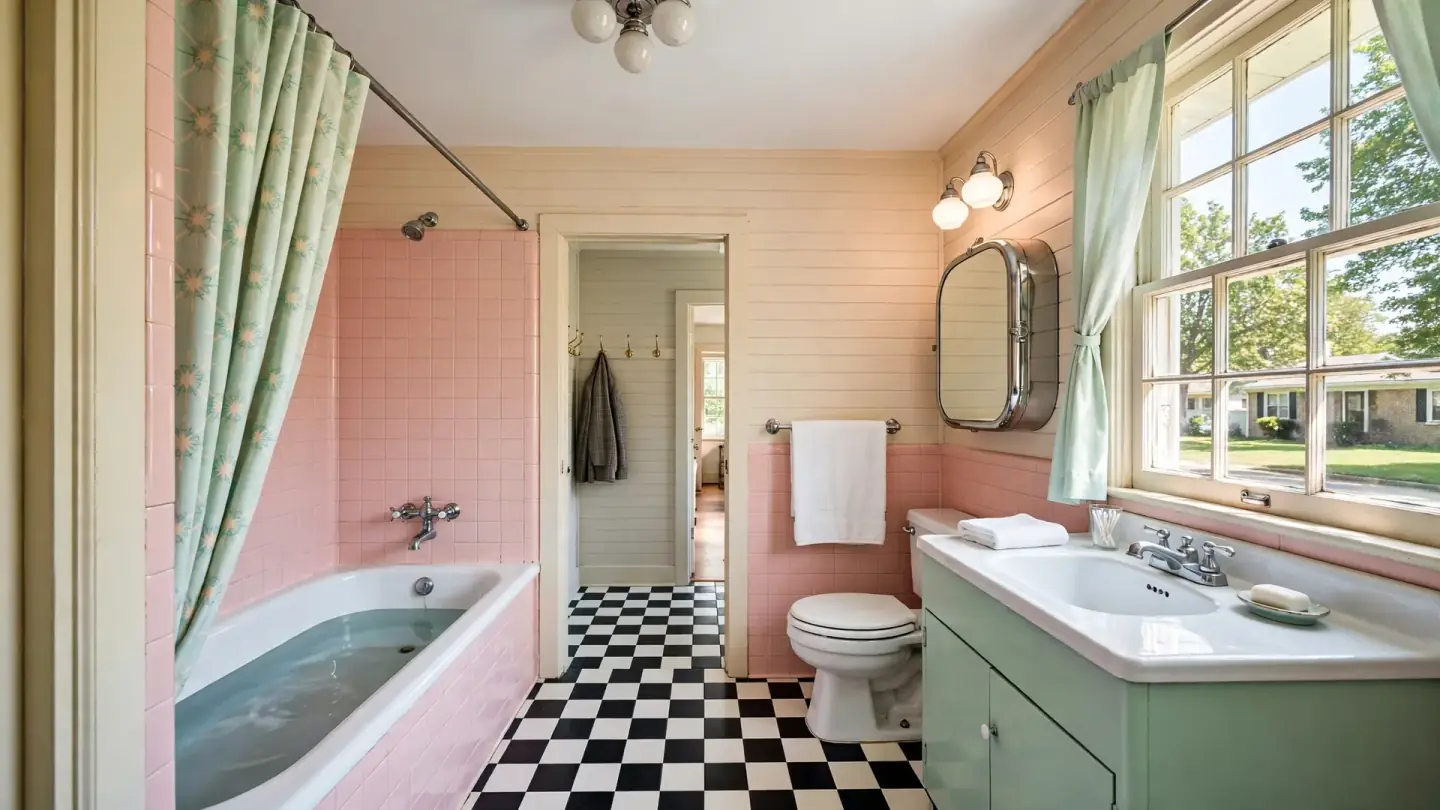
Key facts: Bathroom Drain Cleaning
- Dayton pumps its water from a sand-and-gravel buried valley under the Great Miami, designated a Sole Source Aquifer in May 1988 [3].
- Dayton's treatment plants use conventional lime softening, then pH adjustment with carbon dioxide, before water reaches taps [2].
- Federal hydrologists describe local groundwater as very hard, so unsoftened supplies leave more scale in faucets, basins and drain arms [4].
- When a seldom-used fixture smells of sewer, the City points to an evaporated trap seal; a little water restores it [1].
What you notice
Which bathroom drain symptoms point to which cause?
Vanity drains slowly with the stopper up
Hair wrapped around the pop-up rod and stopper is the most common cause. It is close to the surface and quick to clear.
Sink fills while the toilet is flushed
Water rising in the basin or tub when the toilet flushes means the shared bathroom branch is restricted downstream of all three fixtures.
Slow everywhere, with gurgling
Every fixture in the room slow and noisy, with no single clog, points toward a blocked or undersized vent rather than the drain pipe.
Upstairs bath fine, downstairs slow
If only the lower bathroom struggles, the blockage is in its own branch or where it joins the stack, not in the main.
Overflow hole smells sour
The channel behind a vanity overflow traps soap scum and bacteria. The smell comes from the basin itself, not the sewer.
Gritty flakes when the trap is opened
Hard, chalky flakes in the trap suggest mineral scale from an older galvanized arm, common where water is hard or unsoftened [4].
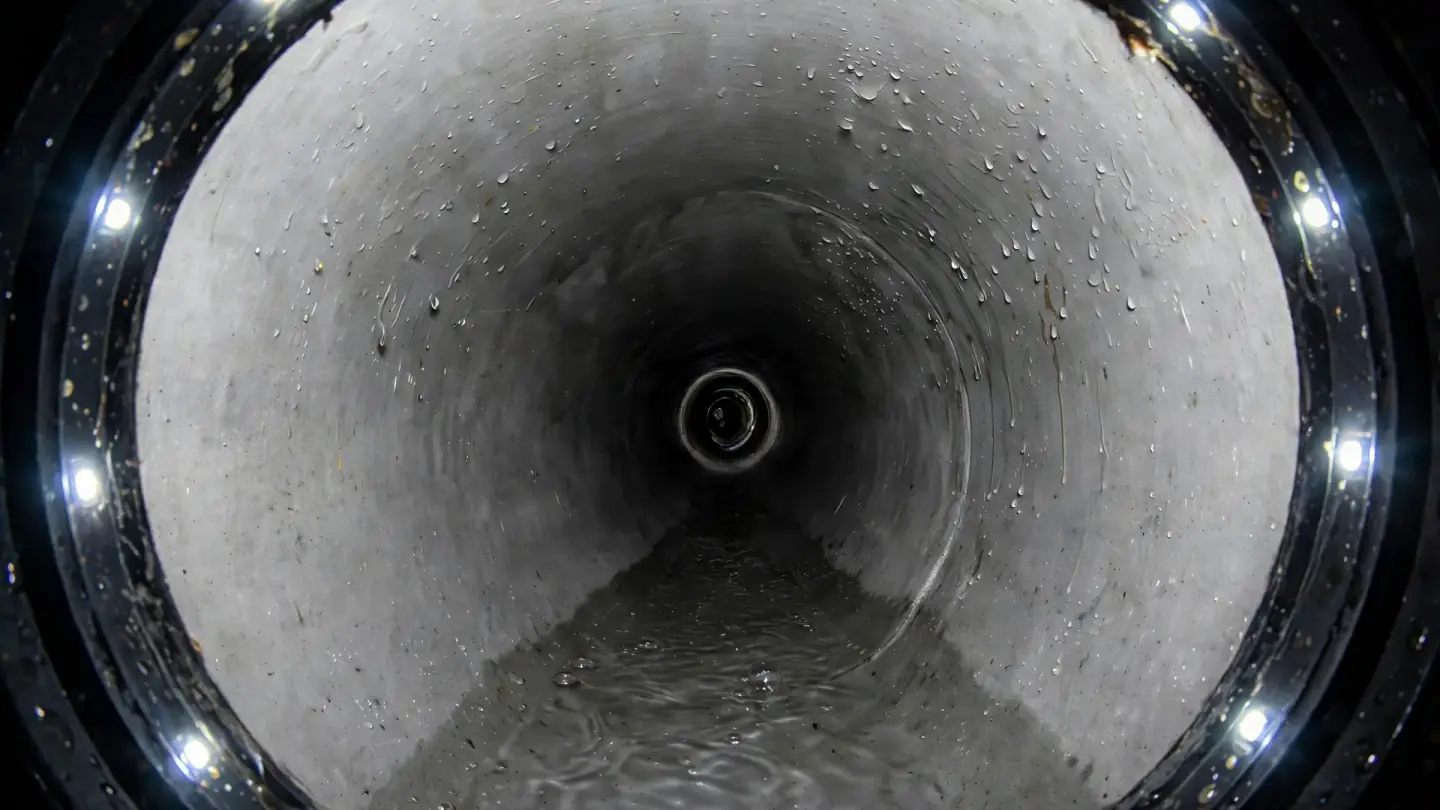
Clearing the bathroom
Working a bathroom clog from pop-up to stack
- 1
Test each fixture separately
The contractor runs the vanity, tub and toilet one at a time and watches where water appears, placing the clog in an arm, the branch or the vent.
- 2
Free the pop-up and tailpiece
The stopper and pivot rod are removed and cleaned. Many vanity clogs end right here, with a hair mat pulled from the tailpiece.
- 3
Open the trap and the wall arm
If the basin is still slow, the trap comes off and a small hand cable is run into the arm, where paste and scale collect behind the wall.
- 4
Cable the shared branch
For branch clogs, access through the tub drain, a toilet flange or a cleanout lets a slightly larger cable reach the junction of the three fixtures.
- 5
Check the vent if flow stays poor
If the drain is open but still sluggish and gurgling, the vent stack is checked for debris, nests or ice at the roof outlet.
- 6
Run all three fixtures together
A final test with the sink, tub and toilet draining at once confirms the branch can handle a real bathroom load without backing up.
Bathroom causes
Matching bathroom drain trouble to its fix
| Problem | Telling clue | Usual fix | How to prevent it |
|---|---|---|---|
| Hair on pop-up rod | Only the vanity is slow | Remove and clean stopper and tailpiece | Lift and wipe the stopper monthly |
| Toothpaste and soap paste | Slow vanity, clean pop-up | Trap cleaning and hand cable | Rinse with hot water after use |
| Galvanized arm scale | Chalky flakes in the trap | Descale or replace the arm | Replacement once the bore is narrowed [4] |
| Shared branch clog | Sink or tub rises when toilet flushes | Cable through flange or cleanout | Keep wipes and floss out of the toilet |
| Blocked roof vent | Every fixture gurgles, no clog found | Clear vent from the roof | Check the vent after storms or heavy snow |
| Dry trap smell | Odour from an unused sink or drain | Refill the trap with water | Run water in guest baths weekly [1] |
Your part
Bathroom drain fixes a homeowner can handle
- Pull and clean the pop-up stopperMost stoppers lift straight out or release with a quarter turn. Clean the hair off the rod end and the stopper, then refit.
- Use a plastic barbed stripThe thin barbed tools sold for hair clogs reach the tailpiece without dismantling anything and are safe for chrome finishes.
- Clean the overflow channelA bottle brush and hot water through the overflow hole removes the soap film that causes a sour smell.
- Leave the wall arm alone if it is metal and oldForcing a cable into a corroded galvanized arm can loosen a fitting inside the wall. That part needs someone with the right size cable.
- Do not climb onto the roof to clear a ventVent clearing involves ladders and roof pitches. Let the contractor check it once the drain itself has been ruled out.
- Watch for the whole-house patternA wet basement floor drain or slow kitchen alongside the bathroom means a shared pipe is involved; the guide on toilet and tub backing up together explains it.
Dayton bathrooms
Hard aquifer water, old galvanized arms and Dayton bathrooms
Most of the region drinks from one federally protected sole-source aquifer beneath the river valley [3], and the USGS rates that water very hard [4]. Dayton's own plants lime soften the water before it reaches homes [2], but houses on private wells, or that sat on harder supplies for decades, carry the history of that hardness inside their pipes.
In bathrooms, hardness shows up twice. Soap reacts with calcium and magnesium to form scum, which sticks to hair and pipe walls. Separately, mineral scale builds inside older metal pipe. A galvanized vanity arm from the early or middle twentieth century can lose much of its bore to scale and corrosion, and no amount of cabling restores the original diameter.
Dayton's older neighbourhoods, from the Oregon District to South Park, are full of houses built well before plastic drain pipe. Bathrooms were often added or rearranged later, sometimes with long horizontal arms and vents that do not quite meet modern layouts. Those quirks make careful diagnosis more useful than simply running a cable.
Winter is a vent issue as much as a drain issue. Dayton averages roughly 23 to 25 inches of snow a season [5], and frost or ice can narrow a roof vent outlet during long cold spells. A bathroom that gurgles only during the coldest weeks is worth mentioning when you call.
Bigger than a sink
When does a bathroom clog point to the stack or the sewer?
Clearing a vanity or bathroom branch should leave the room draining normally. If it does not, or if other parts of the house are involved, the problem is further down. A bathroom on an upper floor drains into the stack, which drains into the building drain and then the lateral, and a blockage in any of those shows up first in the lowest fixtures.
If the toilet and tub are backing up together, or a basement floor drain is wet, the clog is likely in the main, which calls for main sewer line cleaning, and in Dayton homeowners carry the lateral out to the street [1]. Many laterals under older Dayton streets are jointed clay, where roots find their way in; any excavation to repair one starts with an Ohio811 (OUPS) ticket filed two working days ahead [1].
Where a bathroom keeps clogging, camera footage is the honest answer. A drain camera inspection shows whether the branch is scaled, sagging or broken. If replacement of an old arm or branch is needed, the contractor will explain what they would recommend and whether a permit applies.
The tub and shower have their own clog patterns, covered on shower and bathtub drain cleaning, and toilet-only problems are covered under toilet drain clearing.
For other fixtures in the house, browse the full drain service list.
FAQ
Bathroom sink and branch questions in Dayton
Why is only my bathroom sink draining slowly while the tub is fine?
When only the vanity is slow, the blockage almost always sits in that sink's own pop-up, trap or arm. Hair wrapped around the pop-up rod and toothpaste or soap paste in the trap are the usual culprits. Because the tub and toilet share the branch further downstream, their normal flow tells you the shared line is open. This is the simplest bathroom clog to clear, and often the stopper alone holds the plug.
Why does my bathroom sink gurgle every time someone flushes the toilet?
Gurgling at the bathroom sink during a flush means air is being pulled through its trap, which points to a partial branch clog or a restricted vent. The sink and toilet usually share one branch and one vent pipe. When the flush cannot draw air from the vent, it sucks it through the nearest trap instead. Left alone, that can siphon the trap dry and let sewer odour into the room.
Can a blocked roof vent make every bathroom drain slow?
Yes, a blocked plumbing vent can slow every drain in a bathroom even when the pipes below are clear. Drain water needs air entering behind it to flow freely. Leaves, nests or ice at the roof opening starve the system of air, so fixtures drain sluggishly, gurgle and may give off sewer smells. The contractor you're connected with can check whether the vent or the branch is the real restriction.
Does Dayton's hard water clog bathroom sink drains over time?
It contributes, though soap scum and hair do most of the damage. Federal hydrologists class groundwater across the Miami Valley as very hard [4], and older galvanized arms can carry decades of scale. Dayton lime softens its city water before it reaches taps [2], which slows new buildup. Even so, soap film still sticks to rough pipe walls, and that coating catches hair on its way down.
Why does my guest bathroom smell like sewer when nobody uses it?
A guest bathroom that smells of sewer usually has a dry trap rather than a clog. Water in the trap evaporates when a sink, tub or shower sits unused, and sewer gas then rises freely. Run each fixture for a minute to refill the seal. Dayton's sewer guidance gives the same fix for basement odours [1]. If the smell returns within days, have the vent and fittings checked.
Should an old galvanized bathroom sink arm be replaced instead of cleaned?
If the galvanized arm is heavily scaled or corroded inside, replacing it usually beats another cleaning. A cable can punch a hole through the buildup, but it cannot restore the pipe's original bore, so the sink clogs again quickly. A short camera look or simply removing the arm shows how narrow it has become. Replacement with plastic is a small job compared with repeated service visits.
Is it safe to pour a chemical drain opener into a bathroom sink?
Pulling the pop-up stopper and removing the hair is safer and usually works better than chemicals. Caustic openers tend to sit in the trap without reaching a hair mat, and they leave hazardous water for whoever opens the line next. They can also damage old metal arms and chrome. If the stopper is clean and the sink is still slow, the clog is further down and needs a tool.