
Key facts: Floor Drain Cleaning
- Dayton's FAQ lists an overtaxed or blocked sewer main, or downspouts, foundation drains and sump pumps, as causes of basement flooding in heavy rain [1].
- A sewer odour in a Dayton basement is usually a dry trap; adding water to trapped fixtures fixes it [1].
- Dayton's storm and sanitary sewers are separate; laterals are not connected to catch basins [1].
- Ohio's plumbing rule calls for backwater valves where Ohio EPA or the local sewer purveyor requires them [2].
How it works
What sits under a basement floor drain grate
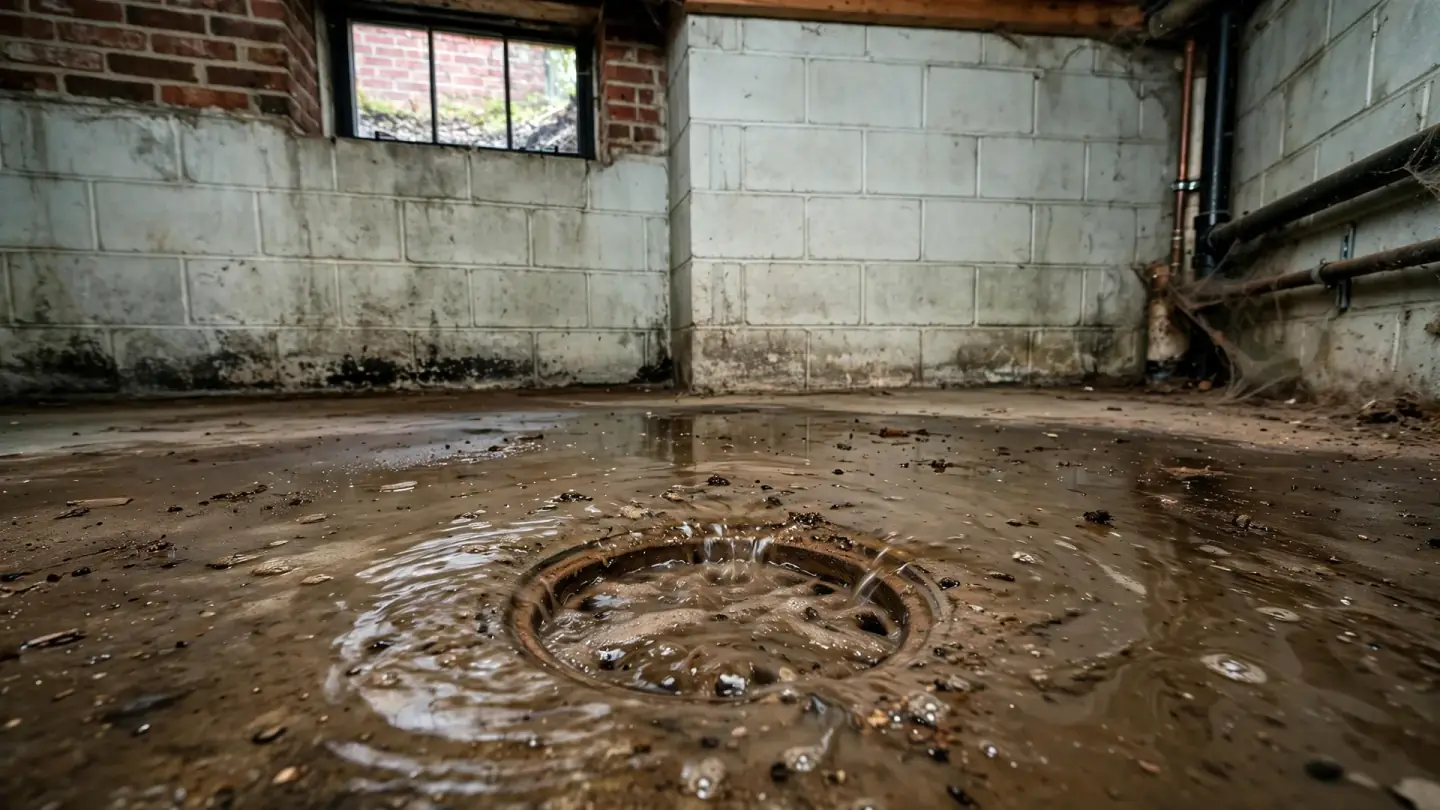
Lift the grate on a typical basement floor drain and there is a short drop into a trap, usually cast iron, set in the concrete. The trap holds water to block sewer gas. From there a pipe runs under the slab to the main building drain, which leaves through the foundation wall as the house lateral. Some older drains also have a sediment bucket or a cleanout plug in the side of the body.
Floor drains collect what nothing else does. Water heater relief discharge, washer overflow, dehumidifier drip, mopping water and grit tracked in from a garage all go down it. Over time, silt, lint and soap settle in the trap and the short pipe beyond, and the drain slows or stops. That is a local clog, and a small cable, a hand auger or a low-pressure jetter clears it.
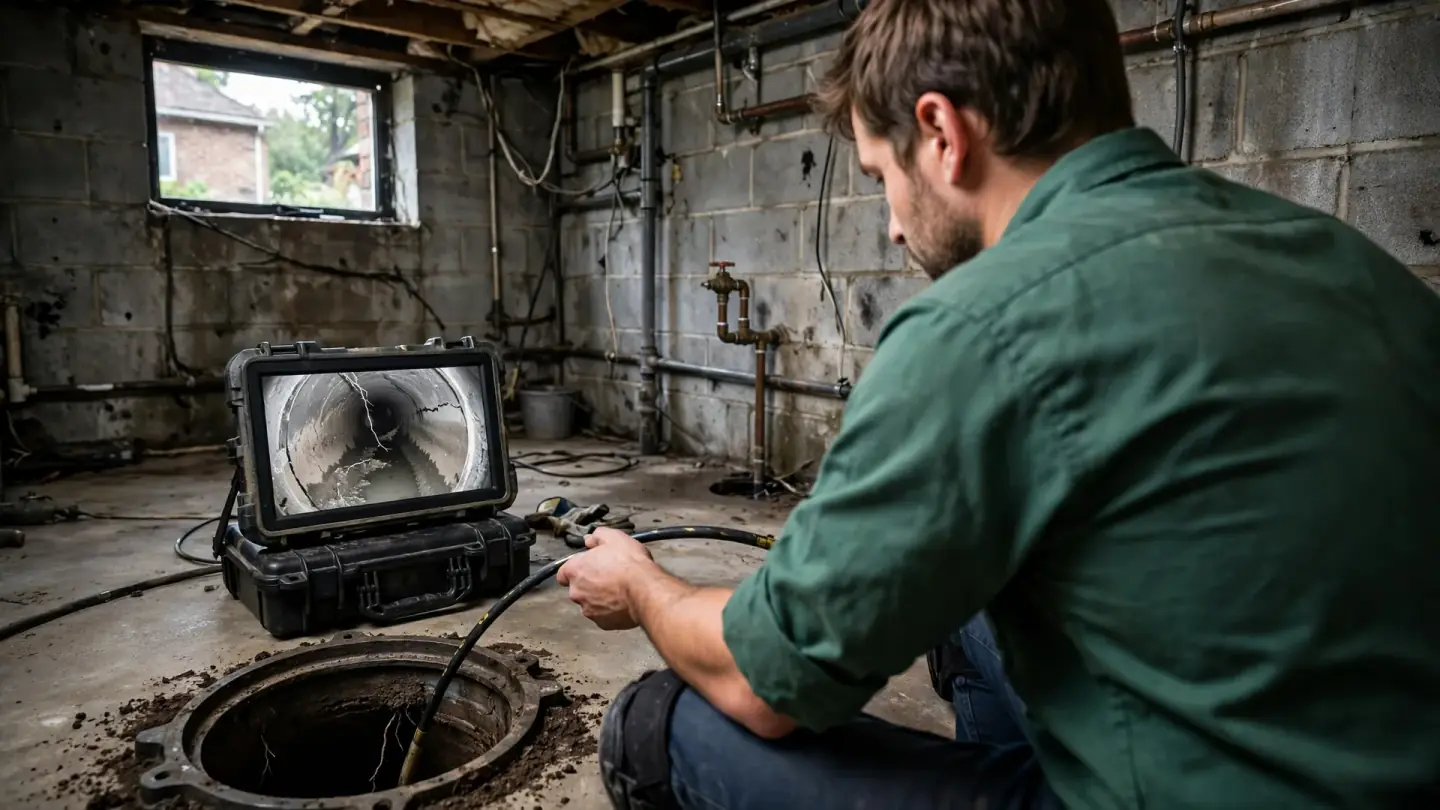
The other possibility is that the floor drain is working perfectly and water is coming up it. Because it is the lowest opening, any restriction in the lateral or overload in the public main shows up there first. Clearing the trap does nothing for that. The contractor needs to see beyond the grate, which is why a camera run into the line is often part of a floor drain visit.
Garage and laundry floor drains follow the same logic with different debris: road grit and salt in the garage, lint and detergent in the laundry. For drains that also take a sump discharge or groundwater, see the guide on sump pit vs floor drain.
Signs
Why is my basement floor drain backing up?
Puddle that sits after the washer runs
If the drain takes water slowly and the puddle shrinks over an hour, the trap or first length of pipe is partly blocked with lint and silt. A local cleaning usually fixes it.
Water rising only during heavy rain
A drain that is fine in dry weather but backs up in storms points away from a simple clog. Rainwater entering the sanitary line or an overtaxed main is more likely.
Sewage, not clear water, coming up
Grey or brown water with paper means the sanitary line downstream is blocked. Stop using fixtures upstairs; every flush adds to the floor.
Sewer smell with no water at all
The trap has dried out. The City FAQ says a basement sewer smell is usually a dry trap, and pouring water in restores the seal.
Gurgle at the floor drain when a toilet flushes
Air pushed back through the floor drain trap means flow is restricted downstream. It often precedes a full backup by days or weeks.
Garage drain full of sand and grit
Garage floor drains catch road grit and salty slush. They fill from the bottom up, and the debris has to be removed, not pushed further.
The cleaning
Floor drain visit order: diagnose, clear, prove
- 1
Ask about weather and timing
When did it back up, during which rain, and which fixtures were running? Those answers separate a local clog from a lateral or main problem before tools come out.
- 2
Pull the grate and scoop the trap
Debris sitting in the trap is removed by hand first. Pushing a bucket of silt down the line only moves the problem.
- 3
Clear the short run to the main drain
A small cable or low-pressure jetter goes through the trap and along the under-slab pipe to where it meets the building drain.
- 4
Camera beyond the drain if needed
If the backup came from downstream, the camera goes in through a cleanout and down the lateral to find where flow stops.
- 5
Refill the trap and test
Water goes back in to seal the trap. A test flow, sometimes from the washer, confirms the drain takes volume without pooling.
- 6
Talk about rain backups honestly
If the cause is rainwater in the sanitary line or a main issue, the contractor explains it and points you toward the right fix rather than repeating cleanings.
Types of floor drain
Floor drain types in Dayton houses and what clogs each one
| Drain type | Usual debris | Clearing approach |
|---|---|---|
| Basement floor drain near laundry | Lint, detergent sludge, hair | Scoop trap, cable or small jetter |
| Basement drain near water heater | Silt, scale flakes, rust | Scoop trap, flush, check trap seal |
| Garage floor drain | Sand, road grit, salt residue | Remove grit by hand, then flush |
| Older drain with sediment bucket | Packed silt in the bucket | Empty bucket, clear outlet |
| Floor drain with backwater valve | Debris jamming the flap | Clean and test valve movement |
| Drain tied to foundation tile | Soil and fine sand from outside | Flush, camera to find entry point |
DIY vs where to stop
Floor drain jobs a homeowner can handle, and the line not to cross
- Lift the grate and remove lint, hair and grit you can reach with a gloved hand or a wet vac.
- Pour a bucket of water into a floor drain every few months to keep the trap from drying out.
- Keep a lint trap on the washer discharge hose if it empties near the floor drain.
- Clear leaves and dirt from outside window wells and stairwell drains before winter.
- Do not pour caustic opener into a floor drain. It sits in the trap, and anyone who later opens it gets a face full.
- Do not open a basement cleanout while water is standing on the floor; the line is under pressure.
- Stop and call when water comes up rather than going down, especially if it is sewage.
Dayton specifics
Do Dayton's separate sewers stop rain backups in basements?
In Dayton, sanitary and storm sewers are separate systems: storm water goes to rivers and streams, sanitary flow to the treatment plant, and house laterals are not supposed to connect to catch basins [1]. In theory, rain should never reach your floor drain through the sanitary line. In practice, it does when downspouts, foundation drains or sump pumps are tied into the sanitary lateral.
The City's sewer FAQ lists the possibilities for basement flooding in heavy rain: an overtaxed or blocked sewer main, or internal plumbing such as downspouts, foundation drains or sump pumps [1]. It also says Sewer Maintenance can help work out which is the cause. If the main is the problem, it is the City's to clean; if it is internal, it is yours. A camera run gives both sides something to look at.
Backwater valves are part of the conversation. Ohio's sanitary drainage rule includes the plumbing code's backwater valve section, applied where Ohio EPA or the local sewer purveyor requires one [2]. A valve can stop main surcharge from reaching the basement, but it needs regular cleaning, and it does nothing about rainwater entering from your own downspouts.
Dayton history is a reminder of what heavy rain can do: the Great Dayton Flood of March 1913 led to the Miami Conservancy District [3]. Modern basement backups are far smaller, but the lesson for a floor drain is the same: watch where the water comes from.
Winter matters too. Garage drains and drains near exterior walls can freeze when the January mean low sits around 21.8°F [3], and salty slush tracked into a garage settles as grit when it melts. See frozen drain lines in winter if a garage drain stops in a cold spell.
When cleaning isn't enough
When a cleared floor drain keeps flooding in storms
If the floor drain clears easily and the camera shows a clean lateral, but water still rises in heavy rain, cleaning is not the answer. The likely causes are clear water getting into the sanitary system from your own downspouts, foundation drains or sump discharge, or a public main that is overloaded or blocked. The first is a plumbing fix on your property; the second is a call to Dayton Sewer Maintenance [1].
If the camera shows roots, a belly or a broken section in the lateral, the floor drain is just where that problem surfaces. The next step is a full sewer line inspection and, where the pipe is sound but dirty, main sewer line cleaning.
For step-by-step help during the storm itself, the guide to a basement drain backing up after rain covers what to stop using and what to note for the contractor.
Basement problems often overlap with the other jobs in our drain service directory.
FAQ
Basement and garage floor drain questions in Dayton
Why does my basement floor drain back up only when it rains hard?
Backups that come only with heavy rain usually mean stormwater is reaching the sanitary line, or the City main is overloaded. Dayton's sewer FAQ lists downspouts, foundation drains and sump pumps tied into the sanitary system as common causes [1]. A plain clog in the floor drain would show up in dry weather too. A camera and dye test help confirm which situation you have.
Why does my basement smell like sewer near the floor drain?
The floor drain trap has most likely dried out, letting sewer gas come straight up. Floor drains often go months without water reaching them. Dayton's sewer FAQ recommends pouring water into trapped fixtures to restore the seal [1]. A bucket every few months keeps it full. If the smell persists after refilling, the trap or a nearby cleanout plug may be cracked.
Can a basement floor drain be cleared without opening the main cleanout?
Often yes, if the blockage is in the floor drain's own trap and short pipe. Silt, lint and sludge can be removed through the grate with a small cable. If the backup is coming from downstream, though, the main cleanout gives far better access to the building drain and the lateral. The contractor you're connected with decides based on where water stands.
Should I install a backwater valve on my basement floor drain?
A backwater valve can help where the City main surcharges, but it is not a cure-all. Ohio's plumbing rule calls for them where the sewer authority requires one [2]. A valve needs periodic cleaning and does not stop rainwater from your own downspouts or foundation drains entering the line. Find the source of the water before deciding on one.
Is a garage floor drain connected to the sanitary sewer in Dayton?
It depends on the house; some garage drains go to the sanitary line, others to a dry well or the storm system. Dayton keeps storm and sanitary sewers separate [1], so a misconnection matters. A camera run and dye test show exactly where your garage drain goes before anyone chooses how to clear it or what can safely go down it.
Who do I call if the Dayton sewer main is causing my floor drain backup?
The City's Division of Sewer Maintenance handles upkeep of the public main [1]. Its sewer FAQ also says staff can help work out whether a rain-related backup comes from the main or from your own plumbing. Having your lateral checked on camera first gives you clear evidence to share. Avoid running water while the main is suspected.
How often should a basement floor drain be cleaned?
Many floor drains never need routine cleaning at all. A drain near the laundry or water heater that slows every year or two benefits from a periodic check, since lint and sediment build up there. If a floor drain ever backs up with sewage, have the line scoped promptly rather than waiting to see whether the next storm repeats it.