Key facts: Emergency Bathroom Drain Cleaning
- Ohio regulates sanitary drainage inside buildings through Chapter 7 of the 2021 International Plumbing Code as adopted with state modifications [1].
- A sewer smell from a little-used basement bathroom is usually a dry trap, fixed by pouring water into the fixture [2].
- Toilets can gurgle or splash while Dayton crews jet the sewer main nearby, because of vacuum and back-pressure in the line [2].
- Dayton's January mean low is about 22°F at the airport, enough to freeze drain lines in cold exterior walls [3].
How bathrooms are piped
Why does one blockage affect every fixture in the bathroom?
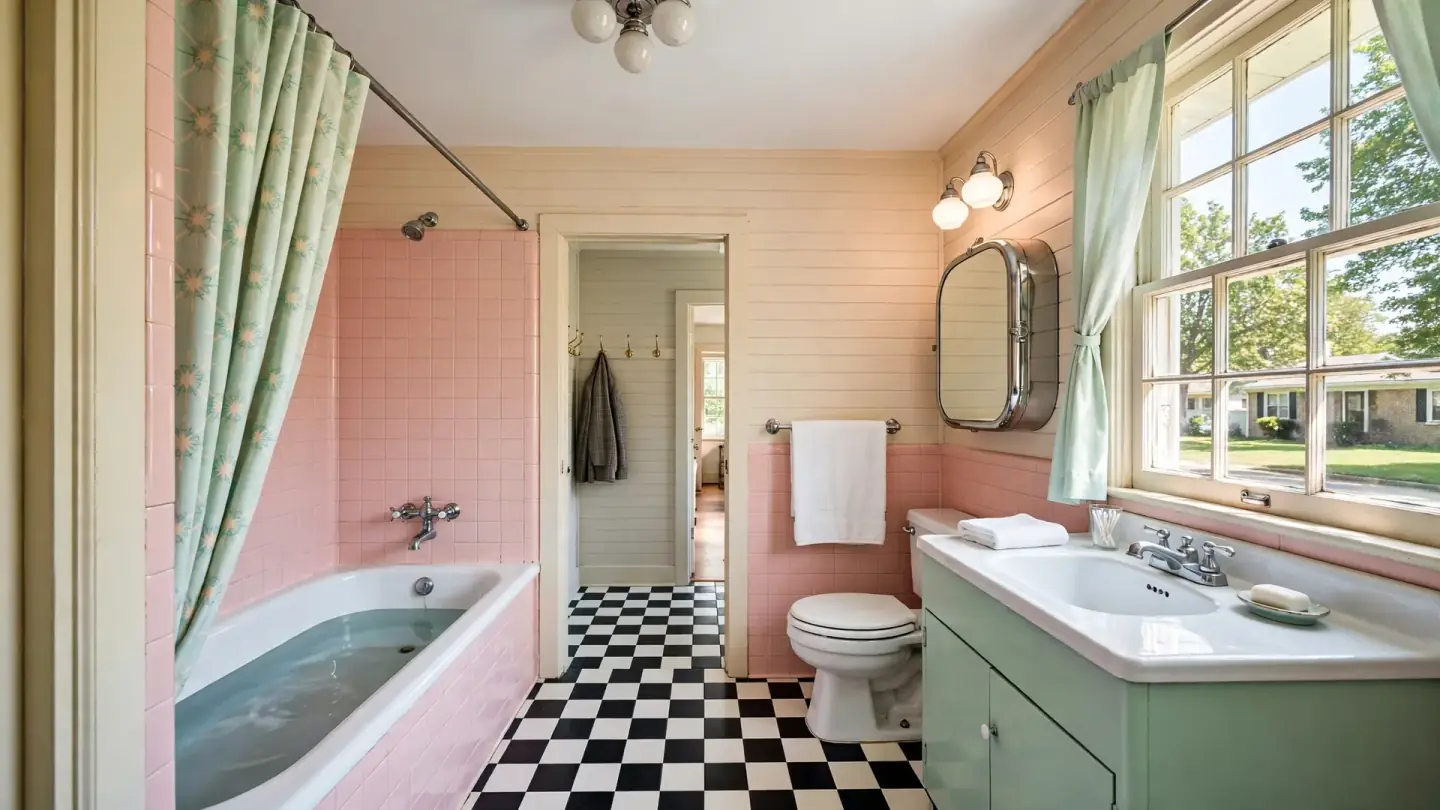
In most houses, the toilet connects to a 3-inch pipe and the tub and vanity to smaller lines that tie into it close by. All of them then drop into the main stack. A blockage at or after that tie-in point affects everything upstream. Hair and soap from the tub, wipes or too much paper from the toilet, and toothpaste and grooming product residue from the sink all end up in the same short stretch of pipe.
Where the bathroom sits changes the picture. In an upstairs bathroom, backing up is limited to that room, and the danger is water through the floor. In a basement bathroom, the fixtures are the lowest openings in the building, so a blockage anywhere further down, including the main line, shows up there first. If your basement tub and toilet are backing up together and the rest of the house is also slow, the toilet and tub backing up together guide explains how to tell a bathroom clog from a main line problem.
Older Dayton homes add a twist. Many were built with cast iron or galvanised branch lines that roughen inside over the decades, and very hard regional groundwater [4] leaves mineral scale that hair and soap catch on. In winter, a bathroom on an exterior wall or above an unheated space can also freeze; a frozen branch looks just like a clog, and the frozen drain lines guide covers how to spot it.
If the problem is spreading beyond the bathroom, the emergency drain cleaning triage page helps you sort which emergency it is.
The visit
How a contractor works through a backed-up bathroom
- 1
Find which fixture is the outlet
The contractor checks which fixtures react to which, to place the blockage before or after the point where the bathroom lines join.
- 2
Choose the best entry
Often that is the tub overflow, a roof vent or a pulled toilet, because the toilet's own trap is hard to cable through cleanly.
- 3
Clear the shared run
A small cable machine or toilet auger opens the branch and pulls out hair mats, wipes or paper plugs.
- 4
Reset and seal
If a toilet was lifted, it goes back on a new wax ring and is checked for rocking and leaks.
- 5
Test the whole room
Tub, vanity and toilet are run together to prove none of them push water into the others any more.
Choosing the call
When is a bathroom backup urgent enough to call tonight?
Call for help when the bathroom cannot be used at all and it is the only one in the house, when water has reached the floor or ceiling below, or when what is coming up looks like sewage. A household with one bathroom and small children, older relatives or someone unwell has an emergency even if nothing has overflowed yet.
If the problem is limited to a single fixture, the emergency clogged drain service page is a better fit. For a toilet that is the only fixture failing, read the toilet emergency page. Once things are flowing, a non-urgent visit for bathroom drain cleaning or shower and bathtub drain cleaning can deal with buildup in the other lines.
If a basement bathroom gurgles or splashes only while City crews are working in the street, the City's FAQ explains that jetting the main can cause it [2]. That is not a private blockage and passes once the crew finishes. Neighbours with the same storm-time backup should also contact Dayton Sewer Maintenance about the main. For background, browse the full list of drain services before you call.
FAQ
Bathroom backup questions from Dayton households
Why does my bathtub fill up when I flush the toilet?
The toilet and tub almost always share one branch pipe, and that pipe is blocked downstream of both. Flush water has nowhere to go, so it rises at the lowest opening, which is usually the tub drain. Stop flushing, keep the tub plug out so you can watch the level, and call a contractor to clear the shared line.
Is it safe to shower if my bathroom drain is backing up?
No, not until the line is cleared. Shower water joins the same blocked branch and can push dirty water into the tub, onto the floor or through the ceiling below. Use another bathroom on a different branch if the house has one, and keep children and pets away from standing water in the tub or shower pan.
Should I pour drain cleaner into a backed-up bathroom drain?
It is better not to. A chemical cleaner sitting in standing water rarely reaches a blockage further down the branch, and it leaves caustic water in the tub that the contractor then has to work around. Mixing two products can release harmful fumes. Bail out what you can and tell the contractor exactly what has been used.
How do I stop water leaking through the ceiling under my upstairs bathroom?
Stop using every fixture in that bathroom first, then close the toilet supply valve so the tank cannot refill. Put a bucket under the drip and move electronics away. If water keeps appearing with no fixtures running, a supply pipe may be leaking rather than a drain, so shut the main water valve and mention this on the call.
Can a contractor clear a bathroom backup without pulling the toilet?
Often yes. Many shared bathroom blockages can be reached through the tub overflow, a cleanout or the vent stack with a drain cable. Pulling the toilet gives the most direct route into the branch, so the contractor may recommend it when the cable cannot pass. Ask them to explain the access point before work starts.
What should I tell the contractor about my bathroom backup when I call?
Say which fixtures are affected, which floor the bathroom is on and whether any other bathroom or the basement floor drain is acting up. Mention anything already used, such as a plunger or a cleaner, and whether water has reached the floor or the ceiling below. Those details help them judge how far down the blockage sits.