
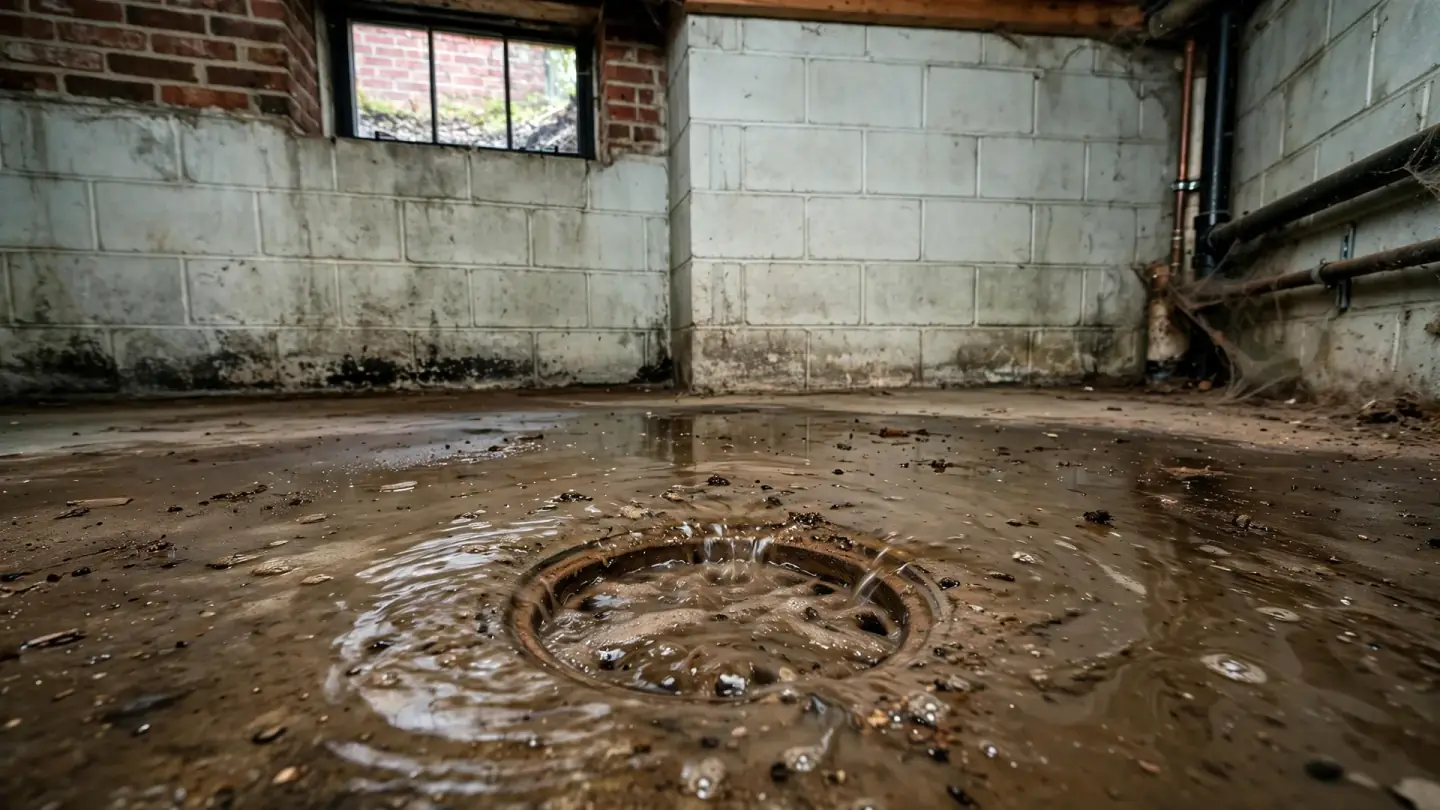
Key facts: Basement drain backing up after rain
- Dayton runs separate storm and sanitary sewers; house laterals are not supposed to connect to catch basins [1].
- The City lists an overtaxed or blocked main, or downspouts, foundation drains and sump pumps tied into plumbing, as heavy-rain basement flooding causes [1].
- Everything on the private connection, up to the point where it meets the City's pipe, is the owner's job [1].
- Ohio's plumbing rule calls for a backwater valve where Ohio EPA or the local sewer purveyor requires one [2].
Short answer
Why does my floor drain only back up when it rains?
A floor drain that backs up only during or right after heavy rain is telling you that extra water is getting into the sanitary side somewhere. In Dayton, storm and sanitary sewers are built as separate systems, so in theory rain should never reach the pipe your floor drain empties into [1]. In practice the City itself names two kinds of cause: the public main being overtaxed or blocked, and the house's own plumbing, such as downspouts, foundation drains or a sump pump discharging into the sanitary line [1].
There is a third case the City FAQ does not need to spell out: a lateral that is already narrowed by roots, grease or a sag. On a dry day it copes. During a storm, when every gutter-fed or groundwater-fed connection adds flow, it cannot keep up and the lowest opening in the house overflows. The fix differs completely between those three, which is why diagnosis comes before clearing.
What you see / likely cause / what to do
Reading a storm-day floor drain backup
| What you see | Likely cause | What to do |
|---|---|---|
| Clear or muddy water rises in the floor drain within an hour of a downpour, then falls when rain stops | Groundwater or roof water entering the sanitary line through a foundation drain, downspout or sump tie-in | Note which downspouts and sump lines run where; ask for a camera and dye check of connections |
| Grey water with toilet paper or odour comes up, and neighbours report the same | Public main overtaxed or blocked during the storm | Stop water use; contact City Sewer Maintenance, who can help work out which side it is [1] |
| Backs up in storms and also drains slowly on dry days | Partly blocked lateral: roots, grease, scale or a sag | Book main sewer line cleaning with camera footage afterward |
| Water appears at the floor drain only when the sump pump runs | Sump discharge routed into a laundry tub or floor drain | Reroute the discharge outdoors; do not pump groundwater into the sanitary line |
| Water seeps from the wall-floor joint, not the drain | Hydrostatic groundwater, not a drain problem | Grading, gutters and sump work rather than drain cleaning |
Where a camera goes in
Safe checks
Checks you can do before the storm passes
- Look at the water. Clear or muddy water suggests groundwater or roof water; grey water with paper or odour means sewage and you should stop using fixtures.
- Walk outside and follow each downspout. One that disappears into the ground near the foundation may be tied into a pipe that leads to the sewer.
- Watch the sump pump cycle. If the floor drain or laundry tub rises each time it runs, the discharge is going to the wrong place.
- Ask a neighbour on the same street whether their basement drain is also backing up. Several homes at once points toward the main.
- Do not open the cleanout cap while water is standing in the drain; the line may be under pressure and sewage can surge out.
- Keep chemical openers out of a flooded drain. They do not move a storm-loaded line and they make the water hazardous for whoever opens it next.
Cause 1
Foundation drains, downspouts and sump lines feeding the sewer
Older Dayton houses were sometimes plumbed with footer tile or downspouts discharging into the house drain, and a later sump pump may have been piped to the nearest floor drain or laundry tub because it was convenient. Each of those connections sends rain or groundwater into a pipe sized for household wastewater. The City lists exactly these connections as internal causes of heavy-rain basement flooding [1].
A sump pump is meant to lift groundwater out of a pit and discharge it away from the building, not into the sanitary system [3]. When the discharge is routed to a floor drain, the pump can overwhelm the line within minutes of a storm. The tell is timing: the rise in the floor drain follows the pump cycle, not toilet flushes. Our guide on sump pits versus floor drains explains the difference in more detail.
Cause 2
Is it the City main or my own sewer lateral?
The City's Division of Sewer Maintenance is in charge of the sewer main under the street, while the homeowner owns the lateral from the house to that main [1]. If the main is overloaded during a big storm, water can push back up laterals toward the lowest basement openings on the street. That is a public-side event, and the City says Sewer Maintenance can help determine whether the cause is on its side or inside the property [1].
If only your house backs up, the lateral is the likelier suspect. Roots enter older clay joints, grease builds up along the crown, and settled sections hold water. A line running at half its bore on a dry day has no reserve for a storm. A main sewer line cleaning followed by a recorded camera run separates these cases quickly.
Cause 3
Backwater valves and what Ohio's plumbing rule says
A backwater valve is a flap fitting that lets wastewater leave the house but closes when flow reverses. Ohio adopts the International Plumbing Code drainage chapter with modifications, and its section on backwater valves applies where Ohio EPA or the local sewer purveyor requires one [2]. Whether a valve suits your house depends on how the basement fixtures are plumbed and on the City's rules, so treat it as a question for the contractor and the sewer authority, not a weekend purchase.
A valve also does nothing for a blocked lateral. If the restriction is between the valve and the street, the valve closes and the house still cannot drain. Clearing and camera inspection come first.
How a contractor diagnoses it
How storm-day backups get traced
- 1
Interview about timing
The contractor asks when it backs up, what the water looks like, and whether neighbours are affected. Timing against rainfall and sump cycles narrows the cause before any tool goes in.
- 2
Open the cleanout safely
Once standing water has receded, the cleanout is opened and the line is checked for a standing level that shows a downstream restriction.
- 3
Clear a working path
If the lateral is restricted, a cable machine or hydro jetting opens it so a camera can pass.
- 4
Record the camera run
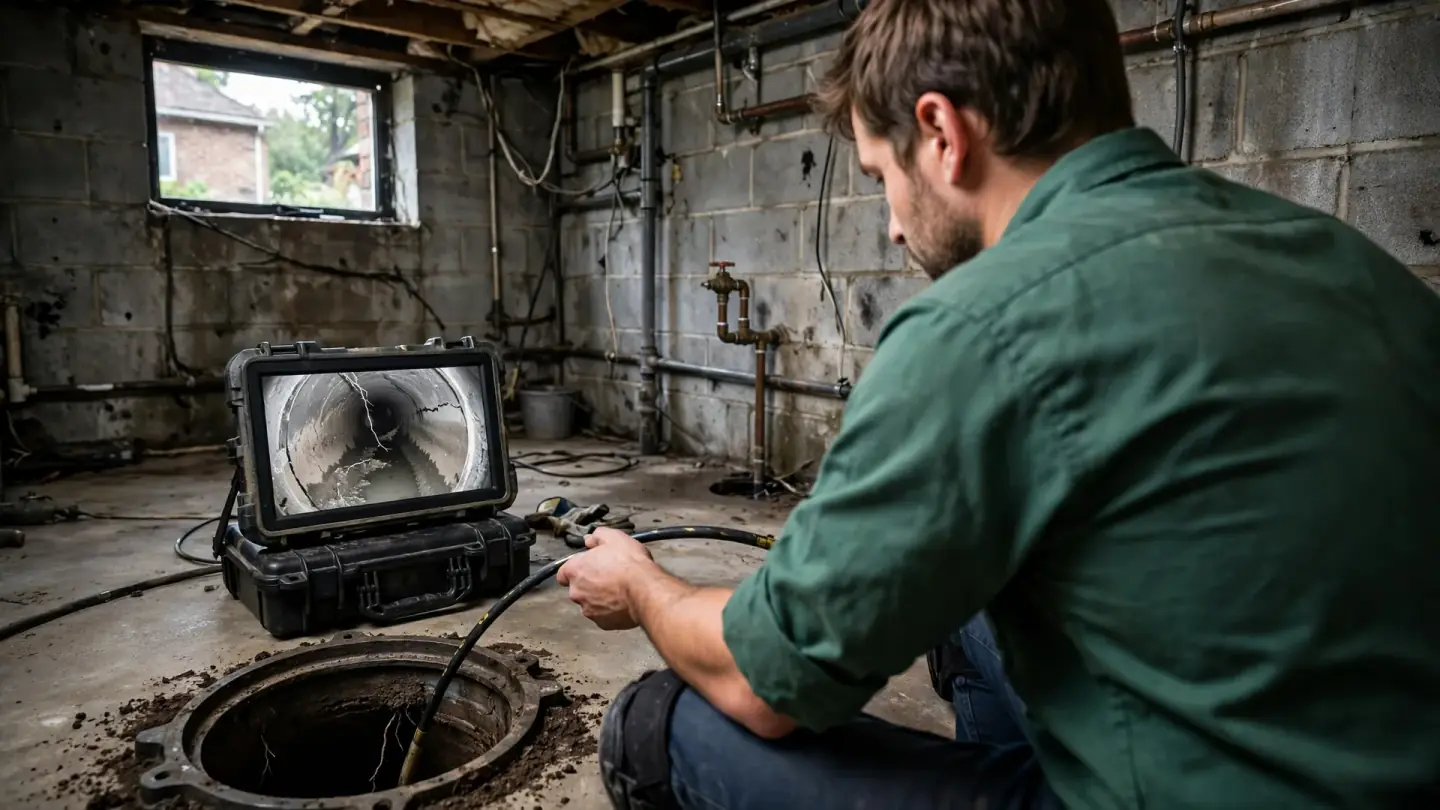
A drain camera inspection records roots, offsets, sags and any branch connections where foundation or downspout lines enter. Ask to keep the footage and the footage distance to each defect.
- 5
Check connections outside
Downspouts and sump discharge lines are traced; water or dye run into a suspect connection shows whether it reaches the sanitary line.
- 6
Locate the lateral
The City does not locate house laterals, so a probe in the camera head can mark the line's route and depth if digging may be needed [1].
Fix options
Fixes that match the storm-day cause
If the camera shows roots or grease, mechanical cleaning or jetting restores the bore and a follow-up schedule keeps it open; the City notes there is no fixed timetable for root cleaning because it depends on the line and nearby trees [1]. If a downspout or sump line is tied into the sanitary system, rerouting it to discharge on the surface away from the foundation removes the storm load at its source.
If the footage shows a broken or collapsed lateral, the City says a licensed plumber pulls a permit for the repair, and street-side work in the right-of-way is done by City crews and billed through the plumber [1]. If the lateral is clean and the backup still follows storms on a whole street, the conversation belongs with Sewer Maintenance about the main.
For related reading, the drain guides library covers the basement from another angle in sump pit or floor drain, and gurgling before a storm backup explains the warning noise that often comes first.
Prevention
Keeping the next storm out of the floor drain
- Send every downspout and sump discharge to grade, well away from the foundation.
- Keep the floor drain trap filled so you notice odour or level changes early; the City links basement odour to dry traps [1].
- Schedule preventative drain maintenance if footage showed roots near joints.
- Avoid grease down any drain; the City asks residents to put it in the trash [1].
- Keep storage off the floor around the drain so a small rise does not ruin boxes before you notice it.
What to tell the contractor
Details to give when you call about a rain backup
- How long after the rain started the water appeared, and when it went down.
- Whether the water was clear, muddy or grey with paper.
- Whether you have a sump pump, and where its discharge pipe goes.
- Whether neighbours on the street had the same problem.
- Where your basement cleanout is, and whether the line also drains slowly in dry weather.
- Any earlier camera footage or root cleaning on the lateral.
FAQ
Rain and basement drain questions
Does Dayton mix storm water and sewage in the same pipe?
No, the City of Dayton describes separate storm and sanitary systems. Storm water is carried to rivers and streams, while sanitary flow goes to the treatment plant. Private laterals are not supposed to connect to catch basins, and the City says illegal connections get disconnected [1]. That separation is why rain in your basement drain usually points to something feeding or restricting your own line.
Who pays to fix a cracked sewer lateral under the street in Dayton?
The homeowner, not the City, maintains the service pipe that carries waste out to the public sewer. A licensed plumber pulls the permit, City crews handle the portion inside the public right-of-way and bill the plumber, and the plumber then bills the owner [1]. Ask the contractor you speak with to explain each step before any digging is agreed.
Is it okay for my sump pump to empty into the basement floor drain?
It should not, because a sump pump exists to move groundwater away from the building, not into the sanitary sewer [3]. The City of Dayton lists sump pumps tied into plumbing as one cause of heavy-rain basement flooding [1]. Rerouting the discharge outdoors, away from the foundation, takes that extra load off the floor drain during storms.
Will installing a backwater valve stop every rain backup?
No, a backwater valve only blocks reverse flow from the public side. It cannot clear a lateral clogged with roots or grease, and whether one is required depends on Ohio rules or the local sewer authority [2]. Having the line cleaned and filmed first shows whether a valve would actually address the cause you have.
Why is my basement drain backing up even in light rain now?
When small storms start causing backups, the lateral has usually lost capacity. Roots, grease buildup or a sagging section can narrow the pipe, or a downspout or new connection may be feeding it. A camera run after the line is cleared shows which of these is present, so the fix matches the cause.
Should I run the washer or shower while the floor drain is full of water?
Stop using water in the house until the floor drain empties, because every gallon you send down has nowhere to go but back up. Hold off on laundry, showers and dishwashers. Keep children and pets away from the water, treat it as contaminated, and call to describe the backup so a local contractor can talk you through next steps.
What should I tell the contractor about a storm-day backup?
Say when the backup started relative to the rain, which openings filled, and whether it drained by itself afterwards. Mention any sump pump, downspouts near the foundation and earlier backups. Those details help the contractor you are connected with judge whether the lateral, a hidden connection or the public main is the likelier source.