Key facts: Emergency Kitchen Drain Cleaning
- Grease poured down drains solidifies and blocks sewer mains; Dayton asks residents to put grease in the trash instead [1].
- Dayton's water plants use conventional lime softening before filtration, which reduces scale but does not stop grease and soap deposits [2].
- Groundwater across the Great Miami and Little Miami basins is very hard calcium-magnesium-bicarbonate water [3].
- Ohio applies Chapter 7 of the 2021 International Plumbing Code to sanitary drainage inside buildings, with state modifications [4].
Kitchen warning signs
Signs the kitchen branch line is closing up
Water rising in the second basin
When one side drains into the other, the blockage is past the point where the two basins join, in the shared trap or the line behind the wall.
Dishwasher leaves dirty water behind
A dishwasher that finishes with water in the bottom often cannot discharge because the drain hose leads into a blocked line.
Sour, greasy smell
Rotting food and fat sitting in a partly blocked trap give off a smell that cleaning the basin will not touch.
Slow for weeks, then stopped
Kitchen lines narrow gradually as grease coats the pipe wall; the final blockage usually follows a big cooking day.
Inside the pipe
How does grease turn a kitchen line into a closed tube?
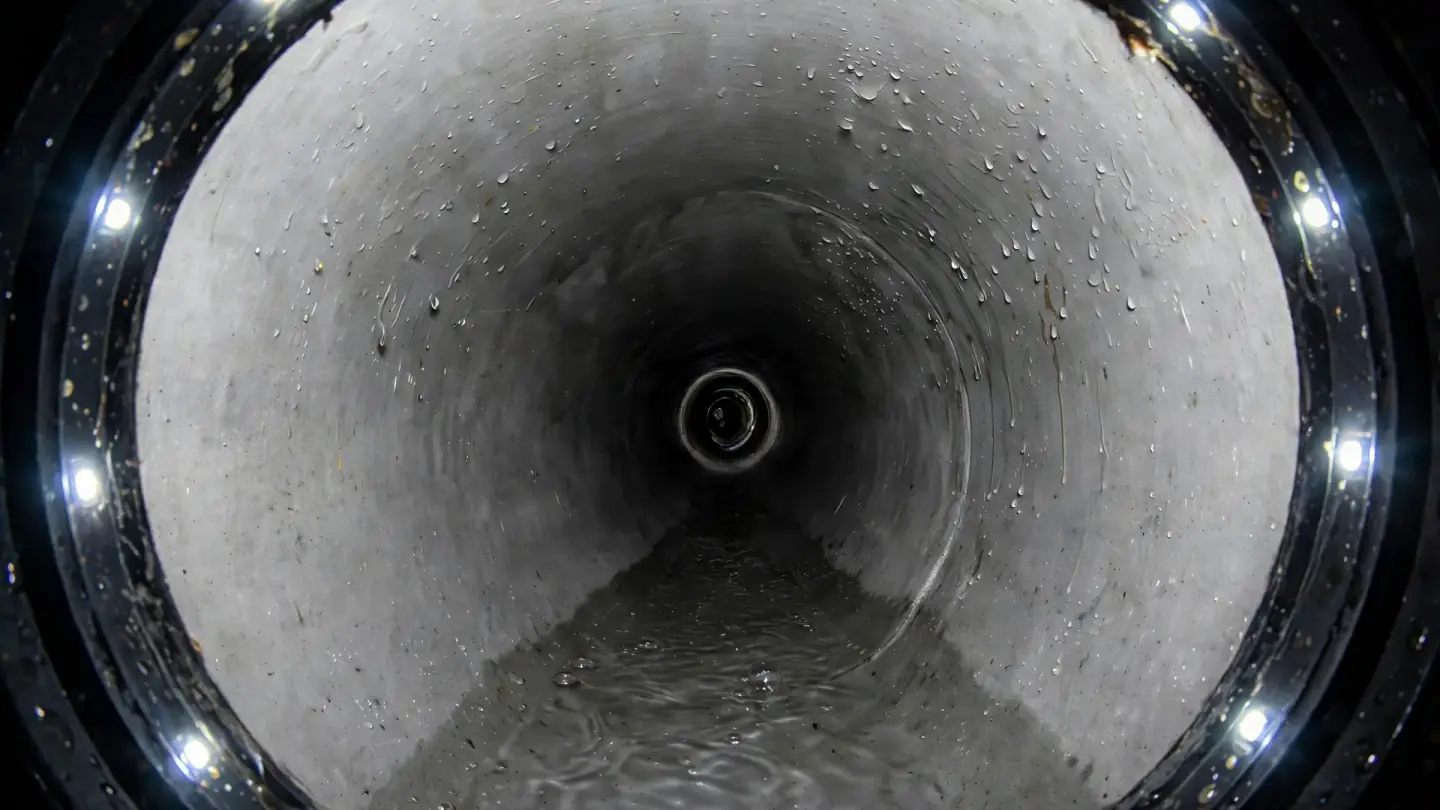
Warm fat runs down the sink as a liquid and cools as it travels. By the time it reaches the trap or the horizontal pipe behind the cabinet, it has started to set. It clings to the pipe wall, then catches rice, coffee grounds, eggshell grit and vegetable fibre. Soap reacts with fats to form a waxy layer. Over months the open bore shrinks to a fraction of its original size, and one holiday roasting tray finishes the job.
The City of Dayton describes the same process at a larger scale: grease poured down drains solidifies and blocks the sewer mains, and residents are asked to put grease in the trash [1]. What blocks a main will block your branch line first. Water chemistry adds to it. The region's groundwater is very hard [3], and although Dayton softens its supply with lime [2], scale and soap scum still leave a rough surface that grease grips well, particularly in older galvanised or cast iron kitchen lines.
That is why kitchen clogs have a habit of coming back. A cable through the middle opens flow, but a coat of grease is still on the walls. If your kitchen line has needed clearing more than once in a year, it is worth reading about routine kitchen drain cleaning after the emergency, and about hydro jetting for pipes that are coated end to end.
Safe to try
Kitchen-only things you can safely try once
- Check the dishwasher air gap on the sink deck, if there is one; a blocked air gap can spill water that looks like a sink backup.
- Free a jammed disposal with its hex key from below, then press the reset button on the bottom of the unit.
- Seal one basin with a wet cloth or stopper and plunge the other with a flat-bottomed cup plunger.
- Scoop out visible food from the basin before plunging so you are not forcing it into the trap.
- Stop if plunging makes water appear anywhere else in the house; that means the blockage is further down than the kitchen branch.
The kitchen visit
What the contractor does under your sink
- 1
Empty and protect the cabinet
Standing water is bailed out and the cabinet floor covered, since kitchen trap water is greasy and smells strongly.
- 2
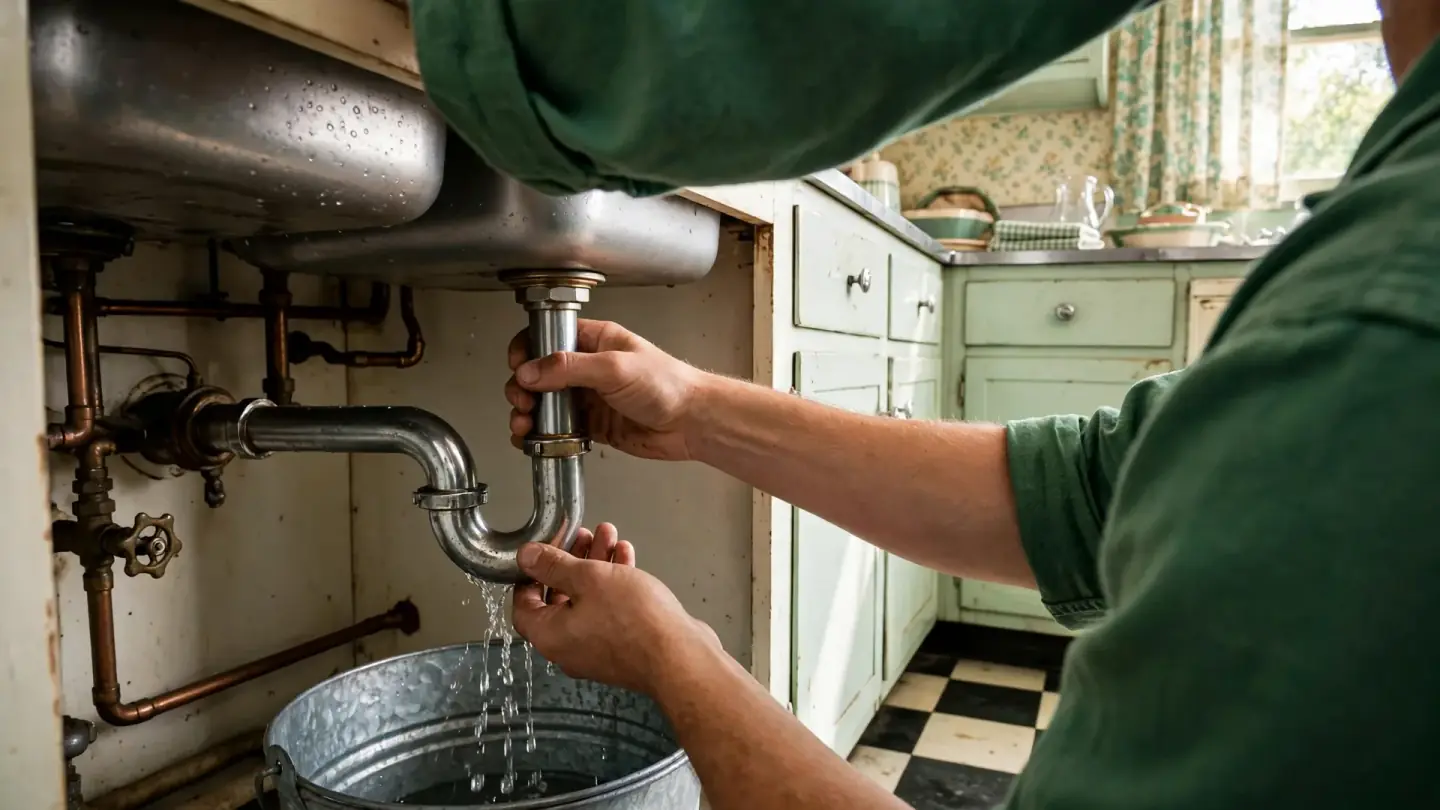
Remove the trap
Taking off the P-trap avoids running a cable through the disposal or basket strainer and gives direct access to the wall pipe.
- 3
Clear the branch to the stack
A cable with a cutting head works through the grease plug to the point where the kitchen line joins the main stack or building drain.
- 4
Check the dishwasher connection
The drain hose and air gap or high loop are checked so the dishwasher can discharge properly once the line is open.
- 5
Run hot water at volume
Both basins are filled and released together, the disposal is run, and the dishwasher drain tested to prove the line carries a real load.
When to pick up the phone
Which kitchen backups should not wait until morning?
Call if the sink will not go down at all, if dirty water is coming up in a basement floor drain or laundry tub when the kitchen drains, or if you have guests, a family to feed and no other place to wash up. Call as well if you notice water under the cabinet, because a trap joint can start leaking once the line behind it is full.
If water appears at fixtures beyond the kitchen, the blockage has moved into the main line and the emergency sewer line cleaning page is a better guide. A restaurant or café with the same problem should look at the commercial emergency page, which deals with grease traps and keeping the doors open.
On the call, mention whether the disposal is in use, roughly how old the house is, and whether this line has been cleared before. The contractor you're connected with uses that to decide whether a cable is likely to be enough or whether to talk about jetting later. Restaurants and cafés with the same trouble should see the commercial emergency page. For grease that builds slowly, the slow-draining sink guide explains early warnings, and the services hub lists every option.
FAQ
Kitchen sink emergency questions
Why is water coming up in both sides of my kitchen sink?
A double sink shares one trap and drain, so a blockage below the tee fills both basins together. The clog is usually grease and food in the trap arm or the branch line behind the wall. Stop running water, switch off the dishwasher and call if a single careful plunge does not move it.
Can I run my garbage disposal when the kitchen sink is backed up?
No. Running a disposal into a blocked line just grinds more waste into standing water and can push it past the trap, making the clog worse. Switch the disposal off at the wall. Press its reset button only after the line drains, and only if the unit has stopped humming.
Why is my dishwasher draining into the kitchen sink?
The dishwasher usually drains through the sink's plumbing, so when the kitchen line is blocked, its pump-out water comes up in the sink instead. Cancel the cycle, leave the door closed, and do not start another load until the line has been cleared by you or a contractor.
Is boiling water safe to pour down a clogged kitchen sink?
It is not recommended in a full sink. Boiling water can crack porcelain, soften plastic trap joints and scald you when it splashes back. It also rarely moves a grease clog that sits deeper in the line. Bail the sink instead and save hot-water flushing for prevention once the drain is clear.
What should I not do to a clogged kitchen drain?
Avoid mixing chemical cleaners, especially after one has already been used, because the reaction can be dangerous. Do not keep running water to test it, and do not take apart the trap over a full sink without a bucket underneath. Tell the contractor about anything already tried.
Can a contractor clear my kitchen drain without cutting into the wall?
Usually yes. Most kitchen clogs are reached by removing the trap and running a cable through the trap arm into the branch line. Some homes also have a cleanout on the branch in the basement. Opening a wall is rare and normally needed only if the pipe itself is damaged.