Key facts: Commercial Drain Cleaning
- Dayton's sewer FAQ says restaurants should install and maintain grease traps, because grease solidifies and blocks sewers [1].
- Owners are responsible for the building lateral to the sewer main; the City maintains the main [1].
- Ohio adopts IPC Chapter 7 for sanitary drainage inside buildings but deletes building-sewer sections [2].
- Dayton's water serves over 400,000 people from the Great Miami River Buried Valley Aquifer [3].
How it works
How commercial drainage differs from a single-family house
A commercial building usually has more of everything: more fixtures on each branch, bigger stacks, longer horizontal runs and a larger building drain leaving the property. A restaurant may have a three-compartment sink, prep sinks, a dish machine and several floor drains all feeding a grease interceptor before the sanitary line. An apartment building stacks the same bathroom and kitchen group floor after floor onto shared risers.
That changes how clogs behave. A grease line in a busy kitchen builds up much faster than a household kitchen branch. A shared stack means one tenant's habits can back up a neighbour's tub. A warehouse floor drain may take wash-down water full of grit. And the stakes are higher: a backup at the dinner rush or in a ground-floor unit has knock-on effects for staff, customers and tenants.
Commercial clearing equipment is sized for the job. Larger cable machines handle 4 and 6 inch lines, and higher-output jetters clean long horizontal runs and mains. Cameras with longer push cables reach further down a building drain. The approach is still the same as at home: find the cause, clear it properly, and show the result on screen.
Building owners and managers also need records. Footage, distances and notes on what was found let a manager see whether a line is a recurring problem, compare visits over time, and pass the information on to a repair contractor or a future owner.
Signs
What are the warning signs in restaurants, rentals and shops?
Kitchen floor drains pooling during dish service
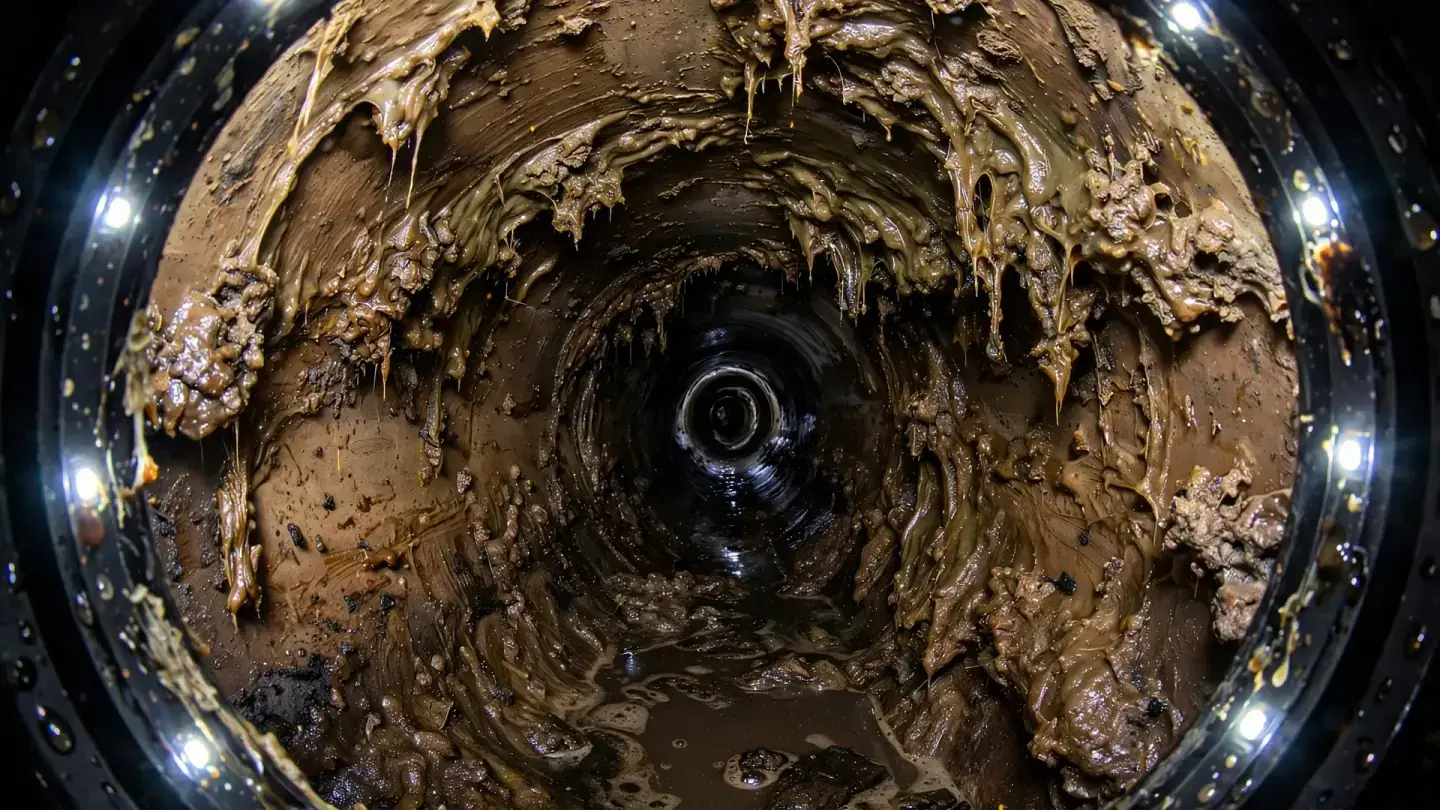
When floor sinks fill while the dish machine discharges, the line to the interceptor or beyond it is restricted. Grease is the usual cause.
Lower-floor tenants report backups first
In a stacked building, the lowest units on a shared riser see sewage when the stack or building drain is blocked. One call often signals a building-wide issue.
Restroom groups gurgling together
Several toilets and sinks gurgling or draining slowly at once points to the shared branch or the building drain, not a single fixture.
Grease interceptor overflowing between pump-outs
If the interceptor fills faster than its service interval, either the load has grown or the outlet line is restricted. Both need looking at.
Shop floor drain slow after wash-down
Grit, oil and debris from vehicle or equipment washing settle in the trap and under-slab line. Slow draining means it is building up.
Odours in a dining room or lobby
A smell near little-used floor drains or restroom fixtures is often a dry trap. Regular priming keeps the seal; a persistent odour needs a camera.
The service call
How a commercial drain call is handled around your operating hours
- 1
Describe the building and the symptoms
On the call, give the type of business, the fixtures affected, floor levels involved and when the problem started. That shapes what equipment comes.
- 2
Isolate affected fixtures
The contractor helps decide which fixtures to take out of use so the backup does not spread while the line is cleared.
- 3
Find the access closest to the restriction
Commercial buildings usually have several cleanouts. The right one shortens the run and keeps the work away from customer areas where possible.
- 4
Clear with commercial-size equipment
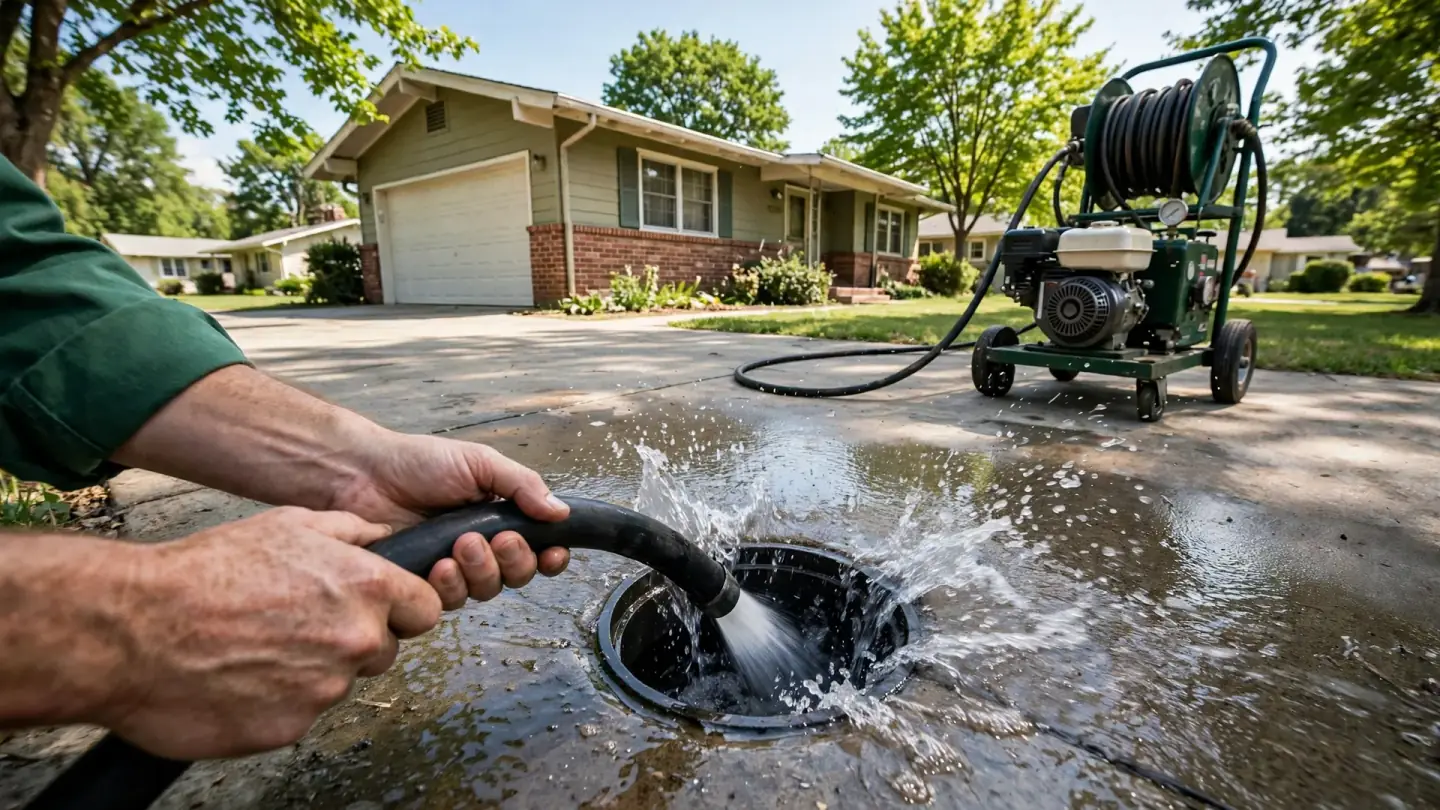
A large cable machine opens a solid stoppage; a jetter cleans grease and scale from the wall. Often both are used in that order.
- 5
Camera the line and record findings
The camera checks the cleared line, notes the condition of joints and fittings, and records distances for the building file.
- 6
Recommend an interval or a repair
Based on the footage, the contractor suggests a cleaning interval, interceptor service changes, tenant guidance or a repair where pipe has failed.
Building types
Commercial property types and the drain problems each tends to have
| Property type | Typical problem | Usual approach |
|---|---|---|
| Restaurant or bar | Grease in kitchen branches and the line past the interceptor | Scheduled jetting plus interceptor service |
| Apartment or multi-unit rental | Shared stack blockages from wipes, grease, hair | Stack cleaning from roof or cleanout, tenant guidance |
| Office or retail restroom group | Paper and wipes in shared branches | Cable clearing, camera on repeats |
| Auto shop or garage | Grit and oil in floor drains and interceptors | Trap cleaning, jetting, separator checks |
| Warehouse or light industrial | Long horizontal runs with settled debris | Jetting with camera verification |
| Salon or care facility | Hair and chemical residue in sink branches | Small-line jetting, strainers |
DIY vs where to stop
Staff and property manager tasks that keep commercial lines running
- Scrape plates into the trash before they reach the sink. Food solids and grease are what close kitchen lines.
- Keep strainers in every kitchen and floor sink, and empty them through the shift.
- Follow the grease interceptor service schedule and log each pump-out. Dayton expects restaurants to install and maintain grease traps [1].
- Prime little-used floor drains with water each week to stop odours.
- Post simple tenant guidance: no wipes, no grease, no feminine products in toilets.
- Stop staff from plunging or snaking shared lines with household tools. A shared stack can be pushed into a lower unit.
- Stop and call as soon as a floor sink, floor drain or lower unit shows rising water.
Dayton specifics
Who is responsible for commercial drains under Dayton's sewer rules?
The City of Dayton's sewer FAQ is direct about grease: poured down drains, it solidifies and blocks the mains, and restaurants should install and maintain grease traps [1]. A kitchen that lets grease past its interceptor is creating a problem for its own line first and for the public main after that.
Ownership works the same way for commercial property as for houses. The property owner is responsible for the building lateral from the building to the sewer main, while the City's Division of Sewer Maintenance looks after the main itself [1]. When a lateral repair is needed in the street right-of-way, City crews do that section and bill the plumber, who bills the owner [1].
Dayton keeps storm and sanitary sewers separate [1]. On commercial sites, roof drains, parking lot inlets and floor drains should go to the correct system. If a camera run finds storm inflow entering a sanitary line, that is a connection to correct, not a clog to clear, and it can be why a building's drains struggle in heavy rain.
Inside the building, Ohio's sanitary drainage rule adopts the plumbing code's drainage chapter with Ohio modifications, but deletes the building-sewer sections, leaving the sewer beyond the building to local authorities and Ohio EPA [2]. For a Dayton business, that means repairs outside the wall run through the City's permit process with a licensed plumber.
Some businesses around Dayton sit outside the City in Kettering, Huber Heights or Beavercreek, where sewer service and permits come from other providers. The Kettering area page and its neighbours explain who looks after the public sewer in each.
When cleaning isn't enough
When a commercial line needs repair instead of another clearing
Repeated emergency calls on the same line are a signal. If the camera shows a broken joint, a sagging section that collects grease, or a fitting with the wrong slope, the line will keep closing no matter how often it is cleared. The footage turns a pattern of calls into a specific repair location.
For grease-heavy lines, the fix may be operational: a more frequent interceptor pump-out, better strainers, or staff training. For multi-unit buildings, it may be replacing a corroded section of cast-iron stack. Either way, the decision is easier when the owner can see the problem on screen. It also helps when a landlord, an incoming tenant or a buyer asks what happened, because the recording and written notes answer that question without anyone reopening the line or arguing from memory about which fixture caused the trouble.
A planned preventative drain maintenance schedule, often built around hydro jetting the main kitchen line, usually beats a cycle of emergency stoppages at the worst possible time.
Building managers can compare every line type in the complete list of drain services.
FAQ
Commercial drain cleaning questions from Dayton owners and managers
How often should a Dayton restaurant kitchen drain line be jetted?
There is no single interval; it depends on the menu, volume and how well the grease interceptor is kept up. The practical method is to camera the line after a first thorough cleaning, then check it again a few months later. How fast grease rebuilds on the wall sets a realistic schedule for that kitchen, rather than a generic calendar that is either wasteful or too late.
Does the City of Dayton require grease traps for restaurant drains?
Dayton's sewer guidance says restaurants should install and maintain grease traps, because grease hardens and blocks sewers [1]. Specific sizing, inspection and pump-out requirements can vary by facility. Confirm the rules that apply to your kitchen with the City before remodelling or opening. Keeping the trap pumped on schedule is also the simplest protection for the line beyond it.
Can commercial drain cleaning be scheduled outside business hours in Dayton?
Ask when you call; scheduling depends on the contractor you're connected with and the job. Many owners prefer before opening or after close so kitchens and restrooms stay in service. If a commercial backup is happening now, call to check emergency availability, and keep the affected sinks, toilets and floor drains out of use until the line is cleared.
Who is responsible when a shared stack backs up into one apartment unit?
In most cases the building owner is responsible for shared stacks and the lateral out to the City main [1]. A tenant whose unit floods from a shared line usually caused only part of the problem, or none of it. Camera footage of the blockage helps a manager show what caused it, address the source, and prevent a repeat in the lowest unit.
Can a commercial drain line be camera-inspected with records for the building file?
Yes, a recorded camera run with distances is a normal part of commercial drain cleaning. Ask for the footage and short written notes on what was found and where. Those records help with insurance questions, tenant disputes and planning the next cleaning. They also give a future contractor a baseline, so changes in the line are easy to spot.
What if a commercial backup in Dayton is coming from the City sewer main?
The City's Division of Sewer Maintenance keeps up the shared main [1]. If camera footage shows your building lateral is clear all the way to the connection, that is strong evidence to share when you contact the City. Keep fixtures out of use while the main is checked, since water you send down has nowhere to go.
Do commercial drain rules differ in Kettering, Huber Heights or Beavercreek?
Yes, those are separate jurisdictions with their own building departments and sewer providers. A business just outside Dayton city limits may answer to a different permit office for repair work. Beavercreek, for example, is not served by Dayton's sewer division. The contractor should confirm the correct office before any excavation or pipe replacement begins.