Key facts: Emergency Drain Cleaning
- Dayton the pipe carrying waste from the building to the public sewer belongs to the property, so its care falls on the owner [1].
- The City's Division of Sewer Maintenance looks after the public main itself, not private laterals [1].
- Basement flooding in heavy rain can come from an overtaxed or blocked main or from downspouts, foundation drains or sump pumps; Sewer Maintenance can help tell which [1].
- Dayton's sanitary and storm sewers are separate systems, so a house lateral should never be tied to a street catch basin [1].
Triage
Which kind of drain emergency do I actually have?
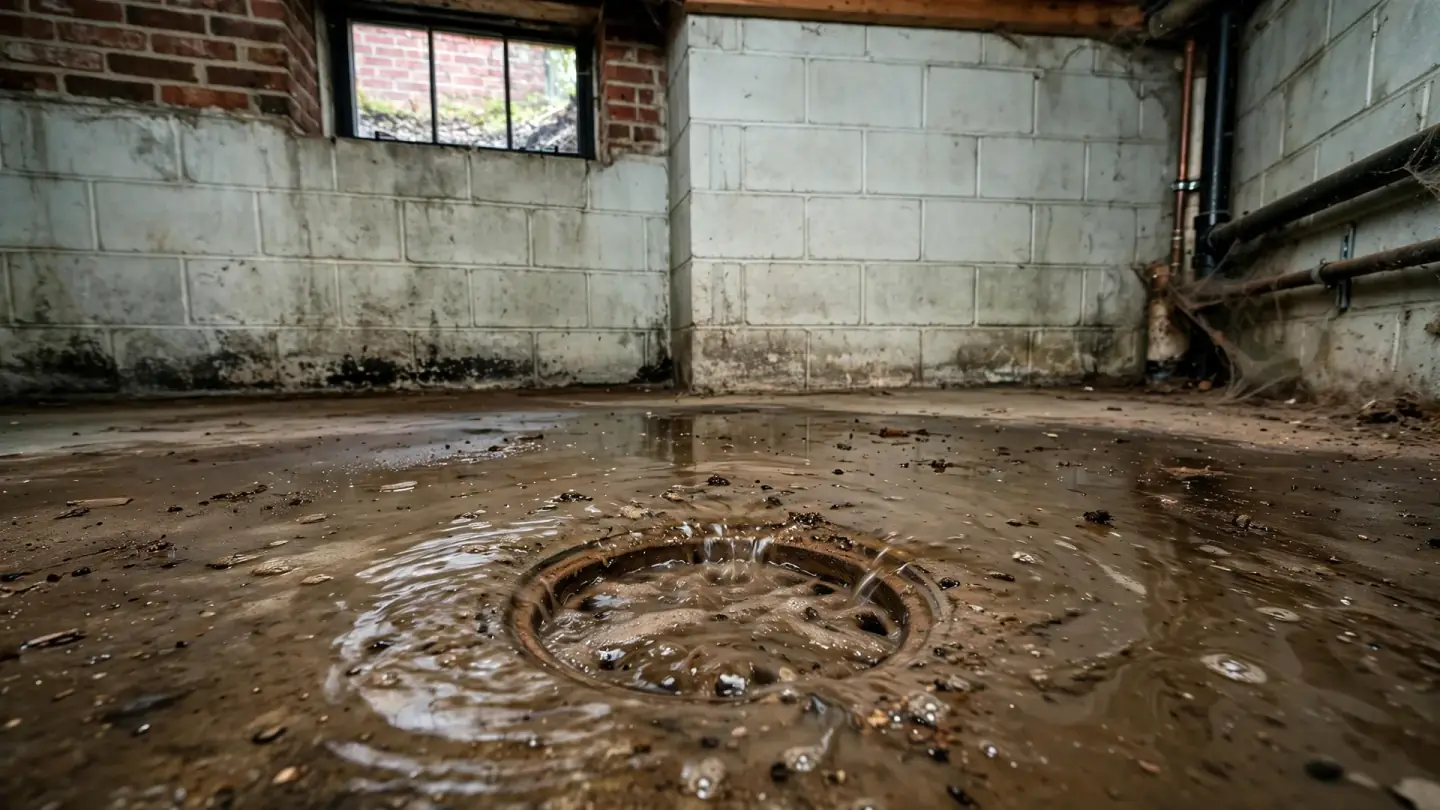
Emergencies feel the same from the doorway: water where it should not be. The cause decides who you call and what the visit looks like. Start with a simple test. Does the problem stay with one fixture, or does running water in one place make it show up somewhere else? A kitchen sink that will not empty while the toilets flush normally is a branch-line blockage. A toilet that bubbles when the washer drains, or a basement floor drain that fills when someone upstairs showers, points further down the system to the main building drain or the lateral running out to the street.
Next, think about timing. Did it begin during a heavy storm? Dayton's FAQ for its Sewer Maintenance division lists an overtaxed or blocked sewer main as one possible reason basements flood in heavy rain, alongside private sources like downspouts, foundation drains and sump pumps [1]. If several neighbours report the same thing on the same night, the problem may sit in the public main, which is a City job rather than a private one.
Finally, look at what is coming up. Grey water with food or soap suggests a kitchen or laundry line. Toilet paper or solids at a floor drain means the main building drain is involved and the water must be treated as sewage. Clear water seeping at the wall-floor joint during rain is more likely groundwater, which belongs in a different conversation about sump pits; our guide on sump pits versus floor drains explains the difference.
Decision table
Matching what you see to the right emergency page
Find the row that fits best, follow the first step, then open the matching page for detail.
| What you see | Likely location | First step | Read next |
|---|---|---|---|
| One sink, tub or shower will not drain before guests arrive | Fixture trap or branch line | Stop using that fixture only | Emergency clogged drain service |
| Floor drain or lowest toilet filling when other fixtures run | Main building drain or lateral | Stop all water use in the building | Emergency sewer line cleaning |
| Kitchen sink full of greasy water, dishwasher backing into it | Kitchen branch line | Stop the dishwasher and disposal | Emergency kitchen drain cleaning |
| Tub and toilet in the same bathroom both rising | Bathroom group or main line | Do not flush; close the toilet supply | Emergency bathroom drain cleaning |
| Toilet bowl rising to the rim on each flush | Toilet outlet or closet bend | Close the supply valve behind the toilet | Emergency toilet drain cleaning |
| Same line has clogged again within weeks | Grease, sludge or roots on the pipe wall | Ask about a camera look before jetting | Emergency hydro jetting |
| Restaurant or shop drains backing up during service | Grease line, trap or building drain | Stop dish and prep sinks | Emergency commercial drain cleaning |
| Several houses on the street flooding in a storm | Possibly the public sewer main | Report to City Sewer Maintenance | Basement backup guide |
Seven specific emergencies
Detailed emergency pages for each type of blockage
One fixture failing at a bad moment
A single sink, shower or tub that stops draining right before a gathering or starts to overflow.
Read moreMain line or lateral backing up
Water appearing at the lowest drain in the building whenever anything upstairs runs.
Read moreKitchen line full of grease
Standing water in the sink, a dishwasher discharging into the basin, and a smell of old food.
Read moreBathroom group backing up together
Tub, shower and toilet in one room reacting to each other, often with gurgling.
Read moreToilet at the rim
A bowl that rises instead of emptying, or a toilet that overflows onto the floor.
Read moreRepeat blockage needing jetting
A line that keeps closing up after cabling and now needs a deeper clean urgently.
Read moreBusiness drains during opening hours
Restaurants, salons and shops where a backup threatens service and hygiene.
Read more
Public or private
When should I call Dayton Sewer Maintenance instead of a contractor?
Inside Dayton city limits, responsibility splits at the main. The City's FAQ puts it plainly: the private sewer lateral that runs out to the public pipe is the owner's to look after, while the main itself is cleaned and repaired by the Division of Sewer Maintenance [1]. That means a backup caused by a blocked public main is not something a private contractor should be digging into, and calling the City first can save a wasted visit.
Signs that point toward the main: neighbours reporting the same backup, trouble that started during intense rain and eased as the storm passed, or water coming up while the City is working in the street. The FAQ also notes that a gurgling toilet or water splashing out of a bowl can happen while City crews jet the main, because of vacuum and back-pressure in the line [1]. In that case the fix is patience, not a drain machine.
If only your building is affected and the water comes up whenever your own fixtures run, the blockage is almost certainly on your side, somewhere between the fixtures and the main. That is where the contractor you're connected with comes in. Kettering, Huber Heights and Beavercreek are separate cities with their own sewer providers, so outside Dayton the public-side number is different.
The call and the visit
From your first call to a draining line
- 1
Describe the symptoms on the phone
Say which fixtures are affected, what is coming up, when it began and whether rain is involved. The contractor you're connected with uses that to judge urgency and tell you what they can do and when.
- 2
Locate an access point
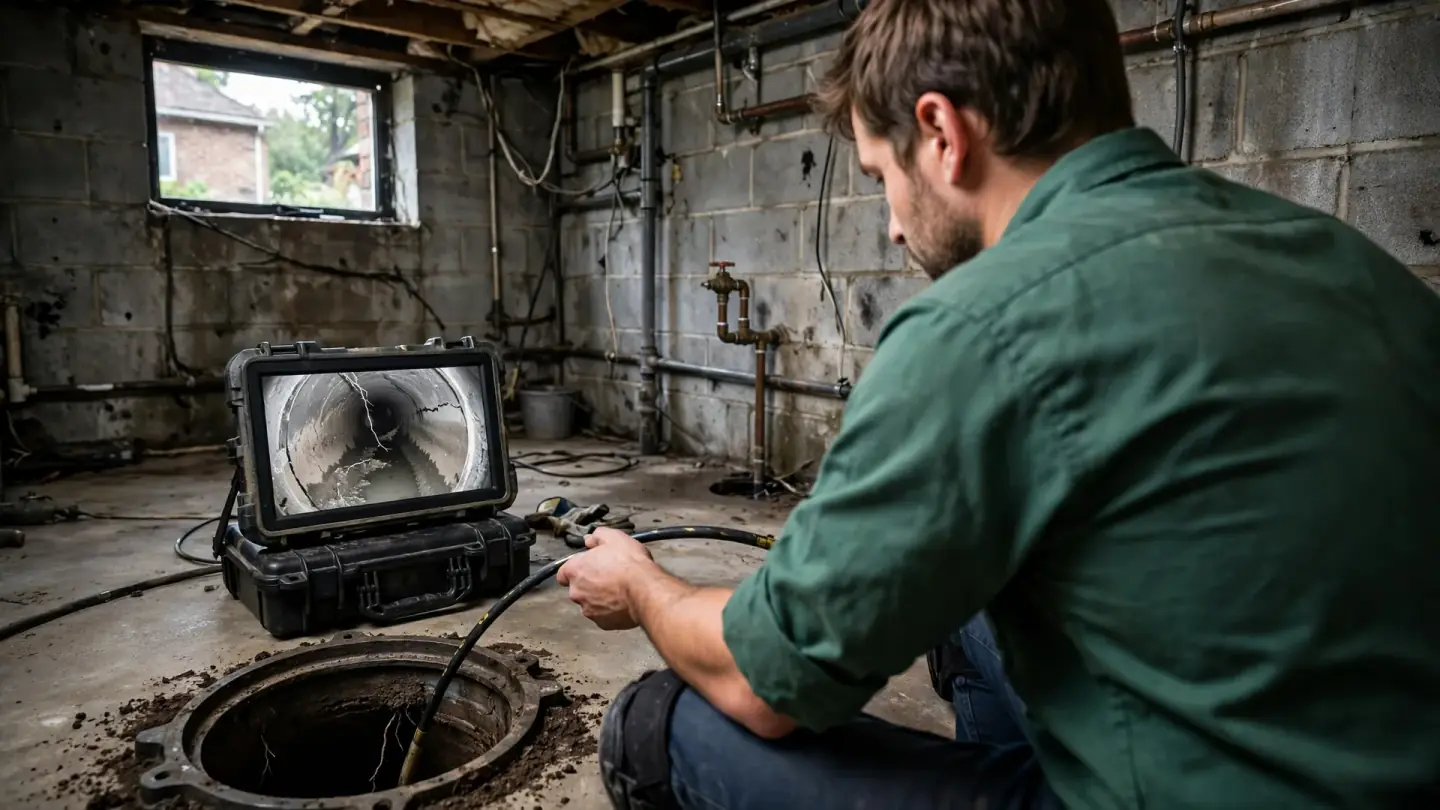
On arrival the contractor looks for the best way in: a fixture trap, a basement cleanout, an outdoor cleanout, or pulling a toilet if nothing else reaches the blockage.
- 3
Clear enough to restore flow
Most emergency work starts with a cable machine sized to the pipe to open a path so water can leave the building and the immediate danger passes.
- 4
Find out why it happened
Once water is moving, many contractors suggest a camera run to see whether grease, roots, a sag or broken pipe caused it, so you are not back in the same spot next month.
- 5
Agree the next step
If the line needs jetting, root work or repair, you get the findings and decide later, once the house is usable again.
Avoid making it worse
Mistakes that turn a clog into a cleanup
- Plunging a toilet repeatedly when the floor drain is already filling; you are just pushing water into the basement.
- Running the washing machine to see whether things improved; a full rinse cycle can overwhelm a partly open line.
- Renting a large drum machine for a lateral you have never seen; cables can kink or snag in old clay or broken pipe.
- Pulling a basement cleanout plug while water stands in the floor drain.
- Pouring grease, coffee grounds or bacon fat down any drain while the line is struggling; the City asks residents to put grease in the trash [1].
Local conditions
Why Dayton drains fail at awkward times
Many emergency calls follow a pattern. Older neighbourhoods such as the Oregon District and South Park have houses dating from the nineteenth and early twentieth centuries [6][7], and laterals of that age are often clay with joints that roots can find. Root growth is gradual, but the final blockage tends to arrive all at once, usually after a heavy wash day or when guests are staying.
Winter adds its own risk. January lows at the Dayton airport average around 22°F [5], and any drain line running through an unheated crawlspace, garage or exterior wall can freeze. A frozen line looks like a clog but needs a different approach; the frozen drain lines guide covers the signs. In spring and summer, heavy rain is the trigger, and the basement drain backing up after rain guide explains how to separate a storm problem from a private blockage.
Whatever the season, the aim is the same: stop water entering the line, work out where the blockage likely sits, and get a contractor on the phone who can talk you through it. For non-urgent problems, start with general clogged drain repair or a drain camera inspection instead. You can also step back to the main drain services page to compare non-urgent options.
FAQ
Emergency drain triage questions from Dayton callers
Who do I call first when sewage is coming up in my basement drain in Dayton?
If the blockage may be in the public sewer main, contact the City of Dayton's sewer maintenance service first, since they look after the main. If the City finds the main flowing, the blockage is in your private lateral or house drain, and a private drain contractor is the right call to make next.
What counts as a real drain emergency and what can wait until Monday?
Sewage coming up anywhere, water reaching floors or ceilings, or a house with no working toilet should be treated as urgent. A single slow sink, a gurgle or a mild odour can usually wait for a normal booking. If you are unsure, call and describe what you see so the contractor can advise you.
Should I turn off the main water valve during a drain backup?
Usually it is not needed for a drain clog, because the problem is water leaving the house. Stopping use of fixtures is enough. Shut the main valve only if water is coming from a supply pipe or a fixture that will not stop running. Everyone in the household should know where that valve is.
Can I use bleach to clean up after a drain backup?
Bleach can disinfect hard surfaces after the water has gone, but never mix it with ammonia, acid cleaners or drain chemicals, because the fumes are dangerous. Wear gloves and boots, ventilate the room and throw away porous items soaked by sewage. Large sewage spills may need a professional cleanup company.
Does homeowners insurance cover a drain or sewer backup?
It depends on your policy. Many standard policies exclude sewer or drain backup unless a specific endorsement was added. Check your policy wording or ask your agent, photograph the damage before cleanup and keep any invoices from the contractor. This site cannot advise on coverage for your situation.
How long does it take to clear an emergency drain blockage?
Many single-line clogs are cleared within one visit, while main lines, roots or damaged pipe can take longer and may need a camera inspection or jetting. The contractor will give an estimate once they see the access point and the blockage. Ask them to explain what they found before they leave.
Sources and citations
- [1]City of Dayton — Water: Sewer Maintenance FAQ
- [2]Ohio Admin. Code 4101:3-7-01 — Sanitary drainage
- [3]City of Dayton — 2025 Water Quality Report
- [4]USGS report WRI 99-4201 on Miami basin water quality
- [5]Wikipedia — Dayton, Ohio
- [6]Wikipedia — Oregon Historic District
- [7]Wikipedia — South Park Historic District (Dayton, Ohio)