Key facts: Clogged Drain Repair
- Dayton homeowners own their sewer lateral all the way out to the public main; City Sewer Maintenance looks after that main [1].
- Dayton runs separate sanitary and storm sewers, so a house lateral should never be connected to a street catch basin [1].
- A basement sewer smell is usually a dry trap; pouring water into trapped fixtures and floor drains restores the seal [1].
- The USGS classes the region's ground and surface water as very hard, a mix that leaves scale on fixtures and inside older drain pipe [3].
Where clogs form
How one clog spreads through a Dayton drain system
Every drain in a house is a tree turned upside down. Small fixture lines run into larger branch lines, branch lines join a vertical stack, and the stack drops into a building drain that leaves through the basement wall or slab as the house sewer. Dayton calls that pipe beyond the foundation the lateral, and it belongs to the homeowner right up to where it meets the public sewer [1].
A blockage only affects what drains into it from upstream. Hair in a lavatory trap slows one sink. A wad of wipes in the branch under a bathroom floor backs up the tub, the toilet and the sink on that branch together. Roots or grease in the lateral stop everything, and the lowest opening in the house, usually a basement floor drain, is where the water appears first.
That is why the first part of any clogged drain repair is a question, not a tool. Which fixtures are slow? Which are fine? Does water rise in one fixture when another is used? The answers place the clog on the tree, and the contractor you're connected with chooses where to open the line and which machine to bring based on that placement.
It also explains why chemical openers so often fail on the jobs that matter. Liquid poured into a sink only reaches the clog if that sink sits directly above it, and it cannot touch a blockage forty feet away under the yard. If you are dealing with a single slow basin, our guide to a slow-draining sink walks through what you can safely check first.
Reading the symptoms
Which drain line is blocked? Reading the clog pattern
One fixture, nothing else
A single slow basin or tub with every other drain running normally points to the trap or the short arm behind it. This is the simplest clog to locate and clear.
Two fixtures in the same room
Tub and toilet, or sink and shower, slowing together usually means the shared bathroom branch is restricted rather than either fixture on its own.
Water appearing in the basement floor drain
When upstairs drains push water up through the lowest opening, the restriction is downstream of every branch, in the building drain or the lateral.
Gurgling after another fixture runs
Air being pulled through a trap when a washer or toilet empties suggests a partial blockage or a venting problem. See our notes on gurgling drains.
Sewage smell with no backup
Often just an evaporated trap seal in a seldom-used drain rather than a clog; water poured into the drain usually stops it [1].
Repeat clog within weeks
A line that keeps blocking after clearing has a cause that a cable passes by: grease coating, scale, a sag or roots at a joint. That calls for a camera look.
On the visit
Clearing a blocked drain from first question to final flush
- 1
Map the slow fixtures on the call
You describe which drains are slow, which back up and where water appears. That narrows the clog to a trap, a branch or the main before anyone arrives.
- 2
Choose the access point
The contractor opens the line as close to the blockage as practical: a trap, a cleanout plug, a toilet flange or the main cleanout in the basement or yard.
- 3
Match the tool to the pipe size
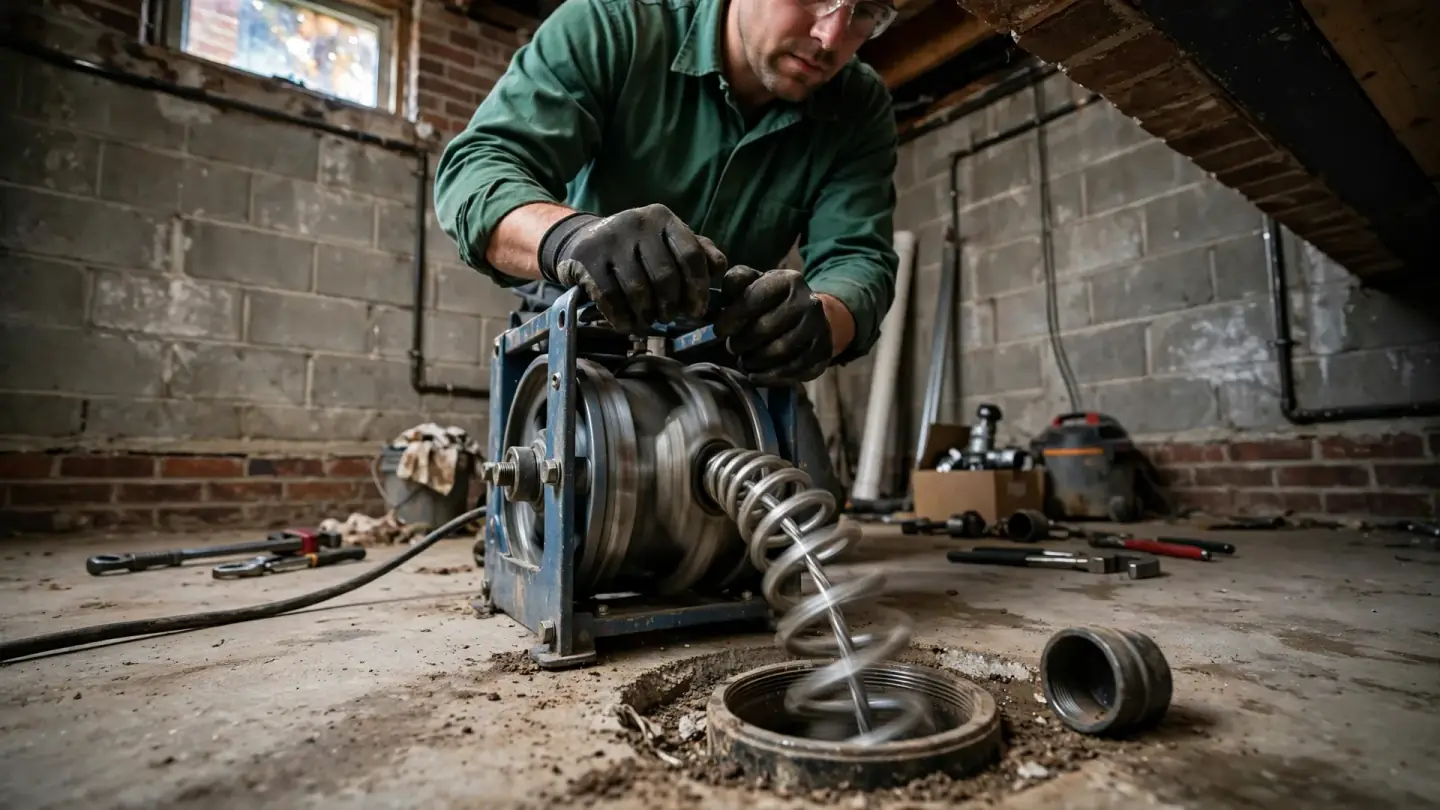
Small hand or drum machines suit fixture and branch lines. Larger sectional or drum machines with cutting heads go into the building drain and lateral.
- 4
Break through and retrieve
The cable is run until the line opens. Where possible the head brings material back so you both see what caused the stoppage: hair, wipes, grease, scale or root.
- 5
Flush and test every affected fixture
Water is run through the cleared line and through the fixtures that were backing up, confirming flow under load, not just a trickle.
- 6
Camera the line if the evidence points to a cause
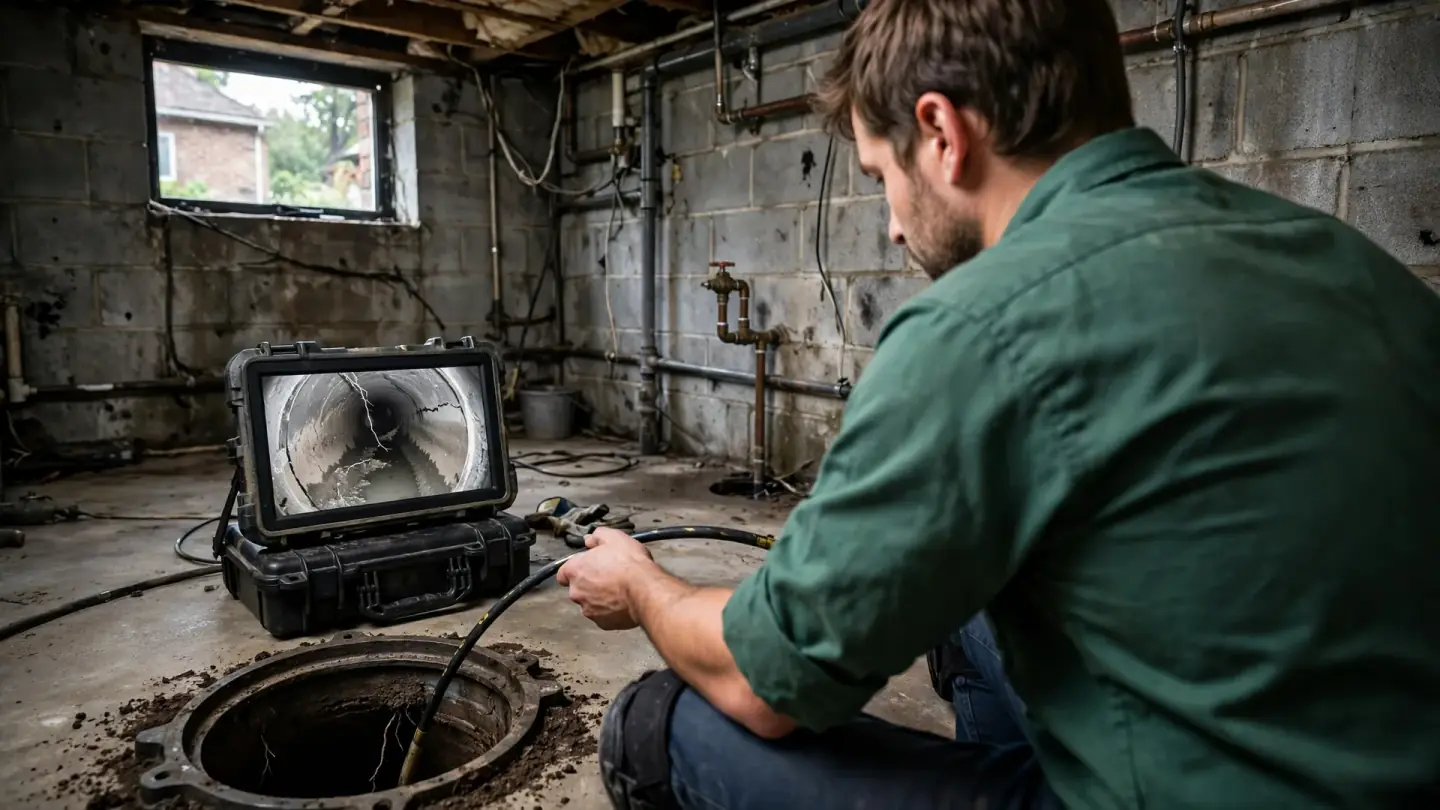
Roots, scale flakes or repeated clogs justify sending a camera through so you can see the pipe condition before deciding on anything bigger.
Tools and methods
Which clearing method fits which Dayton clog
| Clog type | Usual location | Typical method | Notes |
|---|---|---|---|
| Hair and soap | Lavatory, tub and shower traps | Trap removal or small hand cable | Fast fix; recurs if no strainer is fitted |
| Grease and food solids | Kitchen branch and building drain | Drum cable then water jetting | Cable opens it; jetting removes the coating |
| Wipes and paper | Toilet outlet and bathroom branch | Closet auger or branch cable | Wipes snag on joints and catch more debris |
| Mineral scale | Older cast iron and galvanized lines | Descaling head or jetting | Hard water deposits narrow the bore [3] |
| Tree roots | Clay or jointed lateral outside the house | Root-cutting head on a large machine | Camera recommended; roots return at the joint [1] |
| Sediment and silt | Basement floor drain and building drain | Cable plus flushing | Can indicate a cracked or offset pipe nearby |
Homeowner limits
What you can try on a stopped drain and where to stop
- Do: clean the visible stopper and strainerPop-up stoppers and strainer baskets collect hair and food. Lifting them out and cleaning them fixes many slow basins outright.
- Do: use a cup plunger on sinks and tubsSeal the overflow with a wet cloth first so the pressure goes down the drain instead of out of the overflow opening.
- Do: refill trap seals in unused drainsA bucket of water in a seldom-used floor drain stops sewer odour that is often mistaken for a clog [1].
- Stop: when several fixtures are involvedShared-line clogs are beyond a plunger. More water from any fixture only adds to the backup at the lowest drain.
- Stop: after one bottle of chemical openerIf it did not work, a second dose will not either, and anyone who opens the line later has to handle caustic water.
- Stop: before renting a large machineSectional and drum machines can kink a cable inside the pipe or injure hands. Lateral work is better left to someone who runs one daily.
Dayton specifics
Why Dayton basements, water and laterals shape every clog call
Most Dayton houses built before the postwar ranch era have basements, and the basement floor drain is the lowest opening in the plumbing. When a building drain or lateral blocks, that is where water comes up. According to the City, a basement that floods in a downpour may be reacting to a blocked or overloaded public main, or to water fed in by the home's own gutters, footing drains or sump discharge; Sewer Maintenance can help sort out which [1]. Our guide to a basement drain backing up after rain covers that split in more detail.
Water chemistry matters too. The city pumps from a buried-valley aquifer beneath the Great Miami, and both treatment plants soften with lime [2]. The underlying groundwater is very hard [3], so homes on private wells or unsoftened supplies around the region tend to build more scale in fixtures and older pipe. Softened city water reduces, but does not stop, the soap and grease film that collects on pipe walls.
Winter adds its own pattern. January lows at the Dayton airport average about 21.8°F [5], and lines run through unheated garages, crawlspaces or exterior walls can freeze. A frozen section behaves like a clog, but a cable will not fix it. If a drain stopped during a cold snap, see frozen drain lines in winter before anyone forces a tool through.
Finally, ownership. Your side of the line is yours to keep open; the public pipe under the street is the City's job [1]. If a contractor clears the house side and the street sewer turns out to be the blockage, call the City next. At state level, Ohio strips the building-sewer sections out of its adopted plumbing code, so pipe beyond the foundation answers to local authorities and Ohio EPA instead [4].
Beyond clearing
Does a recurring clog mean the pipe itself has failed?
Clearing restores flow. It does not change the pipe. If a line blocks again within weeks, something in the pipe is catching material: a belly where water sits, an offset joint with a lip, a crack where roots enter, or a bore narrowed by years of deposits. A cable will keep opening a path through those problems without removing them.
Camera footage is how you find out. A drain camera inspection records the line from the access point outward, with distance markers, so you can see what the cable kept hitting. The contractor can show you the footage and point to the spot.
If the problem is a coating of grease or scale on sound pipe, hydro jetting cleans the wall rather than boring a hole through the middle. If the pipe is broken or sagging, a licensed plumber takes out a permit for the fix; anything under the street is handled by City crews, who invoice the plumber [1]. Excavation also means a locate request: give Ohio811, the old OUPS, two working days, and look for green paint where sewers run [1].
For lines that clog on a predictable cycle, especially lateral root growth, scheduled preventative drain maintenance can be the sensible choice while you plan a permanent repair. How often roots need cutting varies with the pipe and the plantings around it; Dayton sets no fixed interval [1].
Each fixture has its own page in our Dayton drain services overview.
FAQ
Clogged drain repair questions from Dayton homeowners
How does a contractor work out which drain line is clogged in my house?
They read the pattern of which fixtures are slow and where water comes back. One slow fixture points to its own trap or arm. Several fixtures in one room suggest the shared branch. Water rising from the basement floor drain while upstairs sinks empty places the clog in the building drain or the lateral. Those questions on the call usually narrow it down before anyone opens a line.
Is a sewer smell in my Dayton basement a sign of a clogged drain?
Usually not; a basement sewer smell is more often a dried-out trap than a clog. Dayton's sewer guidance says pouring water into floor drains and other trapped fixtures restores the seal that blocks gas [1]. Try that first and give it a day. If the water you pour does not drain away, or the odour comes back with slow fixtures, then a real blockage is likely.
Who pays to clear a clogged sewer lateral in Dayton, me or the City?
Everything on the private connection, up to the point where it meets the City's pipe, is the owner's job. The City of Dayton maintains only that main [1]. So a clog anywhere in your private line is yours to have cleared, even under the street side of the yard. If camera footage shows the lateral open to the connection and the backup continues, contact the City about the main.
Will the City of Dayton locate my sewer lateral before drain work?
No, the City does not mark private sewer laterals, though a record may exist. Dayton's sewer FAQ notes that Plumbing Inspection sometimes has drawings on file [1]. Otherwise, a plumber can push a camera with a transmitter down the line and trace its route and depth from the surface. That locate is useful before any digging, landscaping or repair decision on a clogged lateral.
Why did my drain clog again right after it was snaked?
A quick reclog means the cable opened a path but left the cause in place. Grease coating, scale, a sagging section, an offset joint or a root entry point will keep catching debris. A camera look after clearing identifies which one you have. Then jetting, root cutting or a targeted repair can address the cause, instead of repeating the same clearing every few weeks.
Can hard water cause clogged drains in older Dayton homes?
It plays a supporting role rather than causing clogs alone. USGS data class the region's water as very hard [3], and scale narrows old metal pipe and roughens its wall. Soap and grease then cling to that rough surface. Dayton's city water is lime softened [2], which limits fresh scale, but it does nothing about grease and soap film already built up.
Should I use a chemical opener on a clogged branch line?
One dose on a single slow fixture is a fair try, but stop if it fails. Chemicals rarely reach a deep branch or main clog, and repeated doses pile up caustic water in the line. That water is dangerous for anyone who opens a trap or cleanout afterward. Tell the contractor you're connected with what you poured, so they can protect themselves before opening the line.
Do I need to call Ohio811 before a clogged drain is repaired?
Only if the repair involves digging; clearing a clog through a cleanout needs no locate request. When a broken or collapsed section must be excavated, Ohio811, the service formerly called OUPS, has to be contacted at least two working days ahead [1]. That marks buried gas, power and other utilities. The contractor doing the digging normally files the request.