Key facts: Toilet Drain Clearing
- The City of Dayton notes that a gurgling toilet or water splashing out of one can occur while City crews jet the nearby sewer main [1].
- Dayton puts the private sewer lateral, building to public main, on the homeowner [1].
- Ohio's sanitary drainage rule takes the IPC's drainage chapter (2021 edition) and amends it for the state [2].
- Dayton winters regularly bring nights in the low twenties, so a toilet in an unheated basement, porch or outbuilding can freeze [3].
Inside the porcelain
Where does a toilet actually clog: trapway, closet bend or main?
Every toilet has its own trap cast into the porcelain. Water leaves the bowl, rises up and over a hump, then drops down to the outlet at the floor. That S-shaped trapway is narrower than the drain pipe below it, and it is where most toilet clogs live: too much paper at once, a wipe that will not break up, a toy or a toothbrush.
Below the floor the toilet sits on a flange that connects to the closet bend, a short elbow that turns the flow sideways into the bathroom branch. The bend is wider than the trapway, so it clogs less often, but wipes and paper towels can lodge there and catch everything that follows.
Further on, the toilet's water joins the stack and the building drain. A clog there does not care which fixture sent the water. It just stops the lowest openings in the house from emptying. A toilet that rises slowly and then drains, or one that bubbles when a tub drains, is often sitting above a downstream clog rather than holding one.
That is why the first questions on the call are about the rest of the house. Is it one toilet or two? Does the tub or floor drain react when the toilet is flushed? The contractor you're connected with uses those answers to decide whether to bring a closet auger, a branch cable or a machine for the main.
If more than the toilet is slow, the clogged drain repair page explains how the branch lines are sorted out.
Toilet behaviour
Toilet symptoms and what each one points to
Bowl rises, then slowly empties
A partial clog in the trapway or closet bend. Enough water passes to drain the bowl, but not fast enough for a full flush.
Weak flush with a clean bowl
Often scale-blocked rim holes or a partly closed supply valve rather than a drain clog. The bowl simply is not getting enough water.
Toilet clogs every few days
Something lodged in the trapway, such as a small toy or a comb, catches paper on every flush. Augering pushes past it; pulling the toilet removes it.
Bubbles in the bowl when the tub drains
Shared-branch restriction or a venting problem. Air is being pushed through the toilet trap by water moving below.
Two toilets slow on different floors
Both drain into the stack and building drain. A clog affecting both is in the main line, not either toilet.
Water splashes from the bowl on a quiet day
The City of Dayton notes this can happen while crews jet the nearby sewer main [1]. If it stops and drains normally, the toilet is fine.
Clearing the toilet
From closet auger to pulling the bowl
- 1
Stop the water supply
The supply valve behind the toilet is closed so an accidental flush cannot overflow the bowl while the clog is being worked on.
- 2
Run a closet auger through the trapway
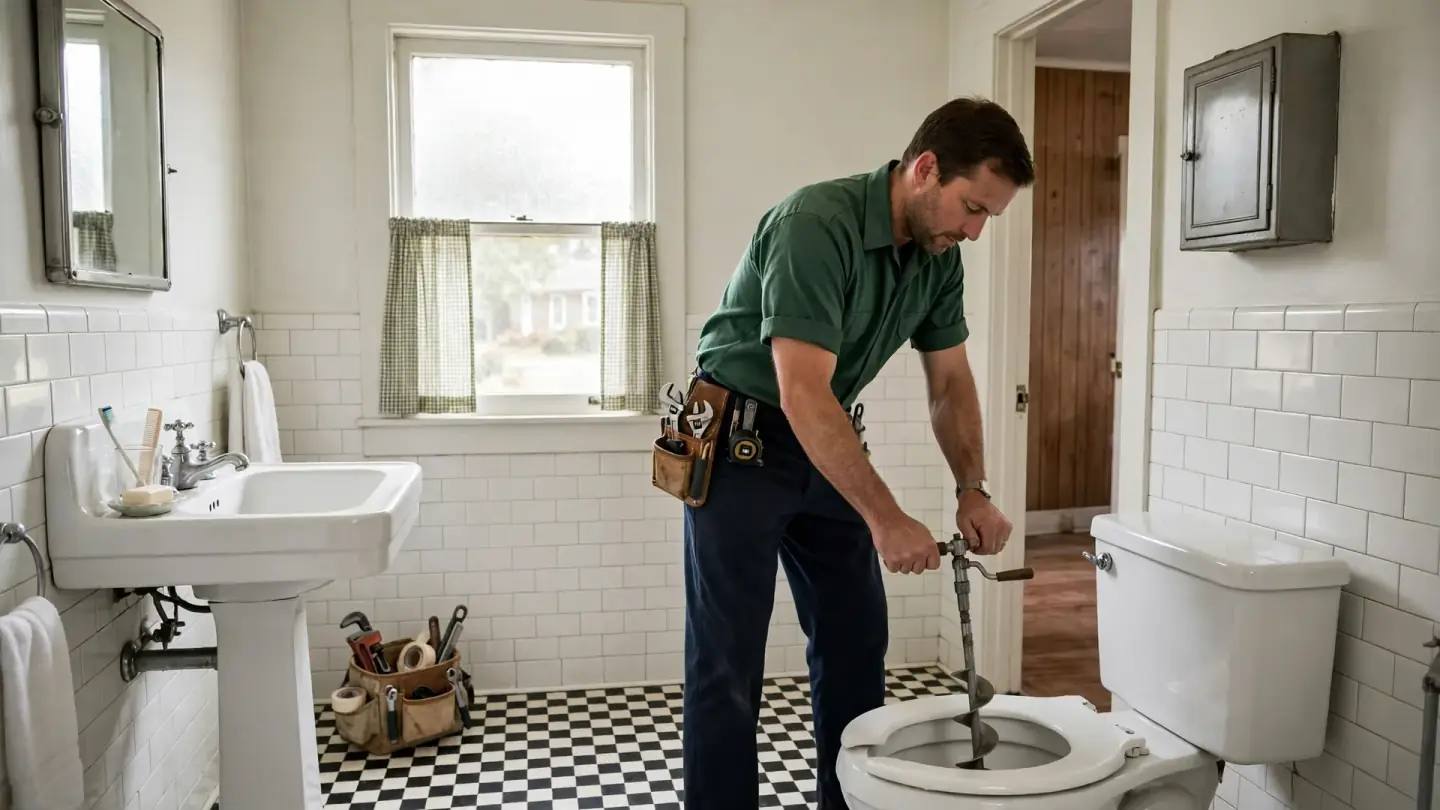
A closet auger has a sleeved, bent tip that guides a short cable around the porcelain trap without scratching it. Most paper and wipe clogs end here.
- 3
Test with a bucket, not the tank
Pouring a measured bucket into the bowl shows whether flow is restored without risking an overflow from a full tank flush.
- 4
Pull the toilet if something is lodged
When the auger hits an object it cannot break up, the toilet is unbolted and lifted so the object can be pushed back out of the trapway from below.
- 5
Cable the closet bend and branch
With the toilet off, the open flange gives direct access to the bend and branch for a larger cable if the clog lies below the floor.
- 6
Reset on a new wax ring
The toilet goes back on a fresh wax or foam seal, bolts are snugged evenly and the base is checked for rocking that could break the seal.
Toilet clog causes
What stops a toilet and how each problem is cleared
| Cause | Where it lodges | Clearing method | Avoid it by |
|---|---|---|---|
| Too much paper at once | Top of the trapway | Plunger or closet auger | Flushing twice with less paper |
| So-called flushable wipes | Trapway, closet bend, branch | Closet auger or branch cable | Binning every wipe |
| Hard objects, toys, combs | Trapway hump | Pull toilet and remove from below | Keeping the lid down near small children |
| Paper towels and tissues | Closet bend and branch | Branch cable from the flange | Using only toilet paper |
| Scale in rim holes | Bowl rim and siphon jet | Clean rim jets with a small tool | Periodic descaling where water is hard |
| Clog in the main | Building drain or lateral | Main-line cable from a cleanout | Not flushing while the floor drain is wet |
Before the call
Toilet clog steps that are safe for a homeowner
- Use a flange plunger, not a cupA plunger with a fold-out flange seals inside the toilet outlet. A flat cup plunger made for sinks barely moves water in a toilet bowl.
- Let a high bowl drop before plungingWait for the water to fall to normal level, or bail some out, so plunging does not splash contaminated water over the rim.
- Try a closet auger if you own oneA homeowner closet auger is designed for porcelain and is reasonably safe. A standard sink snake is not, and it can scratch or crack the bowl.
- Do not pour drain chemicals into a toiletCaustic and acid openers can damage the wax seal and porcelain, and they leave hazardous water in the bowl for whoever clears it next.
- Stop when other fixtures reactIf plunging the toilet makes water rise in the tub or floor drain, stop flushing; the article on toilet and tub backing up together covers this pattern.
- Leave pulling the toilet to the contractorLifting a toilet, setting it back on a new seal and tightening it evenly is easy to get wrong, leading to slow leaks under the floor.
Dayton toilets
Old closet bends, City main jetting and Dayton toilets
Dayton has a large stock of older homes, and many still have their original cast iron or even lead closet bends under the bathroom floor. Inside, those bends roughen with age, and a rough surface snags wipes and paper that a smooth plastic bend would let pass. Pairing those old bends with modern low-flow toilets, which send less water behind each flush, makes clogs below the floor more likely.
Some toilet behaviour has nothing to do with your plumbing. The City of Dayton notes that a gurgling toilet, or even water splashing out of one, can happen while crews are jetting the sewer main nearby, because of vacuum and back-pressure in the line [1]. If it happens once and the toilet then works normally, it is not a clog.
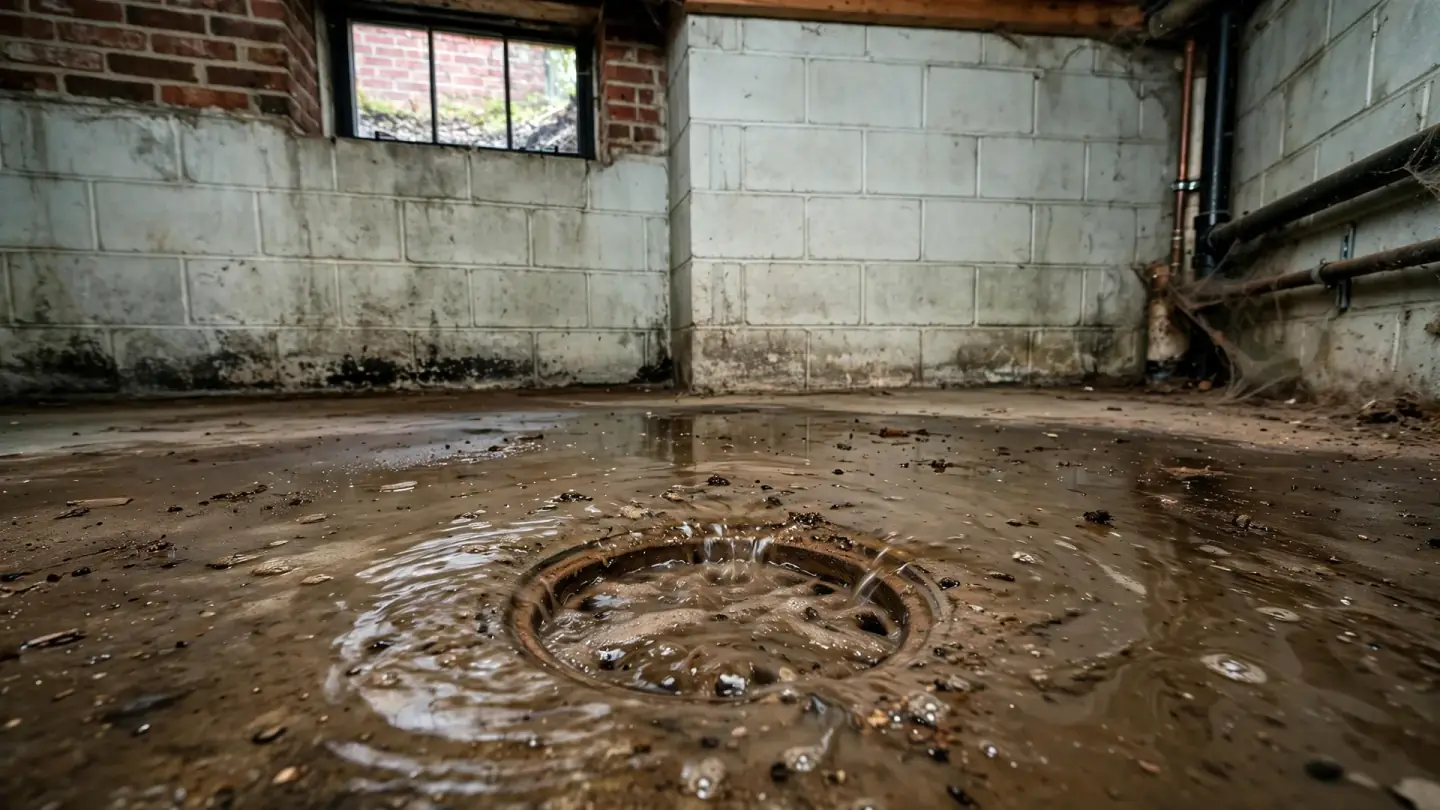
Basements change the picture. In many Dayton houses the basement floor drain and any basement toilet sit lower than the upstairs bathrooms. When the building drain or lateral is blocked, those low fixtures fill first. A toilet clog upstairs with water on the basement floor is a main-line problem; see main sewer line cleaning.
Everything from the toilet out to the street pipe is private plumbing [1], and indoor drainage follows Ohio's amended version of the national plumbing code [2]. If a closet bend or branch under a slab ever needs replacing, the contractor will explain whether a permit is required. Any digging outside needs an Ohio811, formerly OUPS, call two working days ahead [1].
Recurring toilet clogs
Why does a toilet keep clogging after it has been augered?
If a toilet clogs again within days, something is catching paper on every flush. The usual suspects are a hard object stuck in the trapway, a cracked or rough closet bend, a branch with a sag, or roots and buildup in the lateral that slow everything.
The way to stop guessing is to look. A drain camera inspection from the open flange or a cleanout shows the bend, branch and building drain. Many Dayton laterals under older streets are jointed clay, where roots enter at the joints; camera footage shows whether that is part of the story. The contractor can show you the footage before recommending any bigger work.
Sometimes the toilet is the problem. Older bowls with narrow trapways, or bowls with a cracked internal passage, never flush well regardless of what is downstream. The contractor you're connected with can say whether replacing the toilet is the more sensible fix than clearing it again.
Winter adds one more case. A basement or garage toilet in an unheated space can freeze in its tank, bowl or trap when Dayton nights drop well below freezing [3]. A frozen toilet will not flush and looks clogged, but augering ice can crack porcelain. Warm the space first, and see frozen drain lines in winter for what to check.
Other fixtures are covered on the Dayton drain cleaning services page, including shower and tub drain cleaning and sewer line inspection when more than one toilet is affected.
FAQ
Toilet clog questions from Dayton homeowners
What is the difference between a plunger and a toilet closet auger?
A plunger uses pressure to shift a clog, while a closet auger feeds a short cable through the trapway to break up or hook it. The auger has a rubber sleeve so it does not scratch the bowl. Try a plunger first; an auger suits objects and wipes the plunger cannot shift.
Are flushable wipes safe to flush down a Dayton toilet?
No, they are a common cause of toilet and branch clogs because they do not break apart the way toilet paper does. They can snag in the trapway, the closet bend or the lateral and collect other waste. Putting every wipe in the trash, whatever the packaging says, is the simplest way to avoid that kind of toilet clog.
Why did my toilet splash or bubble water out on its own?
The City of Dayton notes this can happen when crews jet the nearby sewer main and push air back up the line [1]. If the toilet flushes normally afterward, nothing needs clearing. If it keeps gurgling, drains slowly or other fixtures react too, the problem is likely a partial blockage or a venting issue worth checking.
When does a toilet have to be removed to clear the drain?
Removal is needed when a hard object is lodged in the trapway, or when the clog sits in the closet bend below the floor. Pulling the toilet gives direct access from both sides. It is then reset on a new wax ring so the seal at the floor does not leak.
Why do both toilets in my house back up at the same time?
They share the stack and the building drain, so a clog affecting both sits in the main line or lateral, not in either toilet. Dayton treats that lateral as the homeowner's pipe out to the public sewer [1]. Stop flushing either toilet and stop running water until the main has been cleared by a contractor.
Can I pour chemical drain cleaner into a clogged toilet?
It is not recommended. Caustic cleaners can damage the wax seal and the porcelain, rarely dissolve wipes or solid objects, and leave a hazard in the bowl for whoever clears it next. Use a flange plunger or closet auger instead, and tell the contractor if any chemical has already gone in.
My toilet flushes weakly but is not clogged. Why does that happen?
Mineral scale in the rim holes or the siphon jet often cuts the water entering the bowl, giving a weak flush without any clog. Cleaning those openings usually restores the flush. A low water level in the tank or a worn flapper can cause the same symptom and are simple to check before calling anyone.