
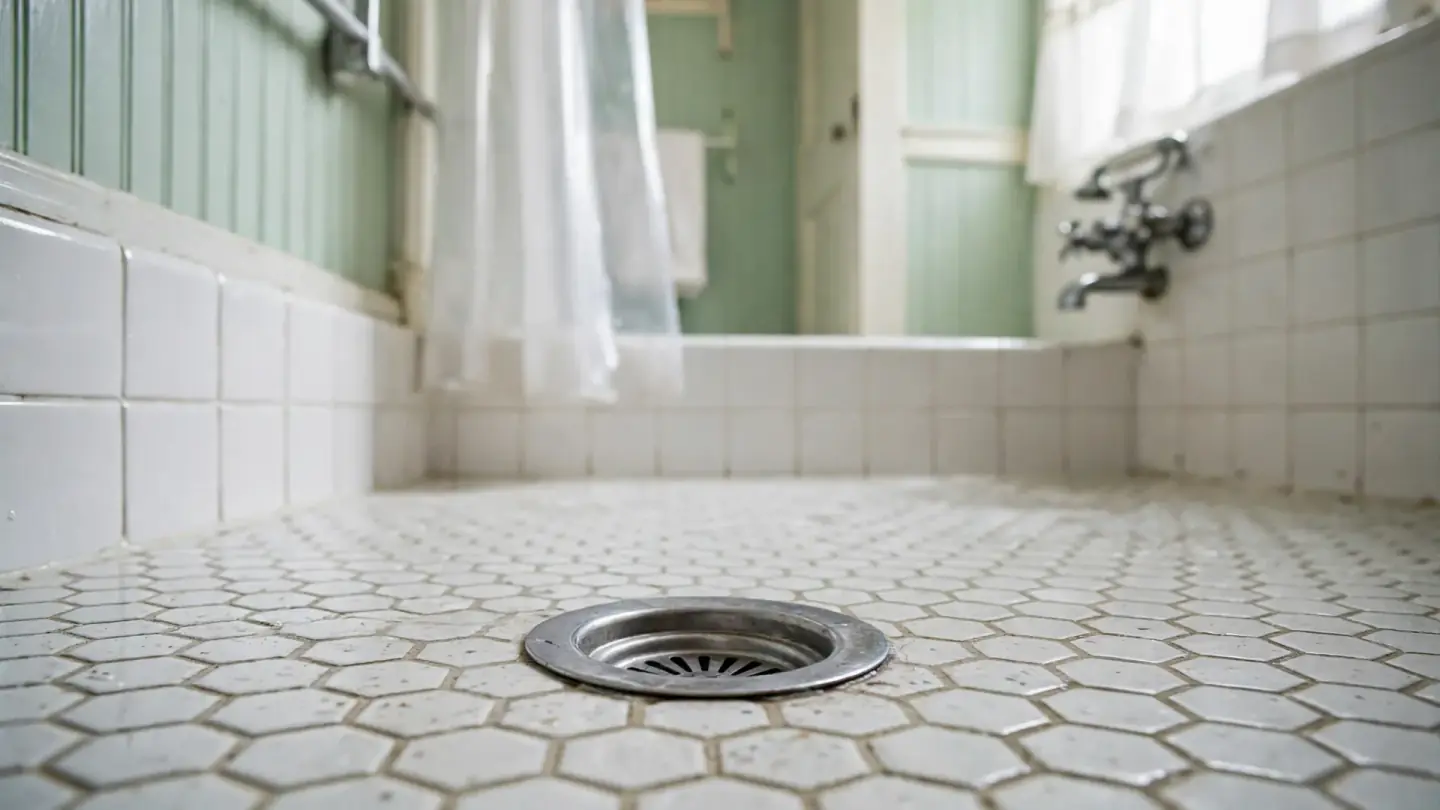
Key facts: Basement shower drain problems
- A trap holds water to block sewer gas; when it evaporates, odour comes through [1][2].
- The City of Dayton says basement sewer odour is usually a dry trap and suggests pouring water into trapped fixtures [2].
- Drain-waste-vent systems admit air so water flows without siphoning traps [3].
- Dayton owners are responsible for the house lateral, while the City maintains the main [2].
Short answer
Why does a basement shower act up more than others?
Position. A basement shower is usually one of the lowest openings on the building drain, so when the main line or lateral narrows, water from upstairs fixtures rises there first. It is also often in a guest or teen bathroom that goes unused for weeks, so its trap dries and lets sewer gas in; the City of Dayton notes basement sewer odour is usually a dry trap [2].
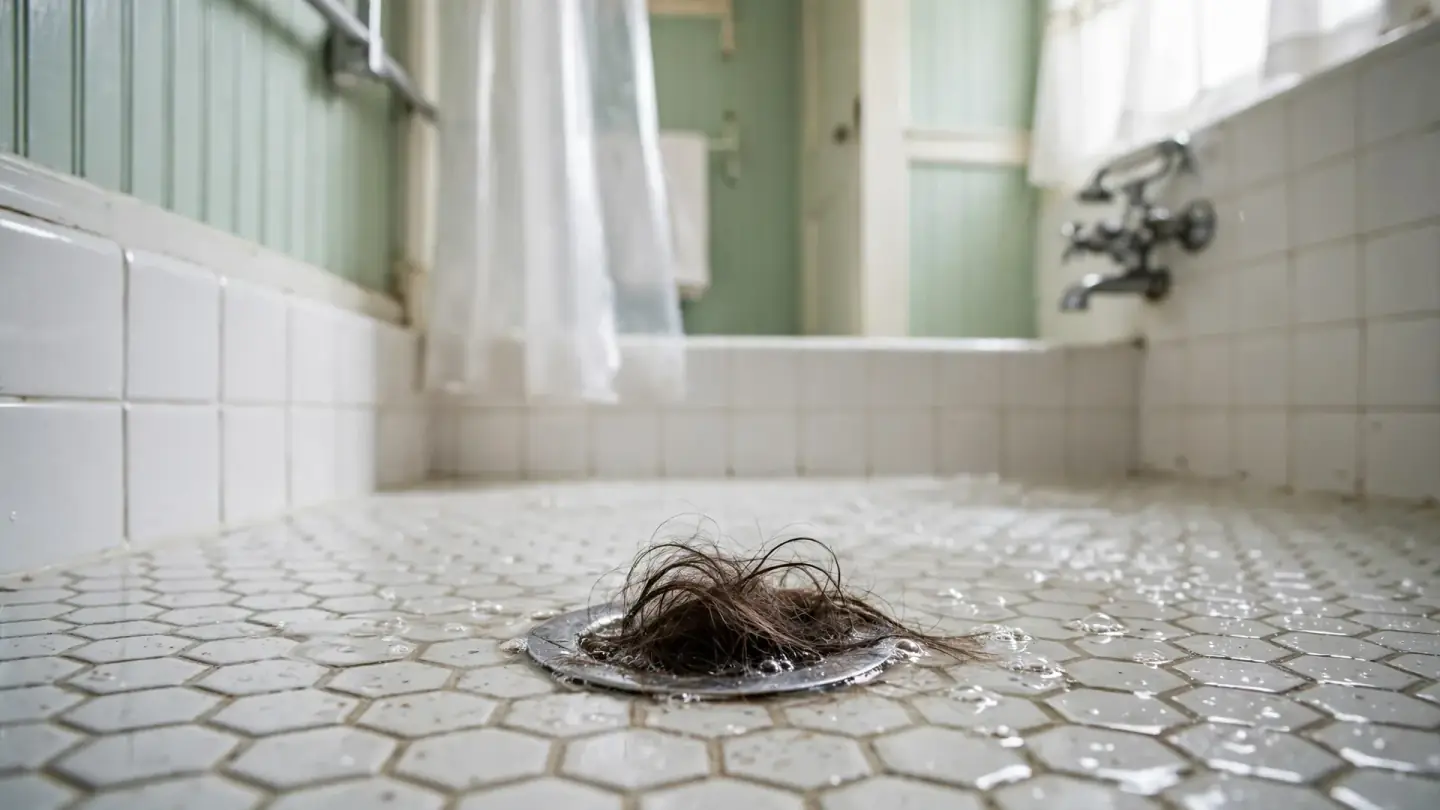
And it is still a shower. Hair and soap scum collect in its trap just like any other, faster in hard-water homes [4]. The three problems look different, which makes them easy to sort out.
What you see / likely cause / what to do
Basement shower symptoms decoded
| What you see | Likely cause | What to do |
|---|---|---|
| Water rises in the shower when a toilet flushes | Main line or lateral restriction | Stop water use; book main sewer line cleaning |
| Sewer smell, shower rarely used | Dry trap | Run the shower for a minute [2] |
| Shower slow only when it is used | Hair and soap scum in the trap | Clear the strainer and trap |
| Gurgle in the shower when other drains run | Venting problem or partial blockage | See the gurgling drains guide |
| Water around the shower base, not in it | Leak in the drain fitting or pan | Have the drain connection inspected |
Hair and scum at the shower drain
Safe checks
Five checks on a troublesome basement shower
- Flush an upstairs toilet while someone watches the basement shower drain.
- Run the shower for a minute to refill the trap and see if a smell fades.
- Lift the grate and pull out hair with a plastic drain tool.
- Check the basement floor drain at the same time; if both rise, it is the main.
- Look at the floor and wall around the shower for staining that suggests a leak.
Deep dive
When the basement shower is really a main-line warning
If water comes up in the basement shower when the washer drains or an upstairs toilet flushes, the shower itself is fine. The building drain or lateral beyond it is restricted, and the shower is simply the lowest place for water to go. In Dayton that lateral is the owner's responsibility all the way to the main [2]. Roots in old clay, grease and wipes are the usual suspects.
Stop using water, and do not use the shower to drain buckets. If sewage is reaching the floor, the basement flooding from a drain page covers the urgent steps.
Deep dive
Why an unused basement shower smells of sewer
A trap holds a small amount of water that seals out sewer gas [1]. In a shower that nobody uses, that water evaporates, especially in warm, dry weather or near a furnace. The fix is simple: run the shower for a minute every couple of weeks. The City of Dayton gives the same advice for basement odour: pour water into trapped fixtures [2].
If the smell returns within days even after running water, the trap may be pulled dry by poor venting. A drain-waste-vent system admits air so flowing water does not siphon traps [3]; a basement bathroom added without proper venting can lose its seal every time a nearby fixture drains.
Deep dive
Add-on basement bathrooms and their quirks
Many Dayton-area basement bathrooms were added long after the house was built. Some tie into the floor drain line; some sit below the sewer and rely on an ejector pump; some were vented creatively. Each setup has its own failure pattern. An ejector system that stops pumping fills the basin and backs into the shower. A shower tied into an old floor drain branch inherits whatever restriction that branch has. Knowing which you have is the first step.
How a contractor diagnoses it
How a contractor works out a basement shower problem
- 1
Test with other fixtures
Toilets and the washer are run while the shower is watched to see if water rises from below.
- 2
Inspect the trap
The strainer is removed and the trap cleared of hair and scum, which fixes simple slow draining.
- 3
Check venting
If the trap keeps losing water, the contractor looks at how the bathroom is vented.
- 4
Camera the branch
A drain camera inspection shows where the shower branch joins and whether the building drain is restricted.
- 5
Clear the right section
Either the shower line or the main line is cleared, depending on what the tests and footage show.
Fix options
Fixes for each kind of basement shower trouble
Slow draining from hair and scum is handled by shower and bathtub drain cleaning. Backups from below need the main line or lateral cleared and filmed. A recurring smell may need a trap primer, a trap seal device or a venting correction. A leaking drain fitting under a shower base is a plumbing repair, sometimes requiring access through the ceiling below or the base itself.
Prevention
Keeping a basement shower drain healthy
- Run the shower briefly every couple of weeks if nobody uses it.
- Use a hair catcher and empty it after each use.
- Keep the main line on a cleaning cycle if it has a root history.
- Do not drain mop buckets or dehumidifier water with grit into the shower.
- Know whether the bathroom has an ejector pump and where its basin is.
What to tell the contractor
What to describe about a basement shower
- Whether water rises from the drain when other fixtures run.
- How often the shower is used and whether there is a smell.
- Whether the bathroom was added later and has an ejector pump.
- Whether the floor drain also backs up.
- Any past main-line backups or root cleaning.
FAQ
Basement shower drain questions
Why does my basement shower fill up when I flush the toilet upstairs?
The main line or lateral below is restricted, so flushed water cannot get out and rises at the lowest opening, which is the basement shower. Stop using water and have the main line cleared. The shower itself is usually not the problem.
How do I get rid of a sewer smell in a basement shower?
Run the shower for a minute to refill the trap, which seals out sewer gas [1]. The City of Dayton gives the same advice for basement odours [2]. If the smell returns within days, have the trap and venting checked.
Can a basement shower drain freeze in winter?
It is uncommon because basements usually stay above freezing, but a shower on an exterior wall in an unheated space can be at risk. More often, winter trouble comes from frozen vents or exterior lines. Keep the basement heated.
Is it normal for a basement shower to gurgle?
Occasional gurgling when a nearby fixture drains points to venting or a partial restriction. It is a warning rather than an emergency. If it comes with slow draining or water rising, have the line checked before it backs up.
What is an ejector pump and does my basement bathroom have one?
An ejector pump lifts wastewater from fixtures below the sewer line up into the building drain. Look for a sealed basin in the floor near the bathroom with a pipe and power cord. If it fails, water backs into the shower and toilet.
Should I use a chemical cleaner on a slow basement shower drain?
It is better not to. Chemical openers are corrosive and repeated use can damage pipes, and they rarely reach a main-line restriction. Pulling hair out by hand or having the trap cabled is safer and more effective.