
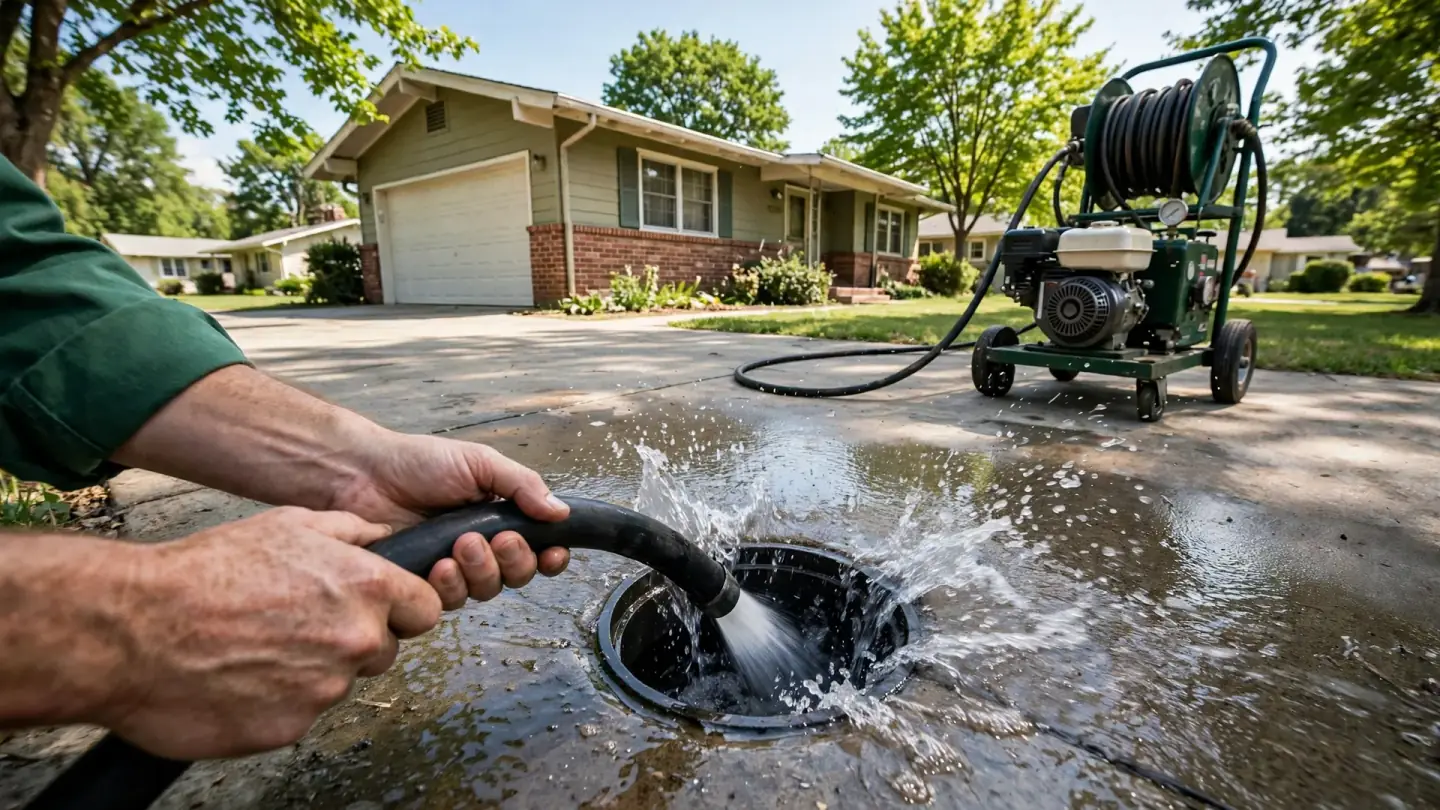
Key facts: Sump and Floor Drain Backup
- A sump pump removes accumulated water from a sump pit and discharges it away from the building [2].
- The City of Dayton lists sump pumps, foundation drains and downspouts as possible internal causes of heavy-rain basement flooding [1].
- Dayton's storm and sanitary sewers are separate systems, and laterals are not connected to catch basins [1].
- Floor drains are tied to a trap that blocks sewer gas from entering the room [3].
Warning signs
What the pit and the drain tell you
Pit full, pump silent
Clear water at the rim and no pump noise points to power loss, a tripped breaker, a stuck float or a failed pump.
Pump running, floor drain climbing
If the floor drain rises each time the pump cycles, the discharge may be piped into the sanitary side instead of outdoors.
Pump runs nonstop
Constant running can mean heavy groundwater, a failed check valve letting water fall back, or a short discharge pipe.
Grey water at the floor drain only
If the pit is normal but the floor drain has grey, smelly water, the drain line itself is blocked.
Both rise in every storm
Repeated trouble in heavy rain suggests groundwater, downspouts and the sanitary line are all loaded at once.
How they connect
Why would a sump pit and floor drain fail at the same time?
The two openings do different jobs. A sump pit collects groundwater from around the foundation and the pump sends it outside, away from the building [2]. The floor drain is trapped and belongs to the sanitary system that carries wastewater to the sewer [3]. Dayton keeps storm and sanitary sewers separate [1], so groundwater has no business in the floor drain.
Trouble starts when someone has run the sump discharge hose into the floor drain, the laundry tub or a cleanout. In dry weather the pump barely runs and nobody notices. In a storm it cycles over and over, loading the sanitary line with groundwater at the same moment the public sewer is busiest. The City specifically names sump pumps and foundation drains among internal causes of heavy-rain basement flooding [1].
The opposite failure happens too. A pump that loses power during a storm lets the pit overflow onto the floor, and that water finds the floor drain. If the drain line is already partly blocked, the basement fills from both sides. The sump pit vs floor drain guide explains the plumbing in calm detail.
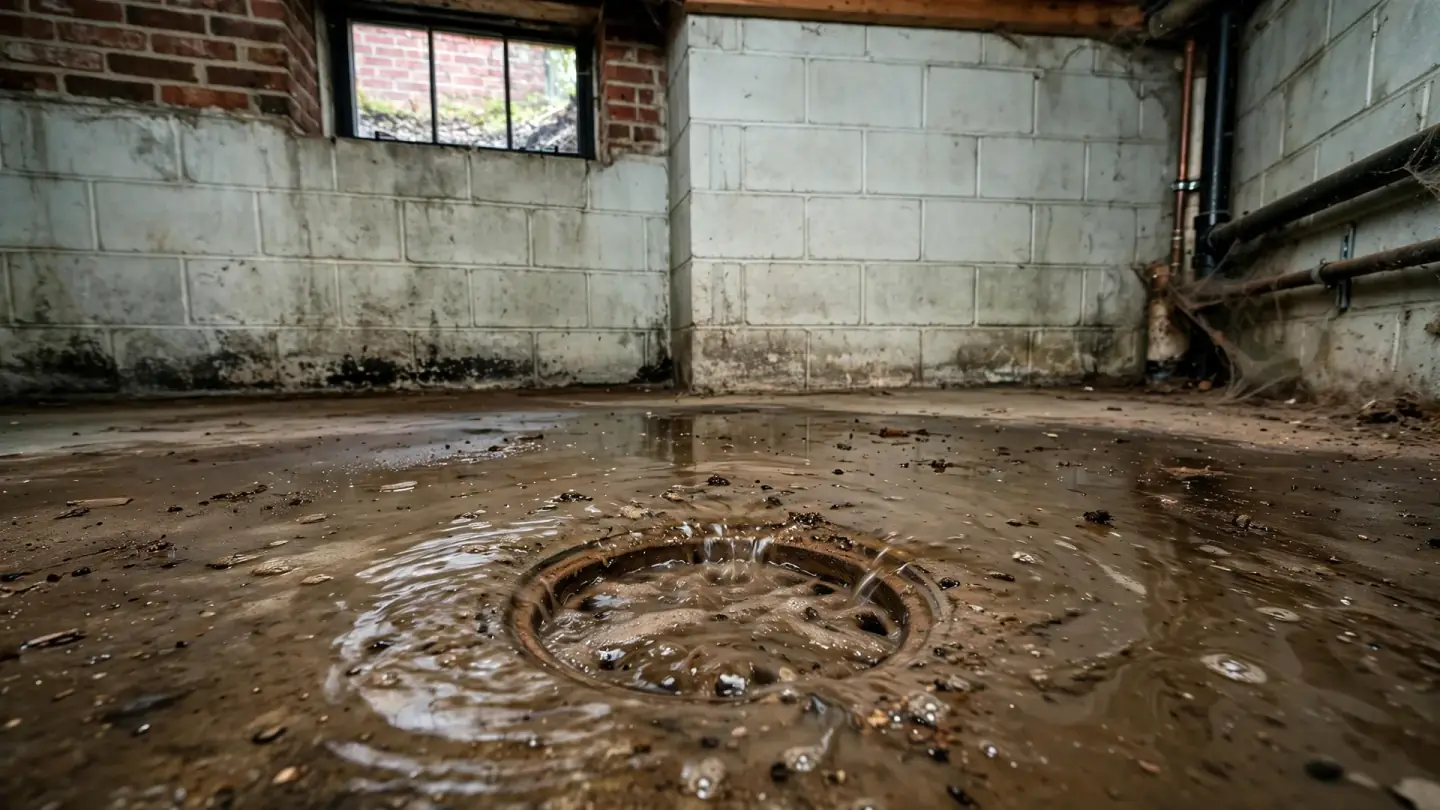
What the visit involves
How a contractor sorts out a sump and drain backup
- 1
Watch one pump cycle
With someone at the floor drain, the pump is allowed to run once so any link between its discharge and the drain shows up.
- 2
Trace the discharge
The contractor follows the sump pipe to where it ends: through the wall to daylight, or into a drain, tub or stack.
- 3
Clear the floor drain line
If the drain itself is restricted, it is cabled from the cleanout or the drain opening and flushed.
- 4
Film the branch and lateral
A camera run shows the condition of the floor drain branch and any unexpected pipes entering it.
- 5
Separate the trades
Drain work is done on the visit. A dead pump, stuck float or failed check valve is noted so pump repair can be arranged.
Dayton factors
Groundwater, rain and Dayton sump pits
Dayton sits over the Great Miami Buried Valley Aquifer, a body of sand and gravel saturated with water that has been designated a Sole Source Aquifer [4]. Groundwater conditions vary a lot from street to street, but in heavy rain many basements in the region see their sump pumps work hard. Newer subdivisions in places like Huber Heights and Beavercreek are more likely to have a sump pit built in, while many older city basements have only a floor drain.
Power cuts during summer thunderstorms are the classic double failure: the pump stops just when it is needed. A battery backup or water-powered backup pump is pump work rather than drain cleaning, but it is worth raising once the emergency is over. On the drain side, regular floor drain cleaning keeps the sanitary line open so a pit overflow does not meet a half-blocked drain.
When to call
When a sump and floor drain problem needs a call tonight
Call to check emergency availability when grey water or sewage is coming up at the floor drain, when water keeps rising even with household water use stopped, or when the floor drain rises every time the pump runs. If the pit is full of clear water and the pump is dead but the floor drain is fine, the urgent job is getting the pump running; ask about that on the call, since it may be pump work.
Afterward, clean up with gloves and a household disinfectant, which the City says is fine after a backup [1], and keep the pump's discharge outdoors. For drain flooding that happens without the sump involved, see basement flooding from a drain. Other urgent problems are on the emergency hub, and the guide on a basement drain backing up after rain covers rain-only patterns. For urgent clogs of any other kind, start with the general emergency drain cleaning page.
FAQ
Sump and floor drain backup questions in Dayton
Why does my floor drain back up when the sump pump runs?
The sump discharge is probably piped into the floor drain, laundry tub or another sanitary opening. Each pump cycle then sends groundwater into a drain line meant for household wastewater, and in heavy rain the line cannot keep up. The discharge should run outdoors instead.
Is it legal to drain a sump pump into the sewer in Dayton?
Groundwater belongs outside the sanitary system. Dayton keeps storm and sanitary sewers separate and lists sump pumps tied into plumbing as a cause of basement flooding [1]. Ask the contractor or the City's plumbing inspection office about rerouting a discharge that ends in a drain.
My sump pit is full and the pump isn't running. What should I check?
From a dry spot, check that the pump is plugged in and its breaker has not tripped. A float stuck against the pit wall can also stop it. Do not reach into the pit while the pump is powered. If it still will not run, the pump needs repair.
Can a drain cleaning contractor fix a broken sump pump?
Some do pump work and some do not, so ask on the call. A drain contractor will clear and film the floor drain line and trace the discharge. If the pump, float or check valve has failed, that is often booked as a separate repair.
Why is my sump pump running all the time even when it's not raining?
High groundwater after a wet spell can keep it busy. A failed check valve letting water fall back into the pit, or a discharge that dumps right beside the foundation, can also make it cycle constantly. Have the check valve and discharge route inspected.
Should I worry if sump pit water smells like sewage?
Yes, that is worth checking. Sump water is normally groundwater and should not smell of sewage. A sewage smell can mean a cracked drain line nearby, wastewater reaching the pit, or a connection that should not exist. Mention it to the contractor.