
Key facts: Hard water and drains
- Surface and ground water in the Great and Little Miami River basins are very hard calcium-magnesium-bicarbonate waters [1].
- Dayton's Ottawa and Miami water plants use conventional lime softening before filtration and disinfection [2].
- Hard water leaves deposits such as calcium carbonate that build up in pipes and restrict flow [3].
- Calcium and magnesium in hard water react with soap to form soap scum, a white precipitate [3].
- Greene County softened its water to about eight grains per gallon from about twenty-seven; private wells do not get that treatment [4].
Short answer
Does hard water really clog drains?
Indirectly, yes. Hard water carries dissolved calcium and magnesium. As it evaporates or warms, it leaves mineral deposits such as calcium carbonate on pipe walls, and those deposits restrict flow over time [3]. The bigger effect in drains is soap scum: calcium and magnesium react with soap to form a white, sticky precipitate [3]. That film coats traps and branch lines and gives hair, lint and grease something to cling to.
In the Dayton area the source water is naturally very hard [1]. City water is softened at the treatment plants [2], so the problem is worst in homes on private wells, in older houses with decades of build-up in metal pipe, and in fixtures that see lots of soap: showers, tubs and laundry.
What you see / likely cause / what to do
Reading the signs of mineral build-up in a drain
| What you see | Likely cause | What to do |
|---|---|---|
| White crust on the shower grate | Scale and soap scum at the drain opening | Clean the grate and pull hair from the trap |
| Tub drains slower every month | Soap scum lining the trap, holding hair | Have the trap and branch cabled and flushed |
| Grey film in the laundry tub | Soap scum plus lint | Clear the tub trap; see laundry sink clogs |
| Kitchen sink slow despite hot water | Grease bonded to scale in the branch | Book kitchen drain cleaning |
| Several drains slow, old metal pipes | Years of deposits narrowing the bore | Camera check, then descaling or jetting |
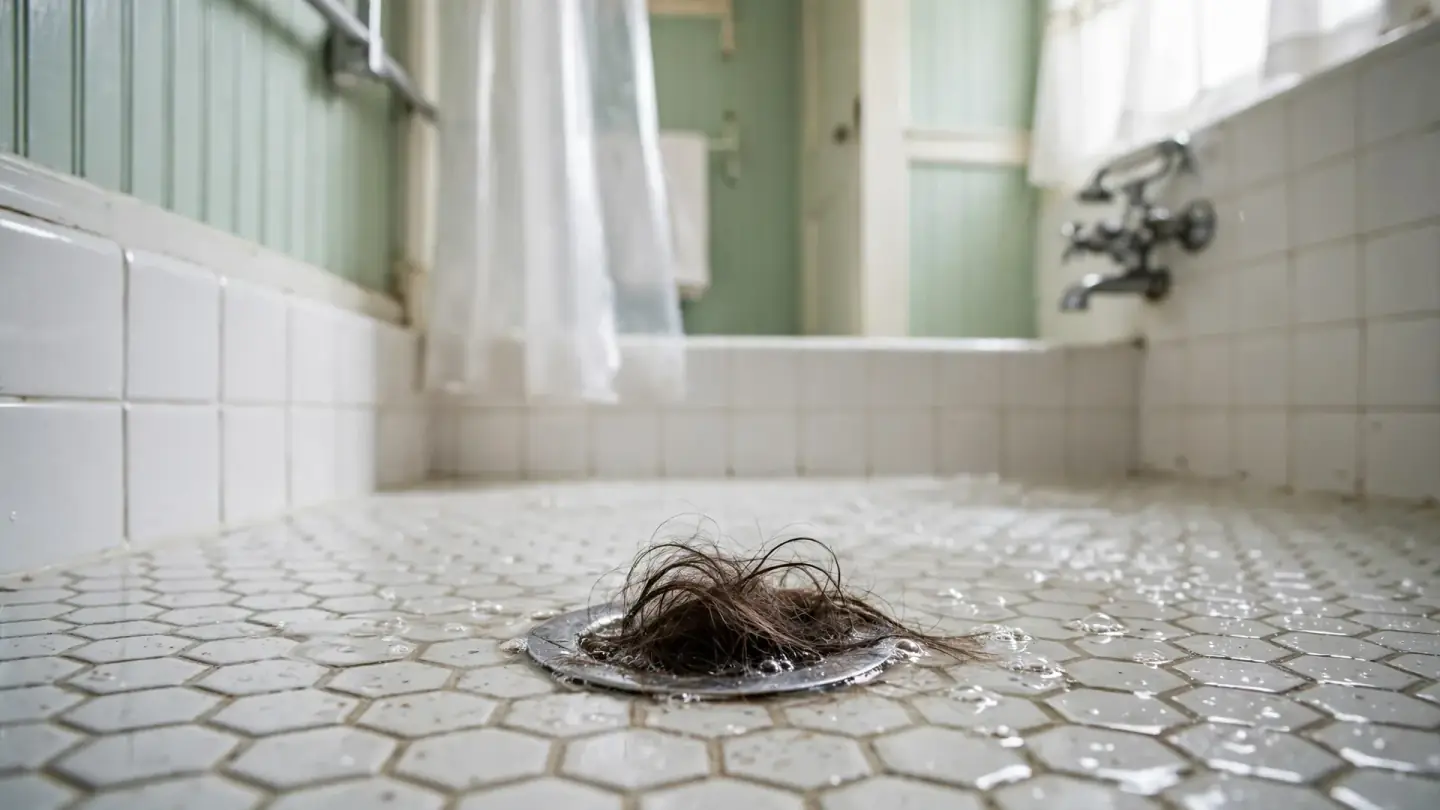
Scale at the shower drain
Safe checks
Quick checks for hard water in your drains
- Look at faucet aerators and showerheads. White crust there means your water leaves scale, and the drains see it too.
- Lift the shower or tub strainer and look for grey, rubbery residue mixed with hair.
- Fill a basin and time how long it takes to empty. Compare it again in a month.
- Check whether your home is on city water, a county supply, or a private well; softening differs a lot.
- Avoid mixing different chemical cleaners in a slow drain while checking it.
Deep dive
Why is Miami Valley water so hard in the first place?
The region's water comes largely from the buried-valley aquifer, sand and gravel laid down by glaciers and full of limestone-derived minerals. The USGS describes surface and ground water in the Great and Little Miami basins as very hard calcium-magnesium-bicarbonate waters [1]. Dayton pumps from the Miami and Mad River well fields and runs the water through lime softening at its Ottawa and Miami plants, followed by pH adjustment, filtration and disinfection [2].
Suburban suppliers have caught up in different ways. Greene County's upgrade brought its water to about eight grains per gallon, down from about twenty-seven [4], and Huber Heights added membrane softening at its plant [5]. Softened supply reduces new scale, but it does not remove deposits already in old pipes, and it never reaches homes on private wells.
Deep dive
Soap scum, not scale, is the bigger drain problem
Scale forms hard, thin layers. Soap scum forms a soft, greasy film that grows wherever soapy water lingers, especially in the trap [3]. Bar soap and many body washes are the worst for this; synthetic detergents form less scum [3]. Hair wraps around the scum, the scum holds the hair in place, and within months a shower or tub drain slows to a crawl.
In laundry lines the same film catches lint. In kitchen lines it combines with grease. That is why a softened supply helps but never fully ends drain cleaning: the soap, hair and grease still go down the drain.
Deep dive
Older metal pipes and private wells
Galvanized and cast iron drain pipe has a rougher interior than plastic, and deposits stick to it more readily. Homes in older parts of Dayton often have metal drain branches inside the walls, and decades of scale and scum reduce their bore. Homes on private wells around the edges of the metro get unsoftened water unless they treat it themselves, so their drains build up faster. If several fixtures are slow and the house has old metal pipe, a camera look is worth more than another bottle of cleaner.
How a contractor diagnoses it
How a drain contractor checks for mineral build-up
- 1
Ask about the water source
City, county or well water changes how much scale to expect, so the contractor starts there.
- 2
Pull the trap
On a sink or tub, the trap shows whether the restriction is soap scum and hair at the fixture or something further down.
- 3
Cable out the soft build-up
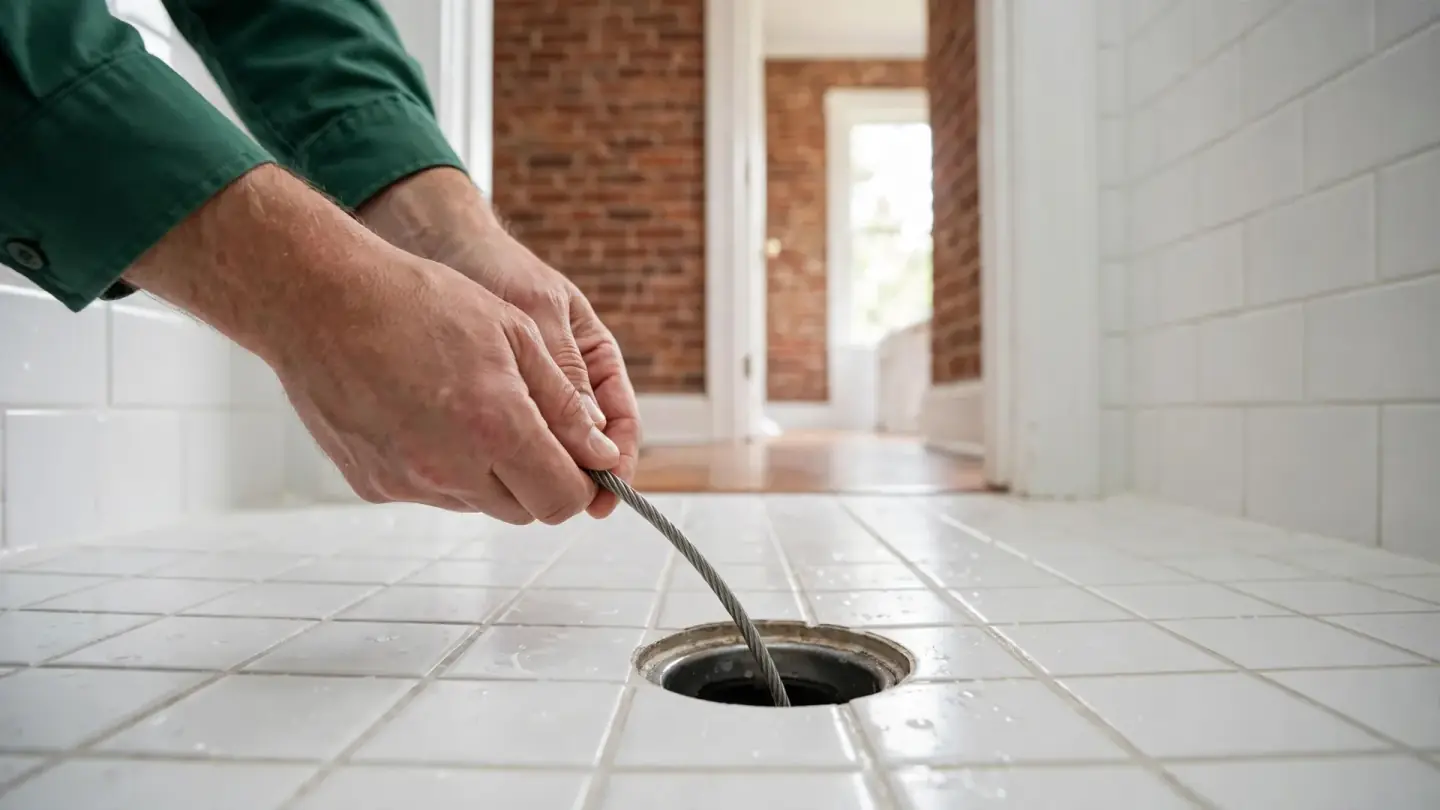
A cable clears the soft build-up and brings back samples that show what is lining the pipe.
- 4
Measure the lost bore on camera
A drain camera inspection shows how much of the bore is lost to scale on old metal pipe.
- 5
Recommend jetting or descaling
Heavy deposits on sound pipe can be scoured with hydro jetting; badly corroded pipe may need repair instead.
Fix options
What clears hard water build-up from a drain?
For a single slow shower or tub, cleaning the strainer and cabling the trap usually restores flow. For branch lines with years of deposits, water jetting scours the walls rather than just punching a hole through. Harsh acid cleaners are not a good answer; they are dangerous to handle and can damage pipes with repeated use. The enzyme vs chemical cleaners guide explains the trade-offs, and shower and bathtub drain cleaning covers the most common hard-water fixture.
Prevention
Keeping hard water from narrowing your drains
- Use hair catchers in showers and tubs and empty them often.
- Run hot water for a short while after showers to move soap residue past the trap.
- Consider a water softener if you are on a private well; it reduces both scale and scum.
- Switch to liquid soaps or synthetic detergents where scum is a recurring problem.
- Book preventative drain maintenance for drains that slow on a predictable cycle.
What to tell the contractor
Details that help with a hard water drain call
- Whether you are on city water, a county supply or a private well, and whether you have a softener.
- Which drains are slow and how long the slowdown took.
- What you see at the strainer: crust, grey film, hair or grease.
- Roughly how old the house plumbing is and whether it is metal or plastic.
- Any cleaners you have already poured down the drain.
FAQ
Hard water and drain questions in Dayton
Is Dayton tap water hard or soft?
The source water is naturally very hard [1], but the City of Dayton lime-softens it at its treatment plants before delivery [2]. Homes on city water get softer water than the aquifer provides. Homes on private wells get untreated hard water unless they soften it.
Can a water softener stop my drains from clogging?
It helps but does not stop clogs entirely. Softer water forms less scale and much less soap scum, so traps stay cleaner for longer. Hair, grease and lint still go down drains, so they will still need occasional cleaning.
What is the grey rubbery gunk in my shower drain?
Usually soap scum mixed with hair. Calcium and magnesium in hard water react with soap and form a sticky precipitate [3], which traps hair passing through. Pulling it out with a plastic drain tool and cleaning the strainer often restores flow.
Does vinegar dissolve scale inside drain pipes?
Vinegar can soften light mineral crust on a strainer or the drain opening. It does little to scale or scum deep in a trap or branch line, because it is diluted and moves past too quickly. Mechanical cleaning works better for real build-up.
Why do homes on wells near Dayton get more drain build-up?
Well water comes straight from the very hard local groundwater [1] without the softening that public plants provide. More calcium and magnesium means more scale and soap scum in fixtures and drains, unless the home has its own softener.
Can hard water damage old cast iron drain pipes?
Hard water mainly adds deposits rather than eating the pipe. In old cast iron, those deposits sit on top of corrosion and narrow the bore further. A camera inspection shows whether the pipe is sound enough for jetting or needs repair.