Key facts: Laundry Drain Overflow
- Lint is a build-up of textile fibres, hair and other debris that sheds from clothing in normal wear and washing [1].
- Residential basement floor drains are often located near the washer and water heater and are tied to a trap [2].
- Hard water reacts with soap to form a white precipitate known as soap scum [3].
- Area water is very hard calcium-magnesium-bicarbonate water; Dayton's plants soften it before delivery [4][5].
Warning signs
Laundry drain warning signs before the big spill
Water near the standpipe rim
Water climbing close to the top of the washer standpipe during the drain cycle means the line is only just keeping up.
Laundry tub fills and lingers
A tub that holds grey water for minutes after the washer stops has a restriction in its trap or branch.
Floor drain bubbles on drain day
If the nearby floor drain gurgles or rises while the washer pumps, the laundry and floor drain likely share a line.
Washer error codes
Many machines flag a slow drain. Check the washer's own pump filter first; if it is clear, the house drain is the suspect.
Musty or sour smell
Lint and soap residue held in a slow drain start to smell, often before the line actually overflows.
What not to do
What should you avoid when a washer drain overflows?
Do not run another load to see if it was a one-off. Each cycle pushes a large volume of water into the line, and a partial blockage can turn into a full one with sewage at the floor drain. Avoid caustic openers too. They do little against a wad of lint and fibre, and they leave a harsh liquid in the standpipe or tub that the contractor then has to work around.
Pulling the washer hose out of the standpipe and draining into a bucket is fine as a stopgap; pushing a garden hose or a coat hanger down the standpipe is not, because it can pack the lint tighter or snag in an old trap. If the laundry tub has a removable strainer, clearing visible lint is reasonable. Anything deeper is a job for a cable.
What the visit involves
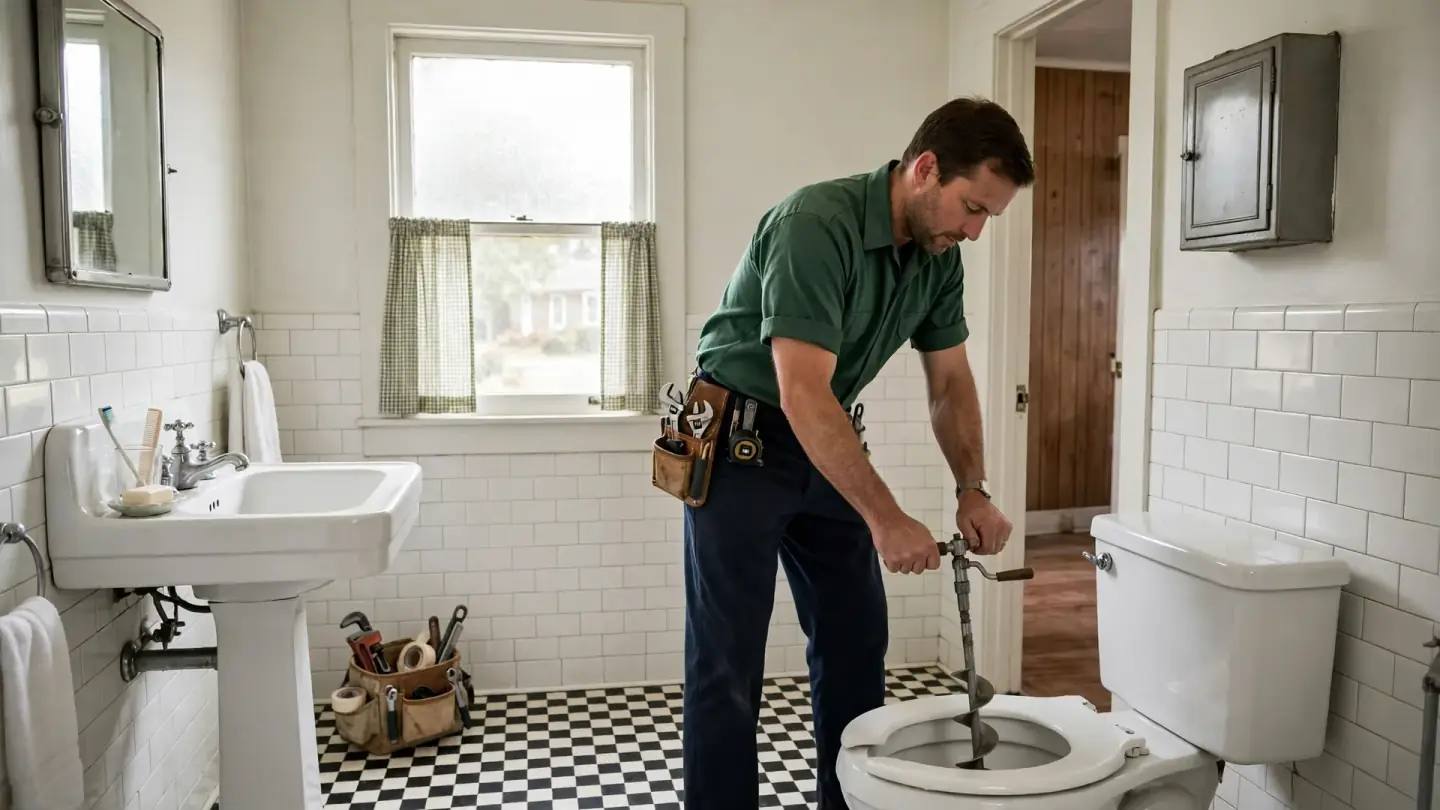
How a contractor clears an overflowing laundry drain
- 1
Rule out the washer
The contractor checks the drain hose for kinks and confirms the machine pumps freely, so the house drain is not blamed for a washer fault.
- 2
Find the shared line
They trace where the standpipe and laundry tub join the building drain and whether the floor drain is on the same branch.
- 3
Cable the laundry branch
A cable sized for the laundry line breaks up lint mats, soap build-up and lost items such as socks or small cloths.
- 4
Drain test with a full load
Running a full washer drain, or filling and dumping the tub, proves the line can take the real flow, not just a trickle.
- 5
Camera if it reaches the main
If the floor drain or other fixtures were involved, a drain camera inspection checks the building drain and lateral beyond the laundry branch.
Dayton factors
Why Dayton laundry drains clog the way they do
In many older Dayton homes the washer, laundry tub, water heater and floor drain sit together in the basement, which matches where floor drains are commonly placed [2]. That layout is convenient, but it means laundry water, lint and soap all head into the same short run of pipe, often old cast iron or clay further out. When the shared branch narrows, the washer is usually the first fixture to overflow because it discharges the most water in the shortest time.
Water chemistry plays a part. Groundwater in the Great and Little Miami basins is very hard calcium-magnesium-bicarbonate water [4]. Dayton's treatment plants soften it before delivery [5], but homes on private wells or in areas with harder supplies see more mineral and soap residue, and hard water reacting with soap forms soap scum [3]. Lint from towels and fleece sticks to that film and builds a mat. The hard water and drains guide and the laundry sink drain clogs guide go deeper.
When to call
Is an overflowing washer drain worth an urgent call?
Call to check emergency availability if the overflow reached the floor drain, if other fixtures are also slow, if water got near the washer outlet or furnace, or if you need the laundry for a household that cannot wait. If the spill was small and only the standpipe is slow, routine clogged drain repair is usually the right booking.
When the floor drain also came up, treat it as a basement drain problem first; the basement flooding page covers that. The floor drain cleaning service handles the shared branch, and every urgent topic is listed on the emergency hub. For urgent clogs of any other kind, start with the general emergency drain cleaning page.
FAQ
Laundry overflow questions for Dayton homes
Why does my washing machine drain overflow at the standpipe?
The drain below the standpipe cannot take the water as fast as the washer pumps it out. Lint, soap residue and small items usually narrow the branch. Less often, the hose is pushed too far down or the building drain further out is blocked.
Why does my basement floor drain back up when the washer drains?
In many basements the washer and floor drain share a branch line. When that branch or the building drain is restricted, washer water has nowhere to go and rises at the lowest opening, the floor drain. Stop laundry and have the shared line cleared.
Can lint from the washer really clog a drain pipe?
Yes. Lint is made of fibres and hair shed from clothing in normal wear and washing [1]. It catches on rough spots and soap film in the drain and builds into a mat. Fleece, towels and new fabrics shed the most.
Is it safe to keep using the washer with a slow laundry drain?
It is risky. One more load can push a partial clog into a full overflow, and if the floor drain shares the line, wastewater may come up too. Hold off until the drain is cleared and tested with a full load.
Should I put a lint trap on my washer drain hose?
A mesh lint catcher on the hose end or in the laundry tub is a simple way to keep fibres out of the line. Empty it often, because a packed filter can cause its own overflow. It reduces lint but does not remove soap residue.
Do I need a plumber or an appliance repair person for a washer that won't drain?
If the washer stops with water still in the tub, start with the machine's pump filter and hose, which is appliance territory. If the washer pumps out but the standpipe or tub overflows, the house drain is the problem and a drain contractor is the right call.