Key facts: Enzyme vs chemical cleaners
- Chemical drain openers typically use corrosive acids or alkalis to break down organic clogs; excessive use can damage pipes [1].
- Enzymatic cleaners break grease, hair and food into smaller soluble pieces and suit maintenance and minor clogs [1].
- Enzymatic products may not work on severe blockages [1].
- Grease poured down drains solidifies in lines and mains; Dayton advises cooling it and putting it in the trash [2].
Short answer
Which drain cleaner should you actually use?
For routine upkeep on a drain that is still flowing, an enzyme product is the gentler choice. Enzymes break grease, hair and food into smaller, water-soluble pieces that wash away, and they are intended for regular maintenance and minor clogs [1]. For a drain that has already stopped, chemical openers are tempting, but they rely on corrosive acids or alkalis and excessive use can damage pipes [1].
For a drain that is backing up, especially more than one, neither is the right tool. Roots, wipes, solid objects and main-line blockages need a cable or a jet.
What you see / likely cause / what to do
Matching the clog to the right treatment
| What you see | Likely cause | What to do |
|---|---|---|
| Kitchen sink a little slow | Grease film in the trap | Enzyme maintenance; keep grease out [2] |
| Shower slow, hair visible | Hair and soap scum | Pull the hair out by hand |
| Sink fully stopped | Solid clog in the trap or branch | Clear the trap or book clogged drain repair |
| Several drains backing up | Main line or lateral blockage | No products; book main sewer line cleaning |
| Clog returns every few weeks | Build-up deeper in the line | Camera and jetting |
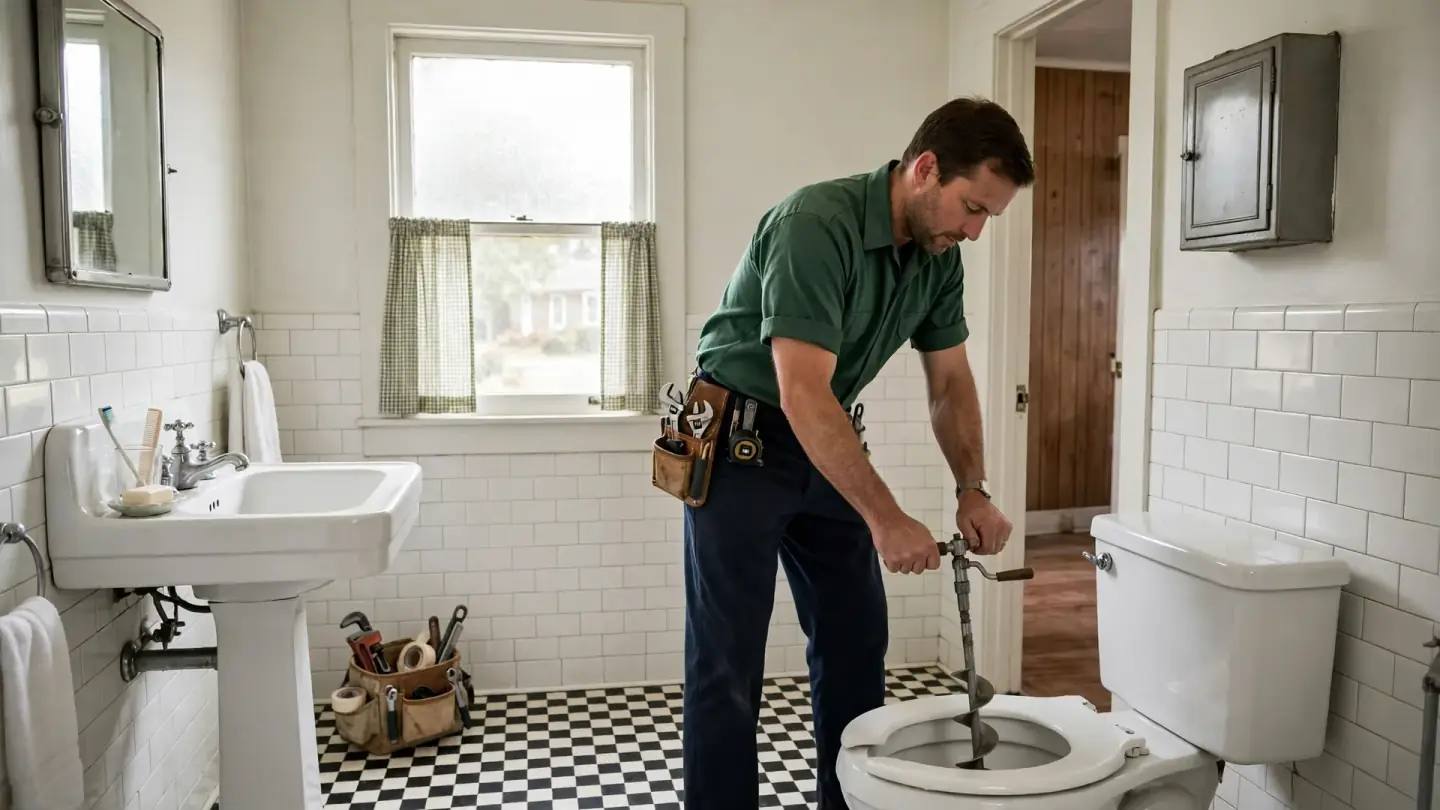
Clearing what a bottle cannot
Safe checks
Before you pour anything down a drain
- Check whether other drains are slow too; if so, skip products entirely.
- Pull the strainer or stopper and remove visible hair or debris by hand.
- Read the label and never mix different cleaners, including bleach, in the same drain.
- Wear gloves and eye protection with any chemical product.
- Do not plunge after pouring a chemical; it can splash back.
Deep dive
How do chemical drain openers work?
Chemical openers contain strong alkalis or acids that attack the proteins, fats and carbohydrates in organic clogs [1]. On a soft clog close to the drain they can work. Their drawbacks are real: they are corrosive, so they are dangerous to skin and eyes, and excessive use can damage pipes [1]. Old metal drain lines, common in older Dayton homes, are the least forgiving.
They also create a problem when they fail. A sink full of caustic water is hazardous for anyone who then has to open the trap or run a cable. Always tell the contractor what you have poured.
Deep dive
How enzyme and bacterial cleaners work
Enzyme products use biological catalysts to break down grease, hair and food residue into smaller, water-soluble molecules [1]. They act slowly, usually over hours, and work best when left in the pipe overnight with no water running. They are suited to regular maintenance and minor clogs but may not work on severe blockages [1].
Their real value is keeping a working drain from slowly closing, especially kitchen lines where grease film builds. They will not cut roots, dissolve wipes, or move a toy or a utensil.
Deep dive
Why neither product fixes hard-water or grease build-up for good
In the Dayton area, hard water forms soap scum [3] that hardens in traps and branch lines, and grease solidifies in service lines and even the public main [2]. Products nibble at the surface. A line with years of deposits needs to be scoured, and hydro jetting does that. The hard water and drains guide explains the build-up.
How a contractor diagnoses it
What a contractor does after products have failed
- 1
Ask what was used
Knowing whether caustic or acid product is in the line protects everyone and shapes the approach.
- 2
Neutralise or remove standing water
Chemical-laden water is carefully removed or flushed before work starts.
- 3
Clear mechanically
The trap is pulled or a cable is run to break up the clog.
- 4
Find the real cause
Recurring clogs get a drain camera inspection to see what is building up and where.
- 5
Suggest maintenance
If the line is sound, an enzyme routine or a cleaning interval may be suggested to keep it flowing.
Fix options
Better options than pouring more product
For a single slow fixture, removing hair or cleaning the trap is usually quicker and safer than any product. For a stopped drain, a hand auger or a professional cable is the reliable route. For lines that keep slowing, jetting and a camera look find and remove the build-up. The guide on how often to clean drains helps set a routine afterwards.
Prevention
Habits that make drain products unnecessary
- Let cooking grease cool and put it in the trash, as the City of Dayton advises [2].
- Use strainers in kitchen sinks, tubs and showers.
- Keep wipes, paper towels and cotton swabs out of toilets.
- Run hot water after greasy dishes to move residue along.
- Use an enzyme product as maintenance if a line has a slow history.
What to tell the contractor
What to say after trying a drain cleaner
- The product name and whether it was acid, caustic or enzyme.
- How much you used and when.
- Whether any standing water in the fixture contains it.
- Which drains are slow or stopped.
- Whether you plunged or used a tool afterward.
FAQ
Drain cleaner product questions
Are enzyme drain cleaners safe for old pipes?
Yes, they are generally considered gentle on plumbing because they rely on enzymes rather than corrosive chemicals [1]. They are a reasonable maintenance choice for older homes. They work slowly and will not clear a severe blockage.
Can chemical drain cleaner damage my pipes?
It can. Chemical openers are corrosive, and excessive use can damage pipes [1]. Older metal drain lines and worn fittings are most at risk. Occasional, careful use on a soft clog is one thing; pouring bottle after bottle into a stopped line is another.
Why didn't the drain cleaner unclog my sink?
The clog was probably something chemicals cannot dissolve, such as a solid object, wipes or roots, or it was too far down the line for the product to reach. If several fixtures are slow, the blockage is likely in the main line.
Is it safe to use a plunger after pouring drain cleaner?
No. Plunging can splash corrosive liquid onto your skin or into your eyes. If a chemical has not worked, leave the fixture alone and tell the contractor exactly what is in the drain so they can deal with it safely.
How long does enzyme drain cleaner take to work?
Enzyme products act slowly, usually over several hours, and work best left in the pipe overnight without running water. Expect gradual improvement over repeated uses on a slow drain, not instant results on a stopped one.
Can I use drain cleaner in a toilet or a floor drain?
It is best not to. Products rarely reach a main-line blockage below a floor drain or toilet, and they leave hazardous water where someone will need to work. A toilet clog usually needs a plunger or toilet auger instead.