
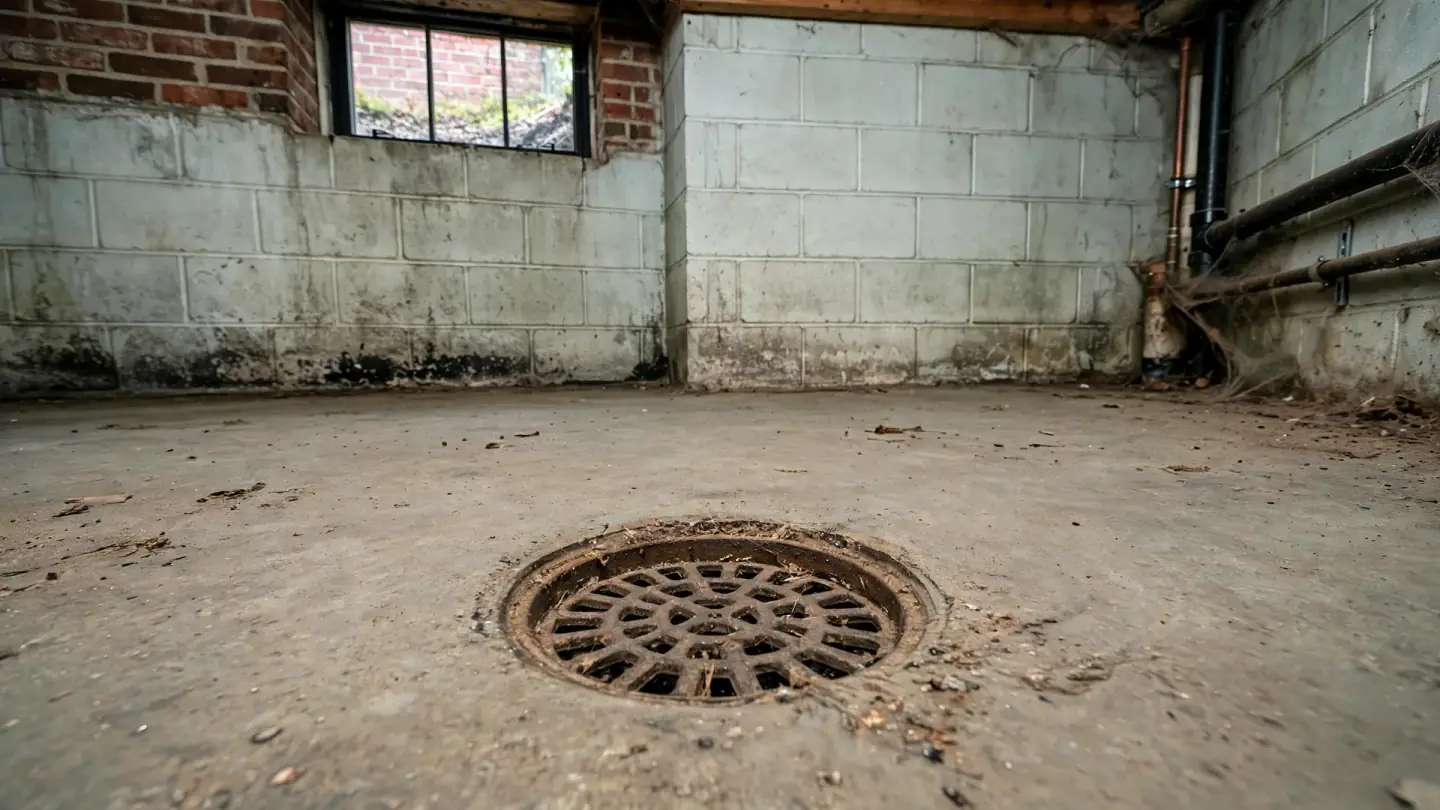
Key facts: Basement Flooding From a Drain
- In Dayton the property owner is responsible for the house lateral from the building to the public main [1].
- Basement floor drains are commonly placed near the water heater or washer and are tied to a trap [2].
- Sewer odour in a basement usually means a trap has dried out; the City suggests refilling trapped fixtures with water [1].
- The City of Dayton says an ordinary household disinfectant is fine for cleaning up after a sewage backup [1].
Warning signs
How to tell drain flooding from groundwater seepage
Water starts at the grate
Drain flooding spreads outward from the round floor drain. Seepage shows up first along the wall joint or through cracks in the slab.
It rises when fixtures run
If the puddle grows each time someone flushes or the washer drains, the water is coming through the sanitary line.
Grey water, paper or a smell
Cloudy water, bits of paper or a sewage odour mean wastewater. Clear, odourless water is more likely groundwater or a supply leak.
Weather is dry
A flood with no rain points away from storm overload and toward a blockage in your own building drain or lateral.
Upstairs drains slowing
Sinks and tubs on upper floors going sluggish in the same days often means one restriction below all of them.
What not to do
Which moves make a flooded basement drain worse?
The common mistakes all add water or pressure. Running a wet-vac into a sink or toilet sends the same water back into the blocked line. Pouring caustic opener into a floor drain does nothing to a blockage many feet away and leaves a harsh liquid sitting where someone will need to work. Unscrewing a cleanout plug on a full line can release a surge of wastewater across the floor, and old plugs are often hard to seat again.
Plunging a floor drain rarely helps either. The trap and branch sit below a heavy column of water, and the blockage is usually further out in the building drain or lateral. A rented cable can work for a confident owner on a simple clog, but on a full line it is messy and it can snag in old clay or cast iron. If the flood is spreading, the wiser move is to stop water use, keep things dry where you can, and let the contractor open the line from the right access point.
What the visit involves
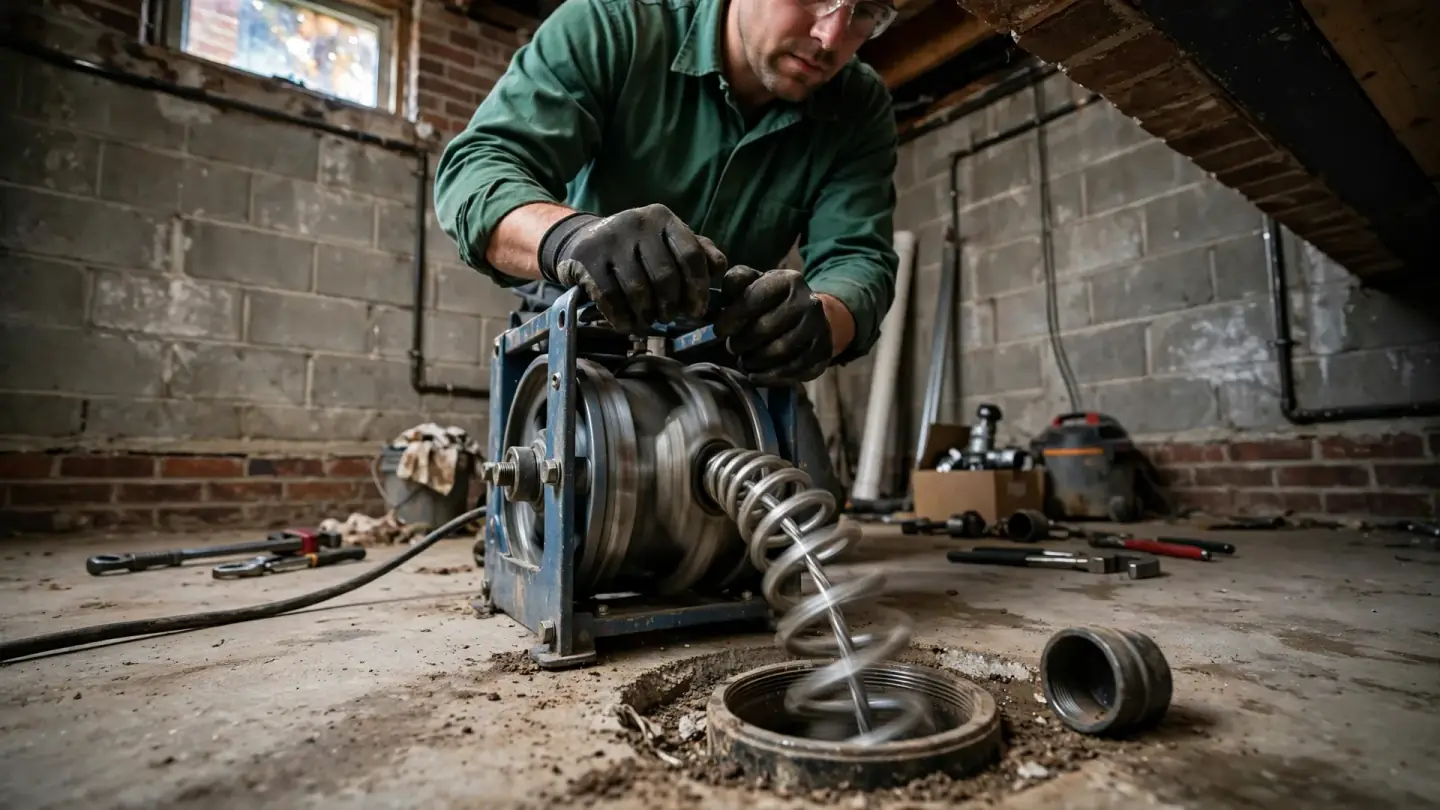
What a contractor usually does at a flooded basement drain
- 1
Ask where it started
The contractor asks when the water appeared, which fixtures were running and whether the weather was dry, to place the blockage before touching tools.
- 2
Pick the entry point
A basement cleanout is preferred. Without one, the floor drain itself or a pulled toilet can serve as the entry.
- 3
Release the standing water
Once the cable breaks through, the water on the floor drops back into the line. The contractor controls this so it does not surge.
- 4
Clear and flush
The cable works through the blockage, then water is run from several fixtures to prove the line carries a full load.
- 5
Look with a camera
A drain camera inspection shows whether roots, grease, a sag or a broken joint caused it, which tells you whether this will happen again.
Dayton factors
Why Dayton basements flood from the drain side
Much of Dayton's older housing has full basements with the laundry, water heater and a floor drain grouped together, and that floor drain is often the lowest opening on the whole system [2]. When the building drain or lateral narrows, this is where the water shows. In older neighbourhoods such as South Park and the Oregon District, laterals are often clay, and the City notes there is no fixed schedule for root cleaning; it depends on the pipe and nearby trees and shrubs [1].
The City is clear about who owns what. The property owner is responsible for the lateral from the house to the main, and a licensed plumber pulls a permit for repairs; work in the street is done by City crews and billed through the plumber [1]. The City will not locate your lateral, though Plumbing Inspection may have a record or a plumber can find it with a probe [1]. If your basement only floods in a downpour, the cause is likely different; the storm backup page covers that case.
When to call
When is a wet basement floor a call-now problem?
Call to check emergency availability when the water is grey or smells of sewage, when it keeps rising even though you have stopped water use, when it is near electrical equipment, or when the only toilet in the house is unusable. A small puddle that drained away and has not returned is still worth booking, but it can usually be handled as routine floor drain cleaning once things are dry.
After the line is open, clean up with gloves, ventilation and a household disinfectant, which the City says is fine after a backup [1]. If a sewer smell lingers on a dry floor later, the trap may have lost its water; refilling it usually fixes that [1]. Other urgent problems are grouped on the emergency hub, and if the floor drain sits next to a sump pit that is also full, the sump and floor drain page explains how the two interact. For urgent clogs of any other kind, start with the general emergency drain cleaning page.
FAQ
Basement drain flooding questions from Dayton owners
Why is water coming up from my basement floor drain when it hasn't rained?
A blockage further down the building drain or lateral is sending your own household water back to the lowest opening. In dry weather, rain overload is unlikely, so the restriction is usually on your side of the line. Stop using water and have the line opened.
How do I know if the water in my basement is sewage or groundwater?
Look at where it starts and what it looks like. Water spreading from the floor drain that is grey, carries paper or smells is wastewater. Clear water seeping along walls or through slab cracks with no odour is more likely groundwater or a supply leak.
Can I keep doing laundry if the floor drain is only a little wet?
Better not. A washer sends a large volume of water down in a few minutes, which is often what turns a damp drain into a flood. Hold off on laundry until the line has been checked and you have seen water drain away normally.
Does homeowners insurance cover water from a backed-up floor drain?
It depends on your policy, and many standard policies treat sewer and drain backup as an optional add-on. Photograph the water and damage before cleanup and call your insurer to ask. The contractor's notes and camera footage can help explain the cause.
Who pays to fix a broken sewer lateral under a Dayton street?
The owner does. Dayton holds the property owner responsible for the lateral to the main; City crews handle street-side work and bill the plumber, who then bills the owner [1]. The private-side repair is done by a licensed plumber under a permit.
How long does it take to clear a flooded basement floor drain?
Opening the line is often the quick part once the contractor has good access; the time depends on where the blockage is and what it is made of. A camera look afterward adds a little time but tells you whether roots or a break will cause a repeat.