
Key facts: Sewer scope before buying
- Standard home inspections list underground sewer lines and buried piping among common exclusions [1].
- In Dayton the property owner is responsible for the house lateral from the house to the main [2].
- The City will not locate a house lateral; Plumbing Inspection may hold a location record or a plumber can find it with a probe [2].
- A home inspection reports condition at the time and does not guarantee future performance [1].
Short answer
Why film the sewer line before you buy?
A home inspection is a limited, non-invasive look at the house, and underground sewer lines and buried piping are usually outside its scope [1]. The inspector may run water and see it drain, but that says little about the pipe under the yard. Meanwhile, in Dayton the owner is responsible for the lateral from the house to the main [2]. Once you close, any roots, cracks or collapsed sections are yours.
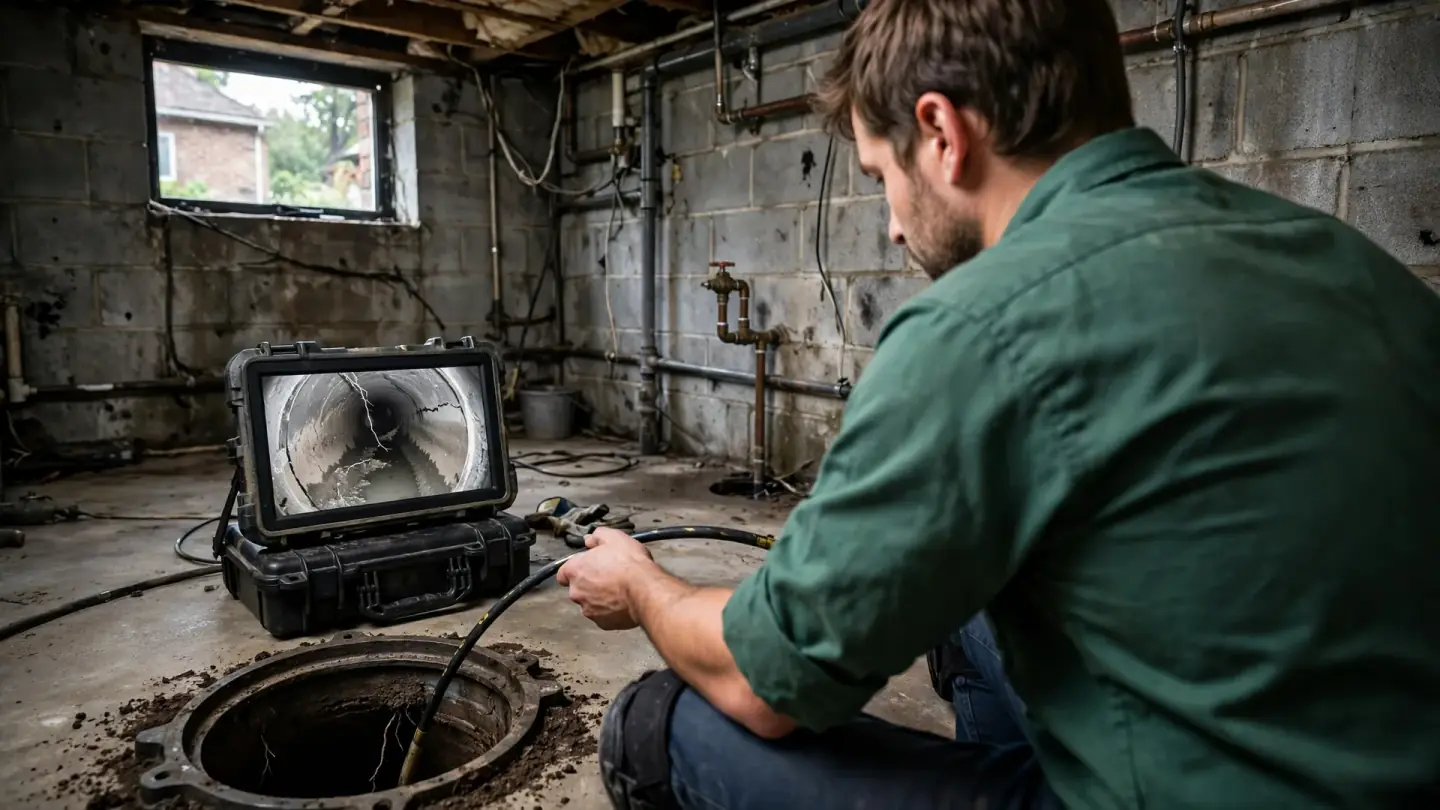
A sewer camera inspection fills that gap. A contractor feeds a camera through the cleanout and records the lateral all the way out, noting what the pipe is made of and where any defects sit.
What you see / likely cause / what to do
Common findings on a pre-purchase sewer video
| What you see | Likely cause | What to do |
|---|---|---|
| Fine roots at a few joints | Root intrusion in clay pipe | Plan for regular cleaning; note it in negotiations |
| Heavy root mass, cracked joints | Long-term intrusion and pipe damage | Ask for a repair estimate before closing |
| Standing water in one stretch | Sag or belly in the line | Have the length and depth of the sag recorded |
| Offset or separated joint | Ground movement | Discuss repair options and permits |
| Clean, round pipe throughout | Sound lateral | Keep the footage for your records |
The camera at the cleanout
Safe checks
What a buyer can check during a showing
- Find the cleanout: a capped pipe in the basement floor or wall, or outside near the foundation.
- Look for signs of past backups: staining around the floor drain, a newly painted basement floor, or a missing carpet.
- Ask the seller about any past drain cleaning, root treatment or sewer repairs.
- Run a few fixtures at once and listen for gurgling in the basement.
- Note large trees between the house and the street.
Deep dive
Which Dayton homes most need a sewer scope?
Age is the biggest factor. The Oregon District has buildings from the early nineteenth century into the early twentieth [4], and South Park is mostly late Victorian and early twentieth-century. Homes of that era were built with clay or cast iron laterals, often with mature street trees nearby. Clay lasts a long time but has many joints and is brittle, which can lead to cracking [3].
Newer homes are not exempt. Postwar and later subdivisions can have settling, construction debris or poorly bedded pipe. A house that has sat empty, or a recent flip with fresh basement finishes, is worth filming too, since cosmetic work can hide a history of backups.
Deep dive
What a sewer camera can and cannot tell you
The camera shows the inside of the pipe: material, roots, cracks, offsets, sags and debris, plus distances from the cleanout. Many systems can locate the camera head from above so the trouble spot can be marked on the ground. That is valuable because the City will not locate a lateral for you [2].
It cannot show the outside of the pipe, the soil around it, or exactly how long a section will last. Like a home inspection, it reports condition on the day [1]. If the line is full of water or heavy debris, it may need clearing before the camera can see anything useful.
Deep dive
Permits and the street side of the lateral
If the footage shows a break, Dayton's process depends on location. A break on the private side is repaired by a licensed plumber under a permit; a break on the street side means the plumber pulls a permit and contacts Sewer Maintenance, which does the work to the curb and bills through the plumber [2]. Separate cities near Dayton such as Kettering have their own permit rules. Knowing this before closing helps you judge what a repair involves.
How a contractor diagnoses it
How a pre-purchase sewer inspection runs
- 1
Confirm access
The contractor checks that a cleanout exists and is reachable, or arranges another access point with the seller's agreement.
- 2
Run water first
Running fixtures shows whether the line drains and moves debris so the camera has a clear view.
- 3
Film to the main
The camera travels the lateral, recording material changes, joints and any defects with distances.
- 4
Locate trouble spots
Where the equipment allows, defects are located from above and their depth estimated.
- 5
Hand over footage
You receive the video and notes to share with your agent before the inspection period ends.
Fix options
Using the sewer report before you close
Light roots in sound pipe usually mean a cleaning plan rather than a deal-breaker. Cracks, collapsed sections or deep sags are a reason to get a repair plan before closing and talk with your agent about how to handle it. Keep the footage either way; it becomes the baseline for future drain camera inspection visits. Our sewer line inspection page explains the service, and the roots in clay laterals guide covers what roots mean long term.
Prevention
Protecting a newly bought sewer lateral
- Keep the inspection footage and note the cleanout location for the next visit.
- Schedule cleaning if roots were found, before they close the line.
- Keep grease and wipes out of every drain from day one.
- Avoid planting trees over the path of the lateral.
- Refill the basement floor drain trap if the house sat empty.
FAQ
Buyer questions about sewer inspections in Dayton
Does a regular home inspection check the sewer line?
Usually not in any depth. Standard home inspections commonly exclude underground sewer lines and buried piping [1]. The inspector may run water, but seeing inside the lateral needs a camera inspection, which is normally booked separately.
Is a sewer scope worth it on a newer house?
It is less critical than on an older home but can still be worthwhile. Settling, poor bedding or construction debris can affect newer lines. If the house has had backups, sat empty, or has big trees near the line, filming it is sensible.
Who is responsible for the sewer lateral after I buy a house in Dayton?
You are. The City of Dayton places responsibility for the lateral from the house to the main on the property owner [2]. The City maintains the main itself and handles street-side repairs, billing them through the plumber.
What if there's no cleanout to put the camera in?
The contractor may be able to film through a pulled toilet or a roof vent, depending on the house. With the seller's agreement, that can work for the inspection. Adding a cleanout later makes future maintenance much easier.
Can I ask the seller to fix sewer problems found on camera?
You can raise it during your inspection period; how it is handled is a matter for negotiation with your agent. Having clear footage and a written description of the defect and its location makes that conversation much easier.
How long does a sewer camera inspection take before closing?
The filming itself is usually a fairly short visit on an accessible line. Allow extra time if the line needs clearing first or access is awkward. Book early so the footage arrives well before your inspection deadline.